Within industrial and scientific practice, the term checking and testing apparatus covers any instrument, fixture, or engineered system whose primary purpose is to measure, verify, or qualify a physical, chemical, or electrical property of a workpiece, material, or installed system. Coal caking index analyzers, petroleum testing equipment, military-qualified semiconductor test stations, and field-deployed electrical test crews all fall under this umbrella, even though their working principles and operating environments differ substantially. The unifying concept is the substitution of an empirical, repeatable measurement for subjective judgment, allowing laboratories, plants, and field service organizations to make procurement, production, and safety decisions on defensible data.
The reference-manual scope of this page covers the working principles, specifications, types, procurement criteria, applicable standards, and market landscape of the category. Source materials informing the discussion include a coal quality analyzer product description from Kindle Tech, the Koehler Instrument Company petroleum testing catalog, the MIL-STD-750D military test method standard for semiconductor devices, and the corporate profile of Apparatus Testing and Engineering, a NETA-accredited electrical testing firm. Because the category is broad, the figures cited here are tied to the specific source from which they originate; values are not extrapolated across vendors or implied to represent a category-wide range.
Checking and testing apparatus refers to specialized instruments and engineered systems used to verify the properties, performance, and safety of materials, components, and electrical equipment. The category spans laboratory analyzers that quantify fuel characteristics, petroleum test benches, military-grade semiconductor test methods, and accredited electrical field services. Selecting appropriate apparatus requires understanding the underlying test method, applicable standards, and the configuration that matches the user's quality objectives.
Chapter 1 / 06
Fundamentals and Working Principle
All checking and testing apparatus share a common functional architecture: a stimulus or controlled condition is applied to a specimen, a transducer or observer captures the response, and a quantitative result is registered against an established reference. In the coal caking index tester described by Kindle Tech, the stimulus is a controlled rotational abrasion delivered by a drum rotating at 50 plus or minus 0.5 revolutions per minute, while the response is the mass and mechanical integrity of the carbonized coal and anthracite blend after a preset number of revolutions. The result is the Roga index, a numeric measure of a bituminous coal's bonding capacity and adhesive plastic mass formation.
Working principles vary by physical domain. Petroleum testing apparatus produced by Koehler Instrument Company is designed to characterize fuels, lubricants, and petrochemical streams against published ASTM, ISO, and IP test method standards, with the catalog describing both manual and automatic instrument configurations. The underlying principle is the application of a defined physical or chemical process, such as distillation, viscosity measurement, or flash point determination, followed by observation of the resulting behavior under controlled temperature and timing. Koehler notes that it has supplied petroleum testing instrumentation since 1925, with technical support delivered either on site or at a Koehler service center.
In the military electronics domain, MIL-STD-750D establishes a comprehensive classification of test methods for semiconductor devices. The standard is approved for use by all Departments and Agencies of the Department of Defense, supersedes prior revisions, and defines a numbered scheme in which each test method is identified, classified, and revision tracked. The working principle is the imposition of environmental, mechanical, and electrical stresses to verify that a semiconductor device meets its specified limits, with results traceable to the test conditions enumerated in the standard.
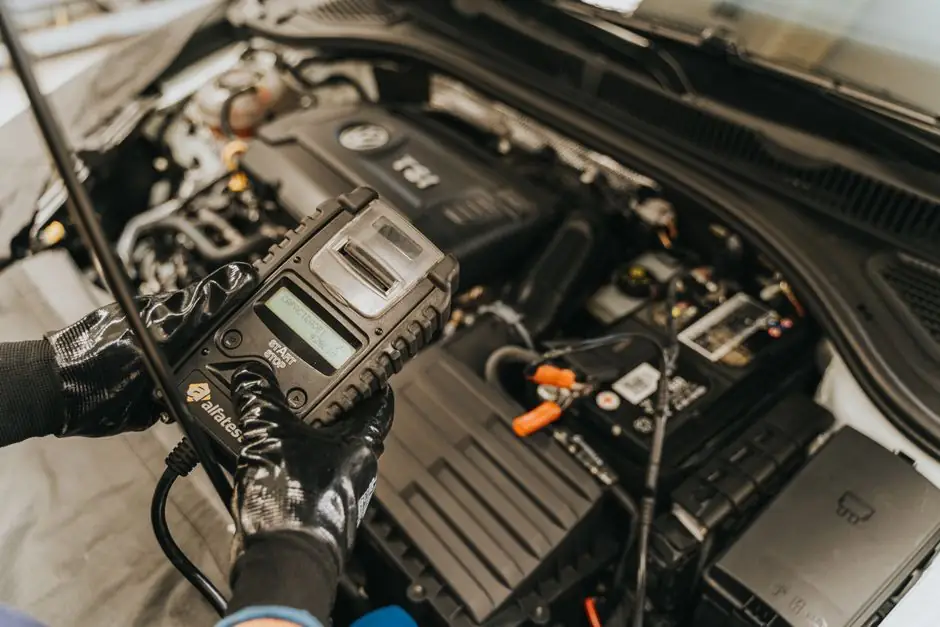
In the field-services domain, checking apparatus takes the form of calibrated test instruments deployed by accredited technicians. Apparatus Testing and Engineering, founded in 1983, operates as a corporately independent electrical testing firm whose personnel perform predictive maintenance inspections, identify developing problems before they escalate, and respond on a 24-hour emergency basis. The working principle is the field measurement of installed electrical equipment using instruments that the company maintains under a calibration program directly traceable to the National Institute of Standards and Technology. The independent structure ensures the client receives an unbiased evaluation of the electrical system.
Chapter 2 / 06
Specifications and Key Parameters
Specifications for checking and testing apparatus must be read in the context of the governing test method. For the Kindle Tech coal caking index tester, the item number KT-TE26 is associated with a drum rotational speed of 50 plus or minus 0.5 revolutions per minute, a revolution preset range of 1 to 999 revolutions, and a motor power rating of 90 watts. The instrument is designed for compliance with GB/T 5447-2014, the Chinese national standard that prescribes the Roga index determination method for bituminous coal. The preset range is wide enough to support the standard 250 revolution test cycle as well as specialized experimental wear protocols for non-standard fuels.
Koehler Instrument Company's petroleum testing catalog lists an extensive product offering conforming to the latest ASTM, ISO, IP, and related international specifications. The catalog itself does not enumerate individual numerical specifications in the excerpted pages; instead, Koehler describes its philosophy of providing manual and automatic instrument versions and offers to recommend a custom solution when a standard product does not fit a particular need. The company also supplies traceable documentation to support an ISO-based quality management system, including traceable certificates for viscometer tubes, thermometers, hydrometers, and thermo-hydrometers, and offers a growing variety of ISO 17025 certified petroleum testing materials for calibration and test method validation.
MIL-STD-750D does not expose a single numeric specification because it is a method standard rather than a product specification. The document defines test conditions, permissible environmental temperature variations, and a numbering system that classifies tests. A reader evaluating apparatus against MIL-STD-750D must consult the specific test method within the standard and the device specification being qualified, with the standard itself describing the order of precedence among referenced documents and the general requirements applicable to environmental test conditions.
For Apparatus Testing and Engineering, the relevant specification set is the credentials of the firm and its instruments. The company is a full service NETA accredited electrical testing firm, employs NETA certified field personnel, and maintains a calibration program for all test instruments that is directly traceable to the National Institute of Standards and Technology. The combination of NETA accreditation, NIST traceability, and corporate independence from equipment suppliers and manufacturers constitutes the specification by which a buyer evaluates the service. Additional capability parameters include 24-hour emergency service availability and predictive maintenance program development.
All Departments and Agencies of the Department of Defense
S3: MIL-STD-750D
MIL-STD-750D Document Type
Test methods for semiconductor devices (method standard)
S3: MIL-STD-750D
Apparatus Testing and Engineering Founded
1983
S4: Apparatus Testing and Engineering
Apparatus Testing Personnel Certification
NETA certified field personnel
S4: Apparatus Testing and Engineering
Apparatus Testing Calibration Traceability
Directly traceable to the National Institute of Standards and Technology (NIST)
S4: Apparatus Testing and Engineering
Apparatus Testing Service Availability
24 hour emergency service, staff on call 24 hours a day, every day
S4: Apparatus Testing and Engineering
Chapter 3 / 06
Types and Configurations
Checking and testing apparatus is most usefully classified by the physical domain of the measurement rather than by form factor. Laboratory material analyzers, exemplified by the Kindle Tech coal caking index tester, are benchtop instruments designed for stationary installation in a metallurgical, coking, or combustion research laboratory. The instrument is built around a rotating drum driven by a 90 W continuous-duty motor, with microprocessor-driven pulse detection counting drum revolutions against a preset target and presenting status on a high-contrast liquid crystal display. Dual-mode reset architecture supports both automated cycle-completion reset and manual operator override, enabling consecutive sample workflows.
Petroleum testing apparatus, as supplied by Koehler, is offered in both manual and automatic configurations to suit different laboratory throughput and skill profiles. The catalog describes a comprehensive line of petroleum laboratory instrumentation, with each instrument designed to conform to a published ASTM, ISO, or IP method. The dual manual and automatic strategy allows buyers to standardize on a method without forcing every site to adopt the same level of automation, and Koehler explicitly commits to recommending a custom solution when no standard product fits the need. Accessories such as traceable thermometers and hydrometers are configured as standalone certified items rather than embedded options.
Military-qualified semiconductor test apparatus is configured around the test methods catalogued in MIL-STD-750D. The standard itself organizes tests through a numbering system that classifies tests and tracks revisions, allowing procurement documents to reference a specific method by its identifier. Apparatus built to MIL-STD-750D is therefore configured to support environmental, mechanical, and electrical stress applications as defined by the specific test method called out in the device specification, with the standard providing order of precedence rules when more than one reference is involved. The configuration is method-driven rather than product-driven, with the device under test as the variable.
Field electrical testing apparatus is configured as a service rather than a product. Apparatus Testing and Engineering dispatches NETA certified field personnel to client sites, carrying calibrated instruments that the firm maintains under a NIST-traceable calibration program. The configuration includes both scheduled predictive maintenance work and 24-hour emergency response, with the company's stated network of equipment contacts used to source whatever apparatus is required to return a facility to service. Because the firm is corporately independent from electrical equipment suppliers and manufacturers, the configuration of the test effort is determined by the client's installed system rather than by any preferred vendor's product line.
Chapter 4 / 06
Selection Criteria for Procurement
Procurement decisions for checking and testing apparatus begin with the governing test method, because no instrument is acceptable if it cannot perform the prescribed measurement under the prescribed conditions. For coal caking work the buyer must first confirm that the apparatus supports the Roga index method of GB/T 5447-2014, then verify that the drum rotational speed of 50 plus or minus 0.5 revolutions per minute is sustained across the full preset range of 1 to 999 revolutions, and then confirm that the 90 W motor is sized for continuous duty in a dust-laden laboratory. These parameters are not negotiable without invalidating the test method.
For petroleum laboratories, procurement typically begins with the list of ASTM, ISO, and IP methods the laboratory must run, after which the buyer selects manual or automatic configurations depending on throughput, operator skill, and budget. Koehler's catalog supports this workflow by providing instruments that conform to the latest versions of the relevant standards, traceable documentation to support an ISO-based quality management system, and ISO 17025 certified calibration materials for ongoing validation. Buyers should also consider the availability of training seminars, on-site service, and reference fluids, all of which Koehler lists as part of its offering.
For military electronics procurement, selection is anchored in MIL-STD-750D or the specific device specification that invokes it. The buyer's task is to identify the correct test method number and revision, then verify that the candidate apparatus can perform the test under the environmental conditions permitted by the standard. The order-of-precedence rules within MIL-STD-750D govern conflicts between referenced documents, and the buyer should ensure that the test laboratory or in-house capability understands those rules. The general requirements section of the standard, including the permissible temperature variation in environmental tests, is the foundation of any acceptance plan.
For electrical field services, procurement is the selection of a qualified contractor. Apparatus Testing and Engineering's NETA accreditation, employment of NETA certified field personnel, and NIST-traceable calibration program are the principal credentials, supplemented by the firm's corporate independence from equipment suppliers and manufacturers and its 24-hour emergency service availability. Buyers should also evaluate the firm's stated willingness to assist in developing predictive maintenance programs, since the value of an unbiased evaluation increases when the testing contractor is engaged before problems develop rather than after a catastrophic event. The 24-hour on-call staffing model is a procurement-relevant capability for facilities where downtime cost is high.
Chapter 5 / 06
Standards, Compliance, and Testing
Standards are the connective tissue of the checking and testing apparatus category, because every credible instrument or service is bound to a published method that defines the stimulus, the response, and the calculation. The Kindle Tech coal caking index tester is described as designed and manufactured in strict compliance with GB/T 5447-2014, the Chinese national standard for Roga index determination. Compliance with this standard is the primary regulatory claim of the instrument, and the specified drum speed of 50 plus or minus 0.5 revolutions per minute and the standard 250 revolution test cycle derive from its requirements.
Koehler Instrument Company's petroleum testing catalog frames compliance in terms of ASTM, ISO, and IP test method standards, with the catalog describing its offering as conforming to the latest revisions of those specifications. The company further supports compliance through traceable documentation for an ISO-based quality management system and through ISO 17025 certified petroleum testing materials for calibration and test method validation. The training seminars offered by Koehler are framed as a way for laboratory personnel to maintain competence with the underlying test methods, which is itself a compliance concern for accredited laboratories.
MIL-STD-750D is a U.S. military standard, approved for use by all Departments and Agencies of the Department of Defense, that defines test methods for semiconductor devices. The standard supersedes prior revisions and is distributed on an unlimited basis after approval for public release. Compliance with MIL-STD-750D requires adherence to the general requirements, including the permissible temperature variation in environmental tests, and to the specific method referenced in the procurement document. The order of precedence rules within the standard resolve conflicts between the standard itself and other referenced documents.
For electrical field testing, the relevant standard is the NETA accreditation scheme under which Apparatus Testing and Engineering operates. NETA certification of field personnel and the firm's NIST-traceable calibration program together establish the compliance framework for an electrical testing engagement. Apparatus Testing and Engineering's corporate independence from equipment suppliers and manufacturers is an additional compliance and governance feature, ensuring that evaluations are not influenced by the firms that would supply any corrective equipment recommended as a result of the testing. The combination of NETA accreditation, NIST traceability, and corporate independence is the basis on which the firm's reports are accepted by clients and, where relevant, by regulators.
Chapter 6 / 06
Market Landscape and Buying Process
The market for checking and testing apparatus is fragmented because each physical domain, coal and coke, petroleum, military electronics, and field electrical services, is served by specialist vendors with deep method expertise. Kindle Tech positions the coal caking index tester KT-TE26 within a Coal Quality Analyzers product family and emphasizes the equipment's relevance to coal preparation facilities, coking plants, metallurgical smelters, and combustion research institutions. Pricing is described as varying based on specs and customizations, with buyers invited to request a custom quote rather than select from a fixed price list. Shipping terms are handled through direct contact with the vendor, who advertises an on-time dispatch guarantee.
Koehler Instrument Company positions itself as a leading producer and supplier of petroleum, synfuels, and petrochemical instrumentation worldwide, with operations referenced in Bohemia, New York, and Houston, Texas, and a stated history of supplying petroleum testing instrumentation since 1925. The company supports its instruments with technical service either on site or at a Koehler service center, training seminars, calibration services using ISO 17025 certified materials, and testing services based on selected standard test methods. The catalog invites buyers to contact Koehler for custom solutions for specialized requirements, indicating a market in which bespoke configurations are routine alongside the standard product line.
MIL-STD-750D is published and maintained through the U.S. Department of Defense standardization system, with the standard distributed by the Defense Supply Center Columbus and approved for public release on an unlimited basis. The buying process for apparatus qualified to MIL-STD-750D is structured around the specific test methods called out in device specifications, with the supply chain composed of semiconductor manufacturers, test laboratories, and government procurement organizations operating under defense contracting rules. The public availability of the standard is itself a market feature, allowing any qualified party to understand the methods a vendor must satisfy.
The buying process for field electrical testing is the selection of a NETA accredited contractor with NETA certified field personnel and NIST-traceable calibration. Apparatus Testing and Engineering's stated commitment to predictive maintenance program development, 24-hour emergency service, and corporate independence from equipment suppliers positions the firm for clients that prioritize unbiased evaluation and rapid response. The firm's tagline, People doing business with people, and its 1983 founding date are part of its market identity, and the buying process typically begins with a contact request, a discussion of the client's installed equipment, and the development of a testing program tailored to the facility. Across all four subdomains, the buying process is dominated by direct vendor or contractor engagement rather than anonymous catalog transactions, and the highest-confidence purchases are those in which the buyer's test method, the vendor's product, and the applicable standard are aligned in writing before any instrument is shipped or any technician is dispatched.
FAQ
What is checking and testing apparatus?
Checking and testing apparatus refers to instruments, fixtures, and engineered systems used to verify the properties, performance, and safety of materials, components, and installed equipment. The category spans laboratory analyzers such as the Kindle Tech coal caking index tester, petroleum testing equipment from Koehler Instrument Company, military-qualified semiconductor test methods under MIL-STD-750D, and field electrical testing services provided by NETA accredited firms.
What standards govern coal caking index testers?
The Kindle Tech coal caking index tester KT-TE26 is designed and manufactured in compliance with GB/T 5447-2014, the Chinese national standard that prescribes the Roga index determination method for bituminous coal. The instrument's drum rotational speed of 50 plus or minus 0.5 revolutions per minute and its support for the standard 250 revolution test cycle derive from this standard.
How do petroleum testing instruments achieve regulatory compliance?
Koehler Instrument Company supplies petroleum laboratory instrumentation designed to conform to the latest ASTM, ISO, IP, and related international specifications. The company supports compliance through traceable documentation for an ISO-based quality management system and through ISO 17025 certified petroleum testing materials for calibration and test method validation.
What does MIL-STD-750D cover?
MIL-STD-750D is a U.S. military standard approved for use by all Departments and Agencies of the Department of Defense that defines test methods for semiconductor devices. The standard establishes a numbering system for classifying tests, defines general requirements including permissible environmental temperature variation, and provides order of precedence rules for resolving conflicts between referenced documents.
What credentials should buyers look for in an electrical testing contractor?
Buyers should look for NETA accreditation, NETA certified field personnel, and a calibration program directly traceable to the National Institute of Standards and Technology. Apparatus Testing and Engineering combines these credentials with corporate independence from electrical equipment suppliers and manufacturers, which supports an unbiased evaluation of the client's electrical system.
Why is corporate independence important in field electrical testing?
Corporate independence from electrical equipment suppliers and manufacturers ensures that the testing firm has no financial interest in the outcome of its evaluation. Apparatus Testing and Engineering cites this independence as a guarantee of unbiased evaluation, which is especially important when testing results may lead to recommendations for equipment replacement or upgrade.
How is pricing typically structured for checking and testing apparatus?
Pricing in this category is typically structured around direct vendor or contractor engagement rather than fixed price lists. Kindle Tech states that the price of the KT-TE26 coal caking index tester varies based on specs and customizations and invites buyers to request a custom quote, while Koehler Instrument Company offers to recommend custom solutions when no standard product fits the buyer's particular need, and Apparatus Testing and Engineering develops testing programs tailored to the client's installed equipment and facility requirements.