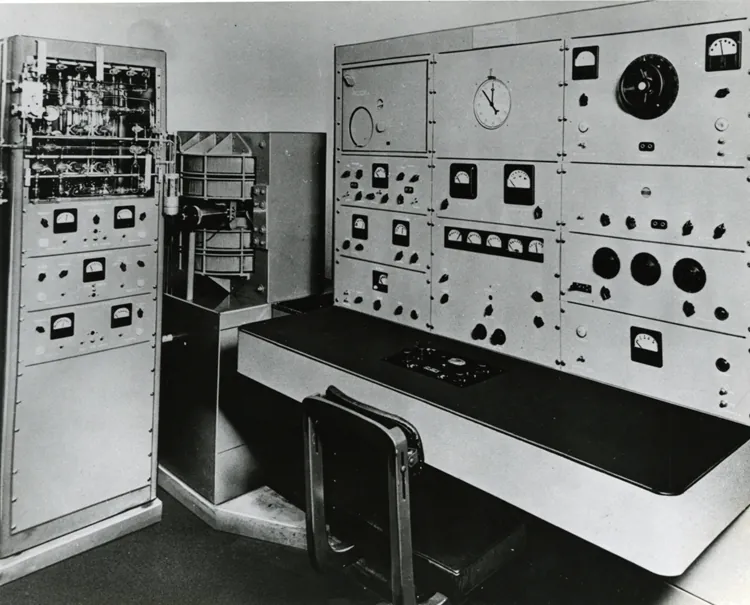
Mass spectrometry rests on a single measurement principle: a molecule is given an electric charge, and the instrument records the mass-to-charge ratio (m/z) of the resulting ion. As described in the Detect-ION capability statement, every mass spectrometer, regardless of vendor or form factor, executes this same fundamental operation. The output is a two-dimensional descriptor of every compound in a sample when the spectrometer is coupled to a separation front end, yielding both the time at which a compound elutes and the precise mass at which it is detected.
The technology is presented by researchers at Rockefeller University's Laboratory of Mass Spectrometry and Gaseous Ion Chemistry as one of biology's most powerful analytical methods, with applications in proteomics, metabolomics, drug development, and chemical security. Limitations in the sequential handling of ion species continue to drive instrument design, and the recent MultiQ-IT prototype described by Chait, Krutchinsky, and colleagues illustrates the field's push toward massively parallel ion processing. The same parallel logic is being applied to field-portable systems, where ambient ionization and non-proximate inlets are expanding the operating envelope beyond the laboratory bench.
A mass spectrometer is an analytical instrument that identifies and quantifies molecules by ionizing them and measuring the ratio of mass to electric charge. The category traces to the technology's invention around 1913 and now spans benchtop laboratory systems, portable field units, and research-grade high-resolution platforms. Contemporary development focuses on parallelization of ion processing, ambient ionization, and integration with separation techniques such as gas chromatography.
Chapter 1 / 06
Fundamentals and Working Principle
Every mass spectrometer executes a four-stage sequence: sample introduction, ionization, mass analysis, and detection. As stated in the Detect-ION capability text, a molecule is ionized, meaning it is given an electrical charge, and the instrument measures its mass-to-charge ratio (m/z), effectively weighing the molecule with high precision. The mass analyzer separates ions according to m/z, and the detector registers the ion population at each mass channel. The full data record is a mass spectrum in which intensity is plotted against m/z.
Resolution is the single parameter that defines what the instrument can resolve. A conventional unit-resolution instrument reports a compound's nominal mass, enough to say a molecule weighs approximately 204. A high-resolution mass spectrometer (HRMS) resolves that same measurement to several decimal places. Detect-ION's capability statement gives a worked example: two molecules near 204 amu, one built around a nitrogen atom, the other built around a carbon-and-hydrogen group in its place, differ in exact mass by approximately 60 parts per million. That gap is invisible to a unit-resolution instrument but is resolved cleanly by a high-resolution system, allowing assignment of an elemental formula and separation of compounds that overlap or co-elute.
Coupling to a separation technique yields a two-dimensional descriptor for every compound in a sample. Detect-ION's reference workflow pairs mass spectrometry with gas chromatography, which separates a mixture by transit time through a column, so each compound is described by when it elutes and what it weighs. The Detect-ION CLARION platform is described as a unit-resolution instrument resolving to approximately 1 amu, comparable to benchtop GC-MS systems used for confirmatory chemical identification, and identifies compounds by matching two independent descriptors simultaneously: chromatographic retention time and the full mass spectral fragmentation signature of the compound.
The historical record places the invention of mass spectrometry around 1913. The Rockefeller University news release, quoting Brian T. Chait of the Laboratory of Mass Spectrometry and Gaseous Ion Chemistry, frames the technique as one of biology's most powerful analytical tools, used to identify and quantify molecules. The same source notes that most current instruments still analyze ions sequentially, one or just a few ion species at a time, which limits the detection of rare molecules in complex biological samples. Andrew Krutchinsky, senior research associate in the Chait lab, characterized the parallelization concept as obvious in principle but not obvious to implement in mass spectrometry hardware.
The MultiQ-IT prototype described in the Rockefeller release illustrates the working principle extended to parallel operation. According to the ScienceDaily summary, the device emerged from long-term research on how molecules move through nuclear pore complexes, structures that distribute traffic across many small openings rather than forcing everything through a single path. The prototype is described as a newly designed ion-trapping chamber intended to replace a key part of traditional mass spectrometers. The Rockefeller release states that the prototype can cool, trap, filter, and redirect over a billion ions simultaneously, a capability the team reports as improving dynamic range and signal-to-noise.
Chapter 2 / 06
Specifications and Key Parameters
The most consequential specification for a mass spectrometer is resolving power, expressed as the ability to distinguish ions at adjacent m/z values. Detect-ION defines the two operational regimes: unit-resolution instruments resolving to approximately 1 amu, and high-resolution mass spectrometers that resolve the same measurement to several decimal places. The published HRMS example cites a 60 part-per-million mass difference between two species near 204 amu as a gap resolved by HRMS but invisible to a unit-resolution instrument. This is the parameter on which identification confidence, elemental formula assignment, and the ability to separate overlapping or co-eluting compounds depend.
Mass range, scan speed, dynamic range, and signal-to-noise ratio are the standard performance parameters referenced across the category. The Rockefeller release reports that the MultiQ-IT prototype is designed to cool, trap, filter, and redirect over a billion ions simultaneously, and that the architecture is described as dramatically improving dynamic range and signal-to-noise. ScienceDaily's coverage of the same prototype indicates the work is intended as a framework for building faster and more sensitive instruments, framing these parameters as the targets of the parallelization work rather than as published numerical specifications of a commercial product.
Front-end coupling is a defining specification. The Detect-ION capability statement describes both reference HRMS and the unit-resolution CLARION platform as configured as thermal desorption gas chromatography–mass spectrometry (TD-GC-MS) systems. Gas chromatography separates the mixture into individual components by transit time through a column, so the combined TD-GC-MS architecture yields a two-dimensional descriptor of retention time and mass for every compound. The Navy STTR topic DON26TZ01-NV004 separately identifies high-resolution systems and tandem mass spectrometry (MS/MS) as the two analytical approaches that provide the chemical detection and identification capability required for non-proximate field operation.
For portable and field-portable units, Size, Weight, and Power (SWaP) become gating specifications. The Navy STTR topic DON26TZ01-NV004 calls for a detailed design and parts inventory for a field portable mass spectrometer that will couple to a flexible non-proximate inlet, with explicit consideration of SWaP requirements and how the instrument will interface and operate on a robotic arm on a rover. The same topic calls for the system to be operational in varying levels of humidity and temperature, and to detect a wide array of chemicals, which places environmental tolerance and breadth of chemical coverage into the specification set alongside mass spectral performance.
Throughput, in the sense of molecules processed per acquisition, is treated by the Chait lab as a category-defining parameter. The Rockefeller release notes that the MultiQ-IT prototype was developed to overcome the sequential analysis of one or just a few ion species at a time, and the prototype is described as capable of handling a billion ions simultaneously, an architecture the researchers compare to the parallelization that took genome sequencing from a billion-dollar effort to a sequencing cost of around one hundred dollars. ScienceDaily frames the same prototype as a framework for faster and more sensitive instruments, with parallelization of ion processing treated as the design target rather than as a published line item on a product datasheet.
Parameter
Unit-resolution GC-MS (Detect-ION CLARION)
High-resolution mass spectrometry (Detect-ION reference method)
Field portable with flexible inlet (NAVAIR DON26TZ01-NV004)
MultiQ-IT research prototype (Rockefeller / Chait lab)
Operating principle
Ionize molecules, measure mass-to-charge ratio (m/z); thermal desorption gas chromatography–mass spectrometry (Detect-ION)
Ionize molecules, measure m/z to several decimal places; high resolution mass spectrometry (Detect-ION)
Portable mass spectrometer coupled to a flexible non-proximate inlet on a robotic arm; high-resolution or tandem MS/MS (NAVAIR)
Reengineered ion-trapping chamber that cools, traps, filters, and redirects ions in parallel (Rockefeller / ScienceDaily)
Resolving power
Approximately 1 amu, comparable to benchtop GC-MS (Detect-ION)
Resolves to several decimal places; resolves ~60 ppm mass difference in the 204 amu example (Detect-ION)
High-resolution or tandem MS/MS as cited by NAVAIR; specific resolving power not published
Not published as a numerical specification in the source materials
Identification method
Two independent descriptors at once: chromatographic retention time plus full mass spectral fragmentation signature, against a library (Detect-ION)
Accurate mass to several decimal places; assign elemental formula, separate overlapping compounds (Detect-ION)
Real-time mass spectra and chemical data at the source; remote red light / green light results to the operator (NAVAIR)
Framework for faster, more sensitive instruments; specific identification workflow not published
Dynamic range / signal-to-noise
Not specified in source materials
Not specified in source materials
Not specified in source materials
Dramatically improved dynamic range and signal-to-noise reported in the prototype (Rockefeller)
Throughput / parallelism
Sequential unit-resolution measurement; not specified as a parallel operation (Detect-ION)
Not specified as a parallel operation in source materials
Real-time data collection at the source; throughput not specified (NAVAIR)
Cool, trap, filter, and redirect over a billion ions simultaneously (Rockefeller)
Size, Weight, and Power (SWaP)
Not specified in source materials
Not specified in source materials
Design and parts inventory required, with explicit SWaP requirements for a robotic arm platform (NAVAIR)
Not specified in source materials
Environmental tolerance
Not specified in source materials
Not specified in source materials
Operational in varying levels of humidity and temperature (NAVAIR)
Not specified in source materials
Detection targets
Compounds characterized on a reference instrument and entered into a chemical library (Detect-ION)
Wide array of chemicals; trace signal identification (Detect-ION)
Wide array of chemicals; explosives and chemical warfare agents demonstrated at distances up to 3 meters (NAVAIR)
Rare molecules in complex biological samples; single-cell proteomics and metabolomics as the motivating application (Rockefeller)
Chapter 3 / 06
Types and Configurations
High-resolution mass spectrometry (HRMS) is presented by Detect-ION as the reference method for establishing, testing, and periodically re-confirming what portable platforms measure. The reference method is configured as a thermal desorption gas chromatography–mass spectrometry (TD-GC-MS) system and operates by resolving m/z to several decimal places. The HRMS configuration is described as the analytical foundation against which rapid point-of-care measurements are validated, rather than as a field-deployable unit in its own right.
Unit-resolution GC-MS is the configuration used in the Detect-ION CLARION platform. CLARION is described as a portable gas chromatography–mass spectrometry platform that analyzes the volatile chemistry of a rapid, non-invasive breath collection, on the order of two minutes, at the bedside, in the clinic, or in the field. Its resolving power is approximately 1 amu, comparable to benchtop GC-MS systems used routinely for confirmatory chemical identification. The configuration identifies compounds not by exact mass but by matching two independent descriptors at once, chromatographic retention time and the full mass spectral fragmentation signature of the compound, against a rigorously developed chemical library.
Ambient ionization mass spectrometry is the configuration the Navy STTR topic identifies as the basis for proximate detection with no sample preparation, if the test subject can be placed in front of the mass spectrometer inlet. The topic lists a plethora of ambient ionization sources for drug, chemical warfare, explosive, and environmental detections of bulk objects in their original form factors with no sample preparation. Where the test subject cannot be placed in front of the inlet, swab and contact transfer touch spray sources have been developed to sample an area and bring the sample to the mass spectrometer, at the cost of requiring a trained user and introducing sampling error.
Non-proximate mass spectrometry is the configuration targeted by NAVAIR topic DON26TZ01-NV004, which calls for a portable mass spectrometer outfitted for proximal detection with a flexible inlet on a land-based robot. The topic cites published work in which explosives and chemical warfare agents were sampled from ambient surfaces at distances of up to 3 meters from the mass spectrometer using a rigid inlet, and notes that the rigid-inlet configuration would be difficult to adapt to a robotic arm on a rover such as those used by Explosive Ordnance Disposal (EOD). The proposed configuration is a flexible, positionable non-proximate inlet or ion transport device coupled to a field portable mass spectrometer, with the inlet and ionization source combination ruggedized and manipulated by a robotic arm to move both to position for sampling.
Research-grade parallel architectures are illustrated by the MultiQ-IT prototype. The Rockefeller release describes MultiQ-IT as a newly designed ion-trapping chamber intended to replace a key part of traditional mass spectrometers. ScienceDaily reports that the device is a cube-shaped chamber. Both sources describe the architecture as inspired by nuclear pore complexes, structures that distribute traffic across many small openings rather than forcing everything through a single path. The prototype configuration is presented as the first big step toward instruments that read the full molecular contents of a single cell, track thousands of chemical reactions at once, and accelerate drug development. Corona, listed in the ACS Analytical Chemistry abstract, is a separate virtual mass spectrometer configuration that simulates instrument data acquisition through the playback of previously acquired data, used for development rather than measurement.
Chapter 4 / 06
Selection Criteria for Procurement
Resolution is the primary selection criterion when the measurement is being defended analytically. Detect-ION's capability statement is explicit that accurate mass at the level of several decimal places is often the only thing standing between a correct answer and a wrong one, and that with accurate mass at this level the laboratory can assign a molecule's elemental formula, separate compounds that overlap or co-elute, and identify a trace signal with a level of confidence that a lower-resolution instrument simply cannot offer. For procurement, the question is whether the application requires confident assignment of elemental formula, in which case HRMS is the reference method, or whether confirmatory identification against a pre-built library is sufficient, in which case a unit-resolution GC-MS configuration is described as adequate.
Throughput and dynamic range are the selection criteria foregrounded by the Chait lab's parallelization work. The Rockefeller release frames the MultiQ-IT prototype as a response to instruments that do this sequentially, one or just a few ion species at a time, often lacking the exquisite sensitivity needed to identify rare molecules in complex biological samples. The motivating applications are single-cell proteomics and metabolomics, where the most abundant species may be millions of times more prevalent than the rarest. For procurement in these application areas, the published rationale is that greater ability to detect faint signals against an overwhelming background of more abundant species is required.
Front-end configuration is a procurement decision that interacts with sample type. Detect-ION couples mass spectrometry to gas chromatography, separating a mixture into its individual components by transit time through a column. The Navy STTR topic separately enumerates ambient ionization sources for drug, chemical warfare, explosive, and environmental detections of bulk objects in their original form factors with no sample preparation, as well as swab and contact transfer touch spray sources for cases where the test subject cannot be placed in front of the mass spectrometer inlet. The selection criterion is the form factor of the test subject relative to the inlet, and the consequent tolerance for sampling error.
Portability and integration impose hard constraints on field procurement. The NAVAIR topic calls for a detailed design and parts inventory for a field portable mass spectrometer that will couple to a flexible non-proximate inlet, taking into consideration Size, Weight and Power (SWaP) requirements and how it will interface and operate on a robotic arm on a rover. The same topic requires the inlet and subsequent ionization source combination to be ruggedized and manipulated by a robotic arm to move both to position for sampling, and requires remote red light / green light results to the operator from a standoff distance. The instrument must be operational in varying levels of humidity and temperature, and able to detect a wide array of chemicals.
Reference-grade validation is a procurement prerequisite for any rapid field test. Detect-ION states that every target compound must first be characterized on the reference instrument and entered into the portable platform's library before the portable platform can call it in the field, and frames reference-grade chemistry as a prerequisite for a rapid result rather than a parallel activity. For procurement, the published position is that a point-of-care measurement depends entirely on the analytical foundation beneath it, so a HRMS reference method is treated as a precondition for the unit-resolution field platform rather than as an alternative to it.
Chapter 5 / 06
Standards, Compliance, and Testing
Identification under confirmatory testing is treated by Detect-ION as a two-descriptor requirement. The CLARION unit-resolution platform identifies compounds not by exact mass but by matching two independent descriptors at once: chromatographic retention time and the full mass spectral fragmentation signature of the compound. That combination is described as specific enough to support confirmatory identification, but only against a rigorously developed chemical library. The published requirement is that every target compound must first be characterized on the reference instrument and entered into the portable platform's library before the portable platform can call it in the field.
Reference-method re-confirmation is a recurring compliance activity. Detect-ION's capability statement describes HRMS as the reference method used to establish, test, and periodically re-confirm what CLARION measures, so that a rapid result never rests on assumption. The published workflow is that the reference method sits beneath the field platform as a continuous check, rather than as a one-time qualification event. Procurement documents built on this model therefore treat HRMS as a living reference instrument, not a one-off characterization tool.
For U.S. Navy STTR procurement under topic DON26TZ01-NV004, the projected Cybersecurity Maturity Model Certification (CMMC) level requirement is Level 2 (Self). The topic pre-releases on 4/13/26, opens to accept proposals on 5/6/26, and closes on 6/3/26 at 12:00pm ET. Phase I calls for a detailed model and parts inventory for a non-proximate mass spectrometry inlet or ion transport device that is flexible and positionable by a robotic arm, and for the ionization source to be selected to interface with the mass spectrometry inlet and demonstrated as movable by a robotic arm.
Environmental tolerance is stated as a testing requirement for field-portable procurement. NAVAIR requires the mass spectrometer to be operational in varying levels of humidity, temperature, and ability to detect a wide array of chemicals. The topic references prior published work in which non-proximate sampling of explosives and chemical warfare agents from ambient surfaces at distances of up to 3 meters from the mass spectrometer was demonstrated, and treats that published result as a benchmark against which the new flexible-inlet configuration is to be evaluated.
Adaptation of commercial field portable mass spectrometers is explicitly permitted under the NAVAIR topic. The Phase I description states that adaptation of a commercial field portable mass spectrometer to interface with a flexible inlet is allowable. The topic also requires the system to provide remote red light / green light results to the operator from a standoff distance, framing the human-factors output as a pass/fail compliance criterion rather than as an advisory display. The combination of CMMC Level 2, environmental tolerance, standoff operator display, and robotic-arm manipulation defines the compliance envelope for the procurement.
Chapter 6 / 06
Market Landscape and Buying Process
The market for mass spectrometers spans reference-grade HRMS, confirmatory benchtop GC-MS, portable point-of-care platforms, and field-portable robotic systems. Detect-ION operates a laboratory in Tampa, FL, and positions its CLARION platform as a portable gas chromatography–mass spectrometry platform that analyzes the volatile chemistry of a rapid, non-invasive breath collection, on the order of two minutes, at the bedside, in the clinic, or in the field. The Rockefeller Laboratory of Mass Spectrometry and Gaseous Ion Chemistry is presented as a research supplier of next-generation parallel architectures, and the MultiQ-IT prototype is described in the Rockefeller release as the first big step toward instruments that could read the full molecular contents of a single cell and accelerate drug development.
Government procurement is a defined channel for non-proximate and field-portable systems. The NAVAIR topic DON26TZ01-NV004, published by the Naval Air Systems Command, sets a fixed procurement calendar with a pre-release on 4/13/26, proposal opening on 5/6/26, and proposal close on 6/3/26 at 12:00pm ET. The component technology priority areas listed are Integrated Sensing and Cyber, and the topic is administered as an STTR (Small Business Technology Transfer) award. The objective is stated as designing, building, and operating a portable mass spectrometer outfitted for proximal detection with a flexible inlet on a land-based robot, to collect real time mass spectra and chemical data at the source.
Adaptation of commercial products is the published route to a field-portable non-proximate system. The NAVAIR topic calls for a detailed design and parts inventory for a field portable mass spectrometer that will couple to the flexible non-proximate inlet, and states that adaptation of commercial field portable mass spectrometer to interface with a flexible inlet is allowable. The buying process for non-proximate systems is therefore positioned as integration of an existing commercial portable platform with a new flexible inlet and a new ionization source, rather than as the development of a wholly new instrument.
Reference-grade validation is positioned as a precondition for the field-platform market, not a parallel activity. Detect-ION states that reference-grade chemistry is a prerequisite for a rapid result rather than a parallel activity, and that every target compound must first be characterized on the reference instrument and entered into the portable platform's library before the portable platform can call it in the field. The published commercial implication is that a HRMS reference instrument is part of the buying process for any CLARION deployment, since the portable platform depends on the reference method for library entry and periodic re-confirmation.
Software-side development tooling is part of the published landscape. Corona, described in the ACS Analytical Chemistry abstract, is a virtual mass spectrometer that simulates instrument data acquisition through the playback of previously acquired data, and is positioned as a development tool for instrument work. The published role of Corona in the buying process is to allow developers to simulate acquisition against a known dataset before committing to hardware integration. The MultiQ-IT prototype from the Chait lab is positioned in both the Rockefeller release and the ScienceDaily summary as a framework for faster, more sensitive instruments, rather than as a commercial product, and the parallelization blueprint it supplies is presented as a development direction for the broader market.
FAQ
What does a mass spectrometer actually measure?
A mass spectrometer measures the mass-to-charge ratio (m/z) of ionized molecules. As stated in the Detect-ION capability statement, the instrument ionizes a molecule by giving it an electrical charge and then records its m/z, effectively weighing the molecule. The output is a mass spectrum of intensity versus m/z, and when coupled to gas chromatography it becomes a two-dimensional descriptor of elution time and mass for every compound in the sample.
What is the difference between unit-resolution and high-resolution mass spectrometry?
A unit-resolution instrument reports a compound's nominal mass, enough to say a molecule weighs approximately 204. A high-resolution mass spectrometer resolves the same measurement to several decimal places. Detect-ION's published example shows two molecules near 204 amu differing by approximately 60 parts per million, a gap resolved cleanly by HRMS but invisible to a unit-resolution instrument. The CLARION platform is described as unit-resolution, resolving to approximately 1 amu.
Why is parallelization a focus of current mass spectrometry research?
Most mass spectrometers analyze ions sequentially, one or just a few ion species at a time, which limits the detection of rare molecules in complex biological samples. The MultiQ-IT prototype from the Chait lab is described as capable of cooling, trapping, filtering, and redirecting over a billion ions simultaneously, a capability reported as dramatically improving dynamic range and signal-to-noise. The researchers frame the parallelization goal against the precedent of genome sequencing and GPU computing.
What is a non-proximate mass spectrometer?
A non-proximate mass spectrometer is a portable system with an inlet capable of sampling analytes at a distance from the instrument, rather than requiring the sample to be placed at the inlet. The NAVAIR topic DON26TZ01-NV004 references prior published work in which explosives and chemical warfare agents were sampled from ambient surfaces at distances of up to 3 meters, and calls for a flexible inlet positionable by a robotic arm on a rover such as those used by Explosive Ordnance Disposal (EOD).
What is ambient ionization mass spectrometry?
Ambient ionization mass spectrometry is a configuration in which analytes are ionized with no sample preparation, provided the test subject can be placed in front of the mass spectrometer inlet. The NAVAIR topic cites a plethora of ambient ionization sources for drug, chemical warfare, explosive, and environmental detections of bulk objects in their original form factors. Where the test subject cannot be placed in front of the inlet, swabs and contact transfer touch sprays are described as the alternative, at the cost of requiring a trained user and introducing sampling error.
What is the role of high-resolution mass spectrometry in a point-of-care workflow?
Detect-ION positions HRMS as the reference method used to establish, test, and periodically re-confirm what the portable CLARION platform measures, so that a rapid result never rests on assumption. Every target compound must first be characterized on the reference instrument and entered into the portable platform's library before the portable platform can call it in the field. Reference-grade chemistry is therefore a prerequisite for a rapid result rather than a parallel activity.
What procurement channel exists for non-proximate field-portable mass spectrometers?
The U.S. Naval Air Systems Command publishes STTR topic DON26TZ01-NV004, which pre-releases on 4/13/26, opens to accept proposals on 5/6/26, and closes on 6/3/26 at 12:00pm ET. The component technology priority areas are Integrated Sensing and Cyber, the projected CMCM level requirement is Level 2 (Self), and the topic permits adaptation of a commercial field portable mass spectrometer to interface with a flexible inlet.