Global metal bonding adhesive consumption hit about 606,000 metric tons in 2025 at a weighted realised value near USD 9.74/kg, with the United States market alone clearing 85.1 KT at roughly USD 12.48/kg because aerospace, defense, and EV battery applications carry higher qualification overhead [S5].
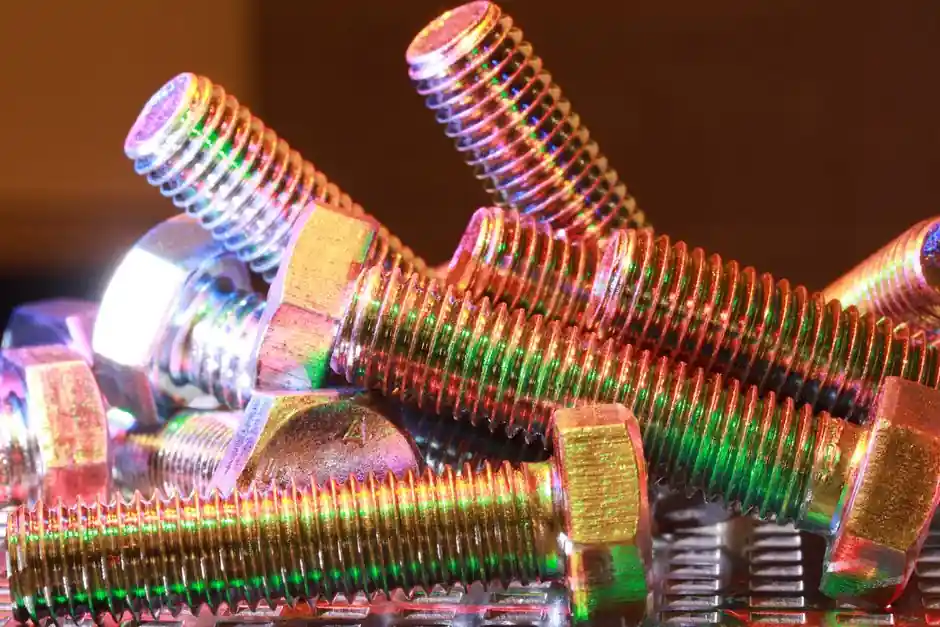
Mechanical fasteners (M5-M10 steel bolts, self-tapping screws, blind rivets) typically land in the USD 0.02-0.15 per-piece hardware range, but the per-joint cost of running a high-volume line with them includes drill bits, taps, nut runners, torque auditing, hole-quality inspection, and the cycle time penalty that engineering teams frequently forget to load into the spreadsheet [S2][S7].
Per-Unit Price vs Per-Joint Cost: Why the Spreadsheet Lies
Unit price per kg of adhesive and unit price per bolt are not comparable quantities, because the adhesive bead on a single joint may weigh only 0.5-3 g while a fastener replaces a drilled hole, a tapped thread, a washer, a nut, and 8-25 seconds of cycle time [S2][S3]. Industry cost analyses consistently warn that focusing only on material unit cost is misleading for high-volume production, and that the correct denominator is total cost per finished assembly [S7].
Permabond's published case data shows a customer moving from solvent welding a cap-and-cup assembly to a gap-filling adhesive cut product cost by 30% in a single step, by freeing the designer to use a cheaper plastic for the cup and by relaxing mold tolerances [S3]. That 30% number is the kind of line-item swing that never appears in a per-kg vs per-bolt comparison, because the savings live in the part design, the cycle time, and the rework rate rather than in the consumable line.
Where Adhesives Beat Fasteners on Total Cost
Adhesives win decisively on three cost lines in high-volume assembly: labor (drilling and fastener installation collapse into a single dispense step), material thickness (bonded joints distribute stress so thinner-gauge metal or glass can replace thicker stock), and finishing (no holes to mask, no visible hardware to color-match) [S1][S2][S3]. Fictiv's 2025 manufacturing guide notes that adhesive joints "distribute loads evenly and reduce vibration" compared with fasteners that "concentrate stress" [S1], which is the mechanical reason thinner substrates are acceptable in bonded designs.
The labor delta is the most defensible number on the shop floor. Adhesive dispensing stations are easily automated for one- and two-component systems, so consistent application and cure can run unattended, while mechanical fastening still needs torque-controlled drivers and audit steps for critical joints [S3]. Samad Adhesive's 2026 cost-benefit breakdown frames it bluntly: high-volume lines save seconds per unit, and seconds per unit compound into line-capacity gains that the per-kg number can never capture [S2].
Where Mechanical Fasteners Still Beat Adhesives
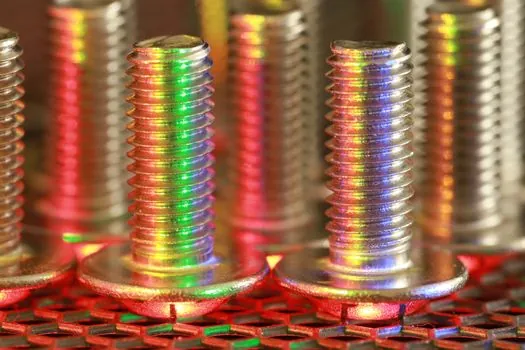
Mechanical fasteners retain clear advantages in three regimes: joints that must be opened for service, joints carrying very high point loads in tension or shear, and joints exposed to peel or cleavage forces that the bonded area cannot redistribute [S4][S8]. 3M's structural-adhesives whitepaper states that fasteners "may rip through and damage a thin substrate" while adhesives "provide even load distribution," which is correct, but the corollary is that a fastener's failure mode is visible, localised, and predictable, whereas an adhesive's is distributed and sensitive to surface prep, cure completeness, and environmental exposure [S8].
Patsnap Eureka's 2026 load-tolerance benchmark notes that pressure-sensitive adhesives carry higher material cost per unit joint than mechanical fasteners, and that environmental cycling (temperature, humidity, chemical contact) can degrade PSA performance in ways that a steel bolt simply does not experience [S4]. For field-serviceable panels, safety-critical structural connections, and any joint rated for cyclic dynamic loading above the adhesive's fatigue envelope, fasteners remain the right call.
Decision Matrix: Adhesive vs Fastener on Four Criteria
For a high-volume line choosing between a structural adhesive bead and a M6 bolt-and-nut on a steel bracket joint, the four decision criteria line up as follows. Cost per finished assembly: adhesive typically wins when cycle time, part consolidation, and finishing are loaded in, fastener wins when joints are few and service access is required. Load tolerance: fastener wins for concentrated point loads and peel, adhesive wins for distributed shear and vibration damping [S1][S4]. Process integration: adhesive wins on automated dispense-and-cure inline, fastener wins when a standard torque tool is already on the line [S3]. Service and rework: fastener wins decisively, because adhesives in the structural class (epoxy, MMA acrylic, PU) are permanent bonds with cure times of 5-45 minutes depending on chemistry and heat [S5][S6].
The 3M SA9860 structural epoxy cited in the 2025 U.S. market data targets chassis, battery boxes, and composite housings where fastener count reduction and weight savings dominate the cost equation [S5]. ThreeBond 3921/3926 acrylic reaches handling strength in roughly 5 minutes and practical strength in 15 minutes, which is the kind of cycle-time number a process engineer can plug directly into takt-time calculations [S5]. HB Fuller's 2020 case data shows structural adhesives providing "tensile strength in 12-45 minutes" for difficult-to-access locations where a rivet gun simply cannot reach [S6].
Selection Criteria for High-Volume Bonded Assembly
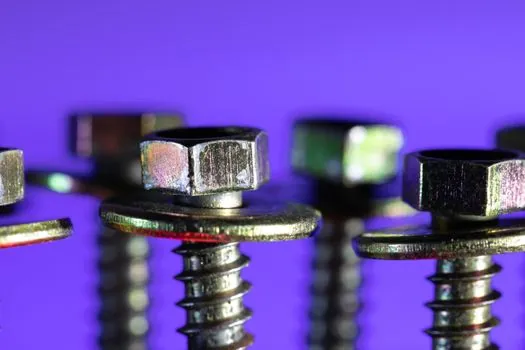
Three selection gates filter whether a high-volume joint should even be considered for adhesive conversion. First, the joint must tolerate a permanent bond; if service access is required, stop here and stay with fasteners. Second, the substrates must be compatible with the chosen adhesive chemistry (epoxy for metals and composites, acrylic/MMA for dissimilar metals and plastics, PU for flexibility, silicone for high-temperature and chemical resistance) [S1][S5]. Third, the production line must support the cure window, because a 45-minute room-temperature epoxy creates a fixture and floor-space burden that a 5-minute acrylic does not [S5][S6].
For a deeper look at how adhesive chemistry choice feeds into shop-floor process windows, the two-part epoxy pot-life working-time breakdown walks through the time buckets a process engineer actually has to plan around. For the joint-geometry side of the same problem, the lap vs butt adhesive joint shear strength comparison lines the two main bonded configurations up against fastener equivalents. When the question is whether to automate the dispense cell at all, the automatic molding line TCO breakdown gives the per-station cost math that frames any bonding-vs-fastening decision at line scale.
Limitations, Failure Modes, and Hidden Costs
Adhesive joints fail in three characteristic modes that fasteners do not: cohesive failure within the adhesive layer, adhesive failure at the interface (usually a surface-prep problem), and substrate failure where the bonded area pulls a thin face sheet apart [S1][S8]. Each mode is sensitive to a different process variable, which is why Assembly Magazine's 2011 hidden-cost analysis flagged that structural adhesives "are more cost-effective than engineers might think" only when surface prep, fixturing, and cure are correctly costed in [S9].
The hidden cost lines that routinely appear in switching studies include: surface preparation (degreasing, abrasion, primer, plasma or corona treatment for polyolefins), fixturing and jigs to hold the joint during cure, climate control of the bond area (most structural adhesives want 18-30 degrees C and 40-65% RH for reliable cure), and end-of-line inspection (destructive testing of coupon batches, ultrasonic or laser shear testing on a sampling basis) [S2][S7][S9]. Thrustin's 2026 cost-and-performance study frames the switching decision as one where adhesive materials appear more expensive up front but yield lower total cost once the line is rebalanced, which is the same pattern Assembly Magazine flagged fifteen years earlier [S7][S9].
Standards, Sourcing, and What to Track Next
There is no single global standard that pins a per-kg adhesive price to a per-bolt fastener price, because the cost-of-joining question is dominated by cycle time, labor, and yield rather than by a regulated ratio. The defensible reference points for an engineering team are: the global weighted realised adhesive value of about USD 9.74/kg (2025), the U.S. premium realisation near USD 12.48/kg driven by aerospace and EV-battery qualification, and a fastener unit hardware cost that typically sits 1-3 orders of magnitude below the adhesive's per-kg figure but multiplies across drill, install, and audit labor to land 3-10x higher per finished joint [S2][S5][S7].
Trackable signals for the next planning cycle: the metal bonding adhesives market is projected to reach USD 8.64 billion by 2032 at a 5.6% CAGR off the 2025 base of USD 5.90 billion, with industrial machinery and general assembly holding the largest end-use share at 25.9% [S5]. The auto and commercial-vehicle segment (20.5% share) and the EV-battery structural-bonding layer (Henkel's North American Battery Application Center, 3M SA9860) are the two demand pockets most likely to pull per-kg realisation upward through 2027, which narrows the cost gap with fastener-based assembly in any high-volume line already running structural bonding for other reasons [S5].
Component reference pages worth checking: industrial adhesive, locking assembly, and mechanical seal.