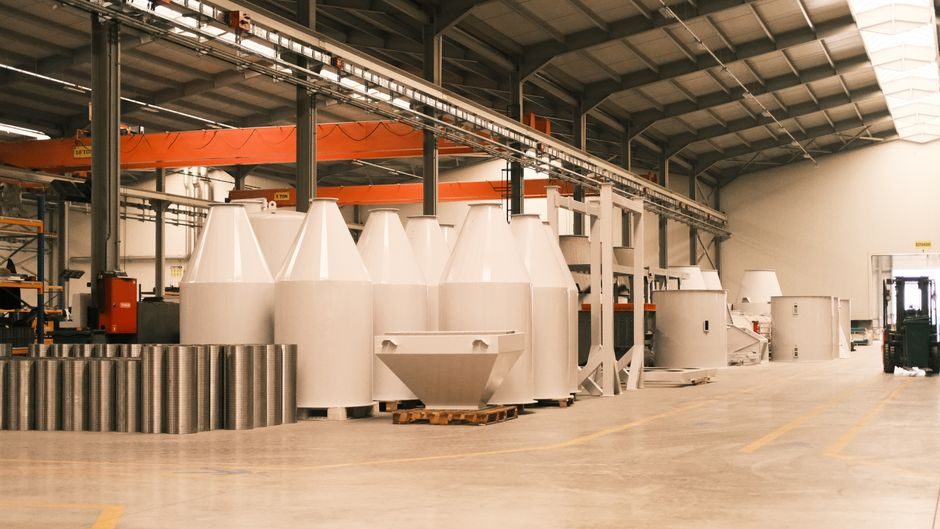
A bag filter is not a single product — it is a category that splits cleanly at the application boundary. On the heavy-industrial side, fabric filter bags inside a baghouse are specified against four engineering gates: gas-stream chemistry, particulate loading, peak temperature, and target capture efficiency, with polyester, polypropylene, acrylic, aramid (Nomex), PTFE, and fiberglass selected to match each gate [S1].
On the microbiological-lab side, the same words describe a different device: pre-sterilised homogeniser blendor bags with integral side-filtration membranes, where the selection criteria reduce to sample volume (400 / 2000 / 3500 ml), recovery method (pipette vs pour), and downstream assay compatibility [S2]. Confusing the two is the most common procurement error and a documented source of failed validations.
The Four Industrial Selection Gates
Selecting the wrong fibre is the leading root cause of premature bag failure in baghouse service, and OEM guidance lists four primary selection criteria applied in sequence: gas stream characteristics, chemistry compatibility, operating temperature, and filtration efficiency target [S1]. Fibre choice is downstream of these gates, not upstream of them — a bag rated for 260 °C will still fail in a 90 °C acid stream if the polymer chemistry is wrong [S1].
Fibreglass and PTFE (polytetrafluoroethylene) media are specified when continuous dry-side temperatures exceed 260 °C; aramid fibres such as Nomex are typically used up to 204 °C; acrylic and polyester are common below 150 °C; polypropylene is limited to roughly 90–95 °C wet service [S1]. Hydrolysis-resistant finishes extend polyester life in moist, acidic flue gas and are now treated as a default rather than an upgrade on cement-kiln and waste-to-energy baghouses.
Efficiency, Air-to-Cloth Ratio and Particulate Loading
Filtration efficiency in dust-collection service is normally expressed as a weight-based or count-based percentage against a defined micron cut, with high-efficiency bags commonly specified in the 99.9% to 99.999% range at 1–10 µm, depending on regulatory class [S1]. Air-to-cloth ratio (A/C, expressed in m³/min per m² of media) is the operating envelope behind that figure: reverse-air baghouses typically run at 0.8–1.2 m/min, pulse-jet at 1.2–2.4 m/min, and high-ratio pulse systems up to 3.0 m/min on non-friable dusts [S1].
Particulate loading is what couples efficiency to A/C: an inlet dust concentration above 50 g/m³ at the design A/C will blind a polyester felt within hours, while the same bag on a 5 g/m³ gas stream can run for 18–24 months between changes [S1]. When in doubt, OEM guidance is to size for the worst-case inlet load, not the average, and to de-rate A/C by 20–30% on hygroscopic or sticky dusts.
Material Decision Matrix for Filter Media

Across the six workhorse fibres, the practical envelope looks like this on the four primary gates: polyester — best cost, ≤150 °C, weak on alkalis and hydrolysis without finish; polypropylene — ≤95 °C wet, strong in acids and caustics, low cost; acrylic — better hydrolysis resistance than polyester, ≤140 °C; aramid/Nomex — ≤204 °C, good on CO and NOₓ streams, degrades in strong acids; fibreglass — ≤260 °C continuous, brittle under flex and moisture unless PTFE-membrane laminated; PTFE membrane laminate on a felt substrate — ≤260 °C, hydrophobic, suitable for sticky or sub-micron dust with surface filtration behaviour [S1].
Operating temperature and chemistry must be matched simultaneously; the decision is rarely a single-axis trade. A coal-fired boiler baghouse at 180 °C with SO₃ condensation will reject aramid and acrylic and typically specifies a PTFE-laminated fibreglass or a hydrolysis-resistant polyester, while the same temperature in a dry mineral-processing application can run standard Nomex without modification [S1]. The conservative rule is to check the lowest of (peak temperature + margin, chemical resistance class, abrasion resistance) and pick the most restrictive fibre.
Lab-Scale Sterility Filter Bags — A Different Selection Tree
For microbiological sample prep, the selection problem is engineered around the recovery step rather than around temperature. The Interscience BagFilter P (pipette-type) and BagFilter S (pour-type) product lines are multilayer composite film pouches with a side-mounted non-woven filter membrane; microorganisms pass through the filter during blending, leaving fibre debris out of the eluate — directly addressing the cross-contamination and pipette-clogging failures common with plain stomacher bags [S2].
Volumes cover 400 ml, 2000 ml (part number 111200), and 3500 ml in the P range, with the 400 ml format (e.g. BagFilter P 400) typically used for 25 g sample + 225 ml diluent in food-micro 1:10 dilutions [S2][S3]. The newer P-series bags add a pre-cut pipette port, a marked labelling zone, a printed volume scale, and a widened mouth for pipette insertion; the S (pour) and Pull-Up PCR variants are chosen when the downstream step is decanting or PCR-grade recovery respectively [S2]. Pre-sterilised, single-use, and batch-certified, these are not interchangeable with industrial filter bags and are sourced through laboratory supply channels rather than process-equipment vendors.
Selection Boundaries: Who Should Specify What
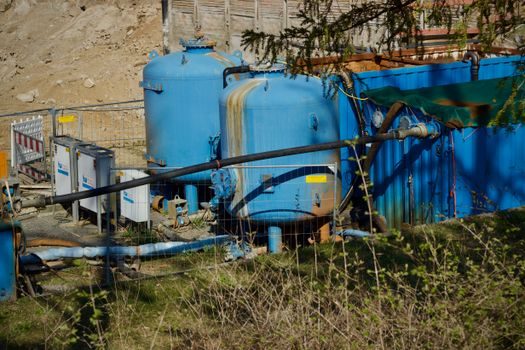
Engineers specifying a fabric filter bag for a cement mill, incinerator, or steel sinter plant should default to pulse-jet designs with a PTFE-laminated or hydrolysis-resistant polyester, A/C in the 1.2–1.5 m/min band, and a target efficiency ≥99.95% at the regulatory micron cut — fibreglass is reserved for sustained >200 °C service where flex-cycle life is acceptable [S1]. Food, pharma, and environmental-microbiology labs should default to a 400 ml BagFilter P for 25 g samples and a 3500 ml P or S format for pooled or higher-mass samples, then escalate to Pull-Up PCR only when nucleic-acid recovery is on the critical path [S2][S3].
Cross-specifying the two is the failure mode to avoid: an industrial felt will not pass sterility validation in a cleanroom, and a 400 ml homogeniser bag has no meaningful A/C or temperature rating in a baghouse context. The two product families share a name and a shape but not a procurement channel, a regulatory framework, or a test method.
Common Failure Modes and How Selection Prevents Them
Most premature baghouse failures trace back to a gate that was skipped rather than a defect in the bag itself. Blinding and high ΔP on day one almost always indicates A/C was sized to the average inlet load, not the peak; bag shrinkage and seam failure on commissioning points to undersized temperature margin; hydrolysis-driven tensile loss within six months on a moist-acid stream is the textbook signal that polyester was specified without a chemical-resistant finish [S1]. On the lab side, eluate turbidity after blending, pipette clogging, and PCR inhibition are the three signatures of a bag that was specified below the assay's purity requirement, and a switch to a membrane-equipped BagFilter P or Pull-Up format usually resolves them [S2].
The take-away for both markets is the same: lock the four (or three, for lab) selection gates first, then choose the model — not the other way round. A 5-minute check of temperature, chemistry, particulate load, and efficiency target is cheaper than a single unplanned baghouse outage, and a 5-minute check of sample volume, recovery method, and downstream assay is cheaper than a single re-validation cycle. The two product families are documented separately in the bag filter encyclopedia entry, the filter element reference, and the industrial filter overview; related selection logic for adjacent process equipment follows the same gate-first pattern in the basket strainer versus steam separator boundary guide and the industrial hinge material/duty gate guide.