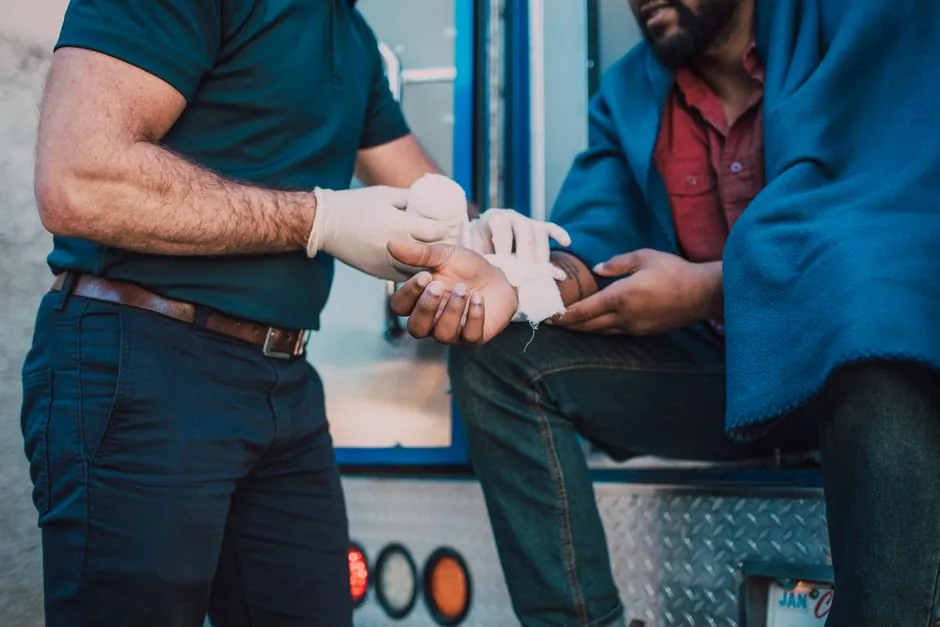
OSHA's construction first aid standard (29 CFR 1926.50) requires readily accessible supplies in a weatherproof container, with kits inspected at least weekly and restocked after use, while pointing employers to ANSI/ISEA Z308.1-2021 for the actual supply list [S3].
For most construction projects that means a Class B kit (higher quantities plus a tourniquet and a splint over Class A) inside a Type III water-resistant or Type IV impact/corrosive-resistant case, with eye wash, AED, burn and trauma supplies added by hazard, not by generic checklist [S3][S4][S6].
ANSI Class A vs Class B: Pick by Crew Size, Hazard, and Distance to Care
ANSI/ISEA Z308.1-2021 defines two kit classes, and the differences are concrete rather than cosmetic. Class A covers common workplace injuries (minor cuts, abrasions, minor burns and eye irritation) at quantities sized for typical office and retail risk. Class B contains the same supply families as Class A but in greater quantities, and must additionally include a splint and a tourniquet for fracture and severe-bleeding response [S4].
Class B is the practical default for construction: most sites are not low-hazard offices, and the splint plus tourniquet requirement directly maps to the fall and struck-by injury patterns OSHA tracks in construction. Sites with under roughly 25 workers in low-hazard tasks (interior finish, for example) can justify a Class A kit, but the moment work involves heights, hot work, chemicals, mobile plant, or remote locations, Class B is the conservative call. Crew size, hours from a clinic, and the language on the OSHA 300 log are the three variables that should drive the upgrade decision, not the purchasing department's catalog default [S3][S4].
A useful comparison frame: Class A is to office work what a 2A:10B:C extinguisher is to a server room, sized to the threat. Class B is the construction equivalent of a 4A:80B:C unit on a welding cart: heavier, more redundant, and built around a worst-case injury rather than a typical paper cut. Treat the choice the same way: a procurement shortcut to Class A on a high-hazard site is a documented liability, not a savings.
Container Types I-IV: Why Type III and Type IV Win Outdoors
ANSI/ISEA Z308.1-2021 also sets four container performance tiers, which matter as much as the contents because the case is what keeps the contents usable on a jobsite. Type I is intended for indoor fixed-mount use, Type II is portable but for low-damage indoor environments, Type III is portable and water-resistant for mobile indoor/outdoor use, and Type IV is portable and designed to resist corrosion, moisture, and impact in rough outdoor service [S4].
For most construction work, Type III is the floor, not the ceiling, because crews move between staging areas, lifts, and laydown yards, and a fixed-mount Type I case is unrealistic. Type IV is the right answer for utility crews, oil and gas, marine/heavy civil, and any site where the kit rides on a vehicle or in an exterior rack. Concrete pour days, winter shutdowns, and dusty demolition phases all punish a case that is not sealed against moisture and grit, and a wet or contaminated bandage is the same as no bandage at the moment it is needed [S3][S4][S6].
OSHA's construction rule reinforces this with operational requirements: supplies must be stored in a weatherproof container, individually sealed by supply type, checked before being sent to each job, and inspected at least weekly on site [S3]. A Type III or IV case with a gasketed lid and an inventory checklist taped to the inside of the lid is the simplest way to make that weekly inspection a 60-second task instead of a 20-minute hunt.
Beyond the Baseline: Eye Wash, AED, Burn, and Trauma Add-Ons
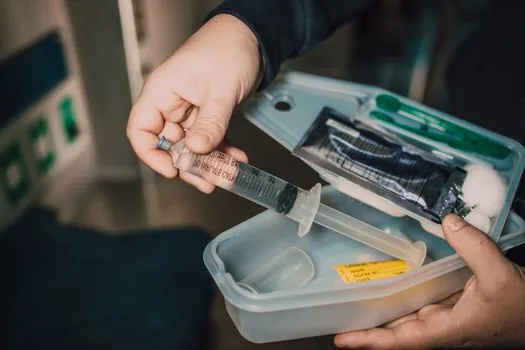
A Class B kit is the floor, not the finished answer, because the most common construction injuries (chemical splash to the eye, thermal burn from cutting, crush and laceration from handheld tools, cardiac arrest from electrocution) all sit outside the Class B supply list. A site-specific hazard register should drive four layered add-ons: portable or plumbed eye wash, an AED, a burn module, and a trauma module with tourniquet and hemostatic gauze [S2][S6].
Eye wash is required wherever corrosive materials are present, and portable squeeze bottles buy the seconds between incident and a plumbed ANSI Z358.1 station; chemical splash incidents degrade outcomes minute by minute, so the path-of-travel from the hazard to flushing fluid is itself a specification. AED deployment thresholds vary by jurisdiction: Ontario construction projects with 20 or more workers and a duration of 3 months or more became AED-mandatory on January 1, 2026, and the same logic (large crews, hot work, electrocution exposure, remote sites) is a defensible trigger in jurisdictions where it is not yet codified [S2].
Burn modules add burn dressings and burn gel sachets beyond the Class B baseline, sized to welding, soldering, and hot-work permit tasks. Trauma modules add extra-large wound dressings, hemostatic gauze, and a second tourniquet (one staged near the kit, one staged near the highest-frequency hazard area). For sites with mobile fuel handling, battery banks, or arc-flash tasks, this layering is the difference between a recordable first aid case and a fatality; see also the Eye Wash Station Selection for Confined Space Entry reference for path-of-travel and flushing-fluid layout logic that pairs with the kit spec.
Placement, Inspection, and Restock: The Weekly Cadence That Catches Failures
Even a perfectly spec'd kit fails if it is buried in a site office or in a locked gang box. The layout rule is simple: the time from incident to kit open should be measured in seconds, not minutes, which on a 200 by 200 m site means multiple kits staged at the trade-cluster level (formwork, steel, mechanical, electrical, concrete), not a single central kit. Posted latitude and longitude, plus a tested 911 routing or on-site comms channel, are the other half of the access requirement, because the kit is only as useful as the ambulance it feeds [S2][S3].
Inspection cadence is weekly under the construction rule, with a documented check before the kit leaves the yard and again on site; restock is required after every use, with sealed-unit supplies (burn gel, eye wash pods, sterile dressings) checked for expiration monthly. In hot, dusty, or freezing conditions, monthly is not enough: saline eye wash pods and burn gel freeze or degrade outside roughly 4 to 35 °C storage, and the inspection log should record both contents and storage temperature [S2][S3][S6].
The most common field failure is not understocking, it is expired or opened stock that nobody logged. A laminated inventory card with lot numbers and expiry dates, signed off weekly, turns that failure mode into a 10-second visual check rather than a post-incident finding. The wider safety stack on a site (lifts, anchors, harnesses, eye wash stations) follows the same pattern: spec, place, inspect, log, and the kit belongs in that same loop rather than treated as a separate compliance chore.
Procurement Map: What to Order, in What Quantities, and When to Walk Away
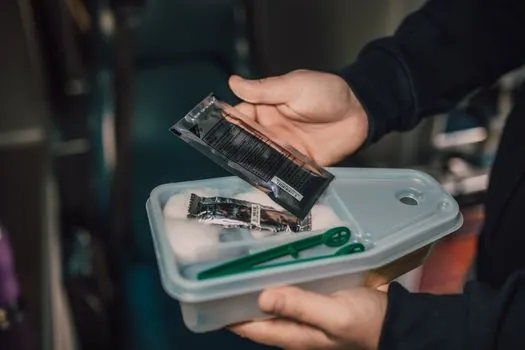
A defensible Class B construction kit order, before site-specific add-ons, typically includes: a Type III (or Type IV for outdoor/vehicle-staged) gasketed case, 50 to 100 assorted adhesive bandages in mixed sizes, 10 to 25 sterile gauze pads, multiple rolled gauze, a trauma dressing and an extra-large wound dressing, cold packs, burn dressings and burn gel, an eyewash pod or two, a CPR barrier, nitrile gloves, a splint, a tourniquet, scissors, a tweezer, an antiseptic wipe count sized to crew size, and a printed first aid guide [S2][S4][S6][S7].
On top of that base, layer by hazard: eye wash stations or bottles for chemical and dust zones, AED unit(s) for crews over 20 or for hot-work/electrical zones, hemostatic gauze and a second tourniquet for mobile-plant and demolition phases, and a heat-stress module (cooling towels, oral rehydration salts) for summer civil work and confined-space entries. For procurement teams, the most expensive mistake is buying a labeled "OSHA/ANSI" Class A kit for a high-hazard crew and treating the label as a spec, when the real spec is the hazard register plus the Class B supply list in ANSI/ISEA Z308.1-2021 Table 1 [S3][S4][S7].
A related procurement trap is buying on unit price rather than on lot/expiry traceability: two cheap kits with unverified supply origin and missing lot numbers will fail an audit and a field inspection equally, while a mid-priced kit with sealed-by-supply packaging and dated components survives both [S3][S6]. For the broader context on how kit selection sits next to powered access and packaging decisions on a typical build, the Construction Tools reference covers adjacent equipment selection for site crews.
Limits, Failure Modes, and Signals to Track
A first aid kit does not replace trained responders, plumbed eye wash, or emergency medical services; OSHA's construction rule explicitly requires employers to arrange prompt medical attention before work starts, provide transport or a tested communication channel for ambulance dispatch, and post location data where employees can see it [S3]. A Class B kit with a tourniquet, in untrained hands, can also worsen an injury; pair the kit with documented first aid, CPR, and AED training and a drills cadence, otherwise the tourniquet and AED are display hardware, not response hardware [S2][S3].
Two other constraints to plan around: (1) temperature-sensitive supplies (eye wash pods, burn gel, some antiseptics) have a narrower storage window than the kit case itself, so outdoor staging without shade or heat is a documented failure mode; (2) supply lists change between ANSI revisions, and OSHA's appendices still reference older ANSI editions, which is why most employers follow ANSI/ISEA Z308.1-2021 even though OSHA has not adopted it as a binding rule [S3][S4]. The watch items over the next 6 to 12 months are AED mandate expansions outside Ontario, any revision to ANSI/ISEA Z308.1 supply tables, and tightening state-level enforcement on heat-stress module stocking for summer civil and roofing work.
Spec-level background on the components involved: first aid kit, and dye penetrant kit.