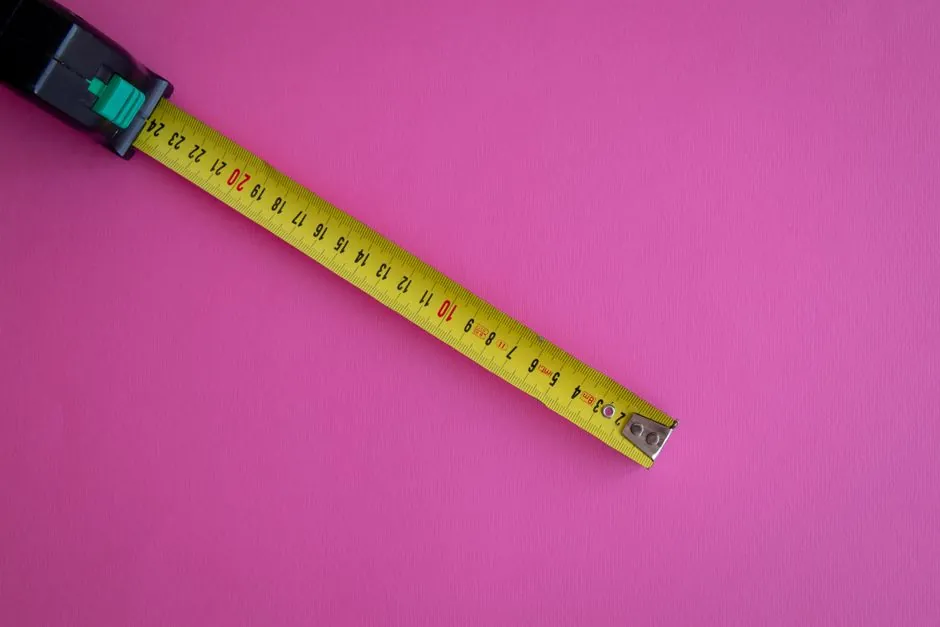
Non-contact displacement measurement covers four mature technologies: laser triangulation, confocal chromatic, capacitive, and eddy-current; each trades standoff distance, target material compatibility, and environmental immunity differently [S1][S4][S5].
Contact measurement, typified by LVDT and touch-probe systems, is the reference for sub-micrometer bench work and any application where the target is stationary, accessible, and immune to probe pressure; non-contact measurement is preferred for moving, hot, or delicate targets where physical contact would alter the reading [S2][S3][S8].
How the Four Non-Contact Technologies Differ in Practice
Laser triangulation projects a beam onto the target, images the reflected spot on a position-sensitive detector, and converts spot position to distance via the triangle formed by laser, lens, and target; it is the default choice for high-speed, short-to-medium standoff work on diffuse surfaces [S4]. Confocal chromatic sensors use wavelength-selective optics so that only one wavelength is in focus at the target surface, giving sub-micrometer resolution on shiny, transparent, or multilayer targets where triangulation struggles with specular reflection [S4][S5].
Capacitive sensors treat the target as the grounded plate of a parallel-plate capacitor; they deliver subnanometre resolution with high temperature and signal stability on large, flat, conductive surfaces in clean environments, and are unsuitable where laser plume, oil mist, or thick non-conductive coatings appear in the gap [S5]. Eddy-current sensors (a branch of the inductive family) drive an AC coil, sense the impedance change as eddy currents form in a conductive target, and can "see through" non-conductive layers such as oil, paint, or plastic; they tolerate dirt, pressure, and high temperature, and are widely used for focus-height control in laser machining cells [S5]. A worked selection on the spectral-confocal side appears in Point vs Line-Spectral Confocal Displacement Sensors: Spec Comparison, which lines the two confocal architectures up against resolution and standoff.
When Contact Still Wins on Accuracy
Contact measurement systems are notably less susceptible to environmental interference such as ambient light, airborne contaminants, and air-index variations, all of which can shift a non-contact reading by micrometers over a few millimeters of standoff [S3]. A trained metrology engineer will still reach for a contact probe or LVDT when the part is fixtured, temperature-stabilized, and the budget is for a calibrated absolute error below 1 micrometer rather than a fast relative reading.
The mechanical contact does introduce friction, finite contact force, and the risk of surface marring, so contact is a poor fit for soft, coated, or high-speed moving targets; non-contact measurement methods avoid those penalties and typically support faster response and higher sampling rates than contact equivalents [S2][S8]. The trade-off is bandwidth for clean air: laser triangulation on a 25 mm standoff can hit tens of kilohertz sample rates, while the same target measured by a contact stylus is limited by probe mass and stylus tip resonance.
Selection Criteria That Drive the Decision
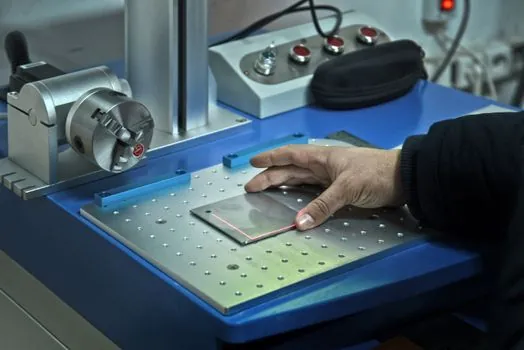
Five criteria reliably separate the options: (1) target material, (2) standoff and measuring range, (3) required bandwidth, (4) environment, and (5) interface/electrical measurement compatibility. A baseline reference for electrical measurement signals, including analog current loops and amplifier chains feeding these sensors, lives in the electrical measurement entry. The reference page on displacement sensor architecture frames the underlying measurement chain, while displacement position covers how raw distance is converted into a usable position signal. [S5]
On target material: eddy-current works only on conductive targets, capacitive works best on conductive or grounded flat surfaces, laser triangulation needs a diffuse or controlled-specular return, and confocal chromatic tolerates shiny, transparent, and multilayered parts that defeat the others [S4][S5]. On standoff: laser triangulation scales from a few millimeters to several hundred millimeters, confocal chromatic is typically limited to short working distances (a few millimeters to tens of millimeters) but with sub-micrometer resolution, and eddy-current standoff is sensor-diameter-dependent, with larger diameters trading range for averaging over rough surfaces [S5].
Comparison of the Main Sensor Options on Four Criteria
For the four dominant options, the trade looks like this on a typical 2026 spec sheet: laser triangulation gives micrometer-class resolution at standoff to a few hundred millimeters and sample rates above 10 kHz, but is sensitive to surface finish, color, and ambient light; confocal chromatic gives sub-micrometer to nanometer resolution at short standoff on glossy or transparent targets, at moderate sample rates; capacitive gives subnanometer resolution on flat conductive surfaces in clean air, with poor behavior around plume and oil; eddy-current gives sub-micrometer to micrometer resolution on conductive metals, with high immunity to dirt, oil, and temperature, and is the right pick for in-process focus control in a laser machining cell [S4][S5].
For background physics and the chromatic confocal principle, the confocal displacement sensor reference is the natural deeper read; for triangulation-based designs the laser displacement sensor entry covers spot geometry, linearity, and the typical SMR/MR ratios. Contact LVDTs, in contrast, deliver sub-micrometer linearity over millimeters to hundreds of millimeters of travel, are immune to most optical interference, and remain the calibration reference against which the non-contact options are benchmarked on static parts [S3].
Matching Sensor to Use Case
Battery cell expansion testing, crash-test deceleration profiling, hydro-turbine blade alignment, and foundation-pile set measurement are all displacement problems that the field solves with laser triangulation or laser rangefinder sensors because the target is either hot, moving, or hard to fixture [S4]. Diesel engine support-rail vibration monitoring uses multiple non-contact laser sensors on idling and heavily loaded sets, since contact accelerometers would mass-load the structure and skew the amplitude reading [S4].
For OEM integration into volume equipment, non-contact linear displacement sensors are favored over contact types when the moving part is a small, fast, or non-ferromagnetic target, or when the application must tolerate a non-contact gap for lubrication, isolation, or wear reasons [S10]. Precision motion systems in machine tools and semiconductor stages typically combine a non-contact sensor (capacitive or eddy-current) for fine positioning with a contact linear encoder for absolute reference, accepting the cost of two sensors to get nanometer-level closed-loop control [S5][S9].
Limits, Failure Modes, and What to Watch For
Every non-contact option has a defined failure mode: laser triangulation drifts with surface color, gloss, and angle; confocal chromatic has a tight standoff window and requires the target to sit inside the calibrated depth of field; capacitive sensors saturate or read incorrectly when conductive debris, oil films, or laser plume sit between sensor and target; eddy-current sensors must be calibrated to the target's electrical and magnetic properties because output signal and linearity depend on the alloy under test [S5]. The high-precision machine-tool literature confirms that no single technology dominates across all axes, and that sensor selection must follow the specific error budget rather than generic accuracy claims [S9].
Contact sensors fail in their own predictable ways: stylus wear, probe-force-induced deflection on soft parts, mechanical hysteresis in the LVDT core, and thermal expansion of the probe stack on warm parts, all of which a non-contact system avoids at the cost of accepting optical or electromagnetic sensitivity [S2][S3]. Engineers specifying into rotating machinery should also recall that displacement sensors, including non-contact eddy-current probes, are preferable to accelerometers when the moving mass cannot be disturbed by an added seismic mass or when the frequency content is dominated by shaft runout rather than casing vibration [S7].
Sourcing, Standards, and Trackable Signals
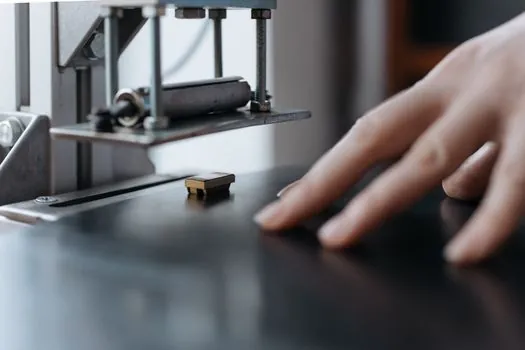
For lab and production use, micrometer-class laser triangulation sensors (AR500, AR700, AR1000 class devices) ship with analog 4-20 mA or voltage outputs, with the AR500 and AR700 used in crash-test and hydro-turbine alignment work described in published case studies [S4]. Capacitive and eddy-current sensors for sub-micrometer positioning are sold as integrated probe plus controller packages, with sensor diameter and effective spot diameter scaling together with measuring range [S5].
The over-arching angular contact bearing and motion-system context matters when a displacement sensor is paired with a precision stage, because the sensor's error floor sets the achievable positioning repeatability of the entire axis.