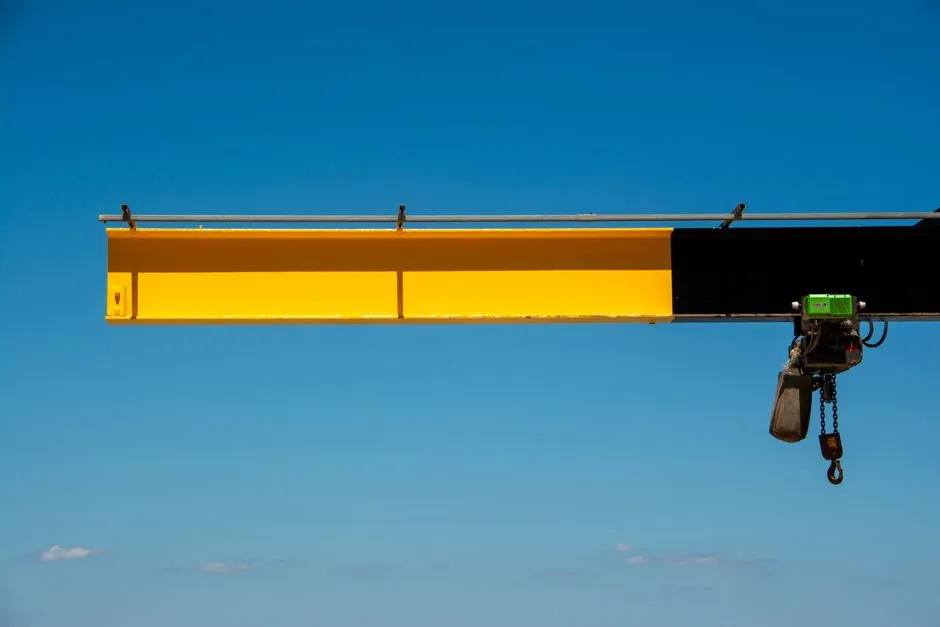
A crane scale is a self-contained dynamometer hung from a hoist, crane, or gantry, with the load cell integrated between the lifting hook and the upper shackle, while a platform scale is a floor- or pit-mounted weighbridge whose load cell sits beneath a flat steel deck for rolled, palletised, or trolley-borne goods.
For 2026 spec sheets, the dividing line is the load vector: tension (the crane pulls up, the load hangs in free air) versus compression (the load rolls or sits on a rigid deck). The form factor, the legal-for-trade class, the footprint, and the safety fatigue rating all fall out of that one geometric choice.
Rated Load, Resolution, and Form Factor
Light digital crane scales such as the Gram Lite C3 are published at 300 kg, 500 kg, and 1,000 kg (661.39 lb, 1,102.31 lb, 2,204.62 lb) with an LCD carrying red 21 mm LED digits, ABS housing, auto-hold, auto-off, infrared remote control, and a rechargeable internal battery, dimensions that map directly to light workshop, warehouse, and parcel-handling use [S1].
Industrial crane scales from METTLER TOLEDO target the higher end of the range: the PCA320 is a steel-bodied, hook-and-shackle unit built around high-strength alloy steel hardware, while the OCS-FBi-XZ and the wireless K-line variant add a 2.4 GHz bidirectional link between a separate weigh terminal and the suspended scale body, separating the operator from the suspended load [S3].
Platform scales flip the geometry: a flat steel or stainless deck is carried on one to four compression load cells anchored to a foundation frame or pit. Deck sizes for warehouse platform scales typically run 1.0 m x 1.0 m up to 3.0 m x 4.0 m, with rated capacities from a few hundred kilograms to 80 t for truck-receiving weighbridges, as catalogued for Shunde Topwe and YingHeng-class Chinese manufacturers [S2].
Selection Criteria: When Each Geometry Wins
Choose a crane scale when the load is irregularly shaped, non-palletised, or lifted from above a process that cannot be re-rigged onto a flat surface, when floor area is at a premium, or when the weighing point must move with the lifting device itself. Hook-and-shackle fatigue testing to 50,000 cycles is the headline safety number on the METTLER TOLEDO PCA320 and OCS-FBi-XZ data sheets, and that number governs daily cycle counts in scrap-yards, steel stockyards, and shipping-dock container weighing [S3].
Choose a platform scale when the load arrives on wheels, forks, or a pallet, when high throughput is needed (a roller-deck platform accepts a pallet truck directly, a crane scale does not), or when the installation can be permanent with a pit or a ramp. The platform scale's load cell also benefits from a stable, vibration-isolated base, whereas a crane scale must be designed to ignore the swinging dynamics of a suspended load.
A useful contrast: the Gram Lite C3 light crane scale carries a 21 mm LED digit height for a 1 m operator reading distance, optimised for a single operator on a workshop floor [S1], whereas an industrial platform scale feeds a remote indicator or a counting platform terminal such as the METTLER TOLEDO IND570, and supports multi-operator, multi-shift, networked data export through RS-232, RS-485, or Ethernet.
Options Line-Up Against Four Decision Criteria

Across the four criteria that drive most 2026 buying decisions, the gap between crane scale and platform scale is concrete and quantifiable. (1) Rated capacity per unit: light digital crane scales top out near 1,000 kg per published spec sheet [S1], industrial crane scales reach tens of tonnes, while platform scales cover 80 t in single-deck truck-receiving formats [S2]. (2) Footprint: a crane scale occupies zero floor area, hanging from existing lifting gear; a platform scale commits 1-12 m^2 of fixed floor, often with a pit. (3) Throughput: a crane scale is cycle-bound by hoist speed, typically 4-10 lifts per hour in a one-operator cell; a roller-deck platform scale rolls directly into a forklift loop at 20-40 pallets per hour. (4) Safety/margin: crane-scale datasheets call out 50,000-cycle fatigue-tested hook and loadcell assemblies [S3]; platform-scale datasheets call out NTEP or OIML R76 legal-for-trade class III or IIIL accuracy.
For at a glance comparison, the engineering team should rank the following matrix in the RFQ package: option, rated capacity range, footprint, throughput, integration effort. Against that matrix, the crane scale wins on footprint and mobility; the platform scale wins on capacity ceiling, throughput, and legal-for-trade grade.
Use Cases That Force the Hand of Each Option
Scrap-yard and recycling-bay weighing, coil and rebar stockyard handling, foundries weighing ladles, and shipyard load-out verification are textbook crane-scale applications where the load is hot, awkward, or pre-rigged, and the lifting point already exists. The METTLER TOLEDO wireless crane scale, with a 2.4 GHz bidirectional transceiver and a multifunction wireless indicator, is aimed squarely at those users who need the readout at a safe distance from a swinging, hot, or hazardous load [S3].
Platform scales dominate pallet-receiving docks, despatch lanes, in-line checkweighing of boxed goods, vehicle weighing at guardhouse gates, and bulk-bag or drum filling stations. The Shunde Topwe product line, with body scales, crane scales, indicators, and balance scales all under one supplier, is a typical industrial buying pattern where one vendor supports both overhead and floor-level weighing in the same plant [S2].
Hygienically sensitive areas (food, pharma, dairy) lean toward stainless platform scales with hermetically sealed IP68/IP69K load cells; crane scales in the same areas are limited because the suspended hook and shackle are hard to clean to washdown standards. METTLER TOLEDO flags "highest quality materials for use in your hygienically sensitive areas" as a crane-scale selling point, but the practical execution still favours platform scales in washdown zones [S3].
Limitations, Failure Modes, and Integration Effort

Crane-scale failure modes are dominated by mechanical wear: hook thread fatigue, shackle pin wear, and loadcell overload from shock loading during slinging. The METTLER TOLEDO 50,000-cycle fatigue rating is the key benchmark that procurement should require on every quote, and that figure should be on the certificate, not buried in marketing [S3].
Platform-scale failure modes are environmental: load cell moisture ingress, lightning-induced surge on long analogue homeruns, and foundation settling that throws the corner-load calibration off. Use IP68 potted load cells, surge arrestors on the home-run cable, and a re-zero check at every shift handover. For legal-for-trade applications, the indicator must carry the relevant OIML R76 or NTEP Handbook 44 class, and the platform must be installed on a flat, level, vibration-isolated foundation per the manufacturer.
Integration effort also diverges. A light crane scale like the Gram Lite C3 ships as a self-contained unit with a remote control and a rechargeable battery, so commissioning is essentially hang, charge, calibrate, and go [S1]. An 80 t truck platform scale is a civil works project: pit or ramp, foundation curing, load cell mounting, junction box summing, indicator wiring, and a multi-point calibration traceable to national standards [S2].
Sourcing, Standards, and the 2026 Signal Trail
Two signals are worth tracking through 2026. First, Chinese vendors such as Shunde Topwe and YingHeng have moved wireless, printing, and remote-indicator options across both their crane-scale and platform-scale lines in a single 12-month window, narrowing the feature gap between the two form factors on the low end [S2]. Second, METTLER TOLEDO's wireless crane-scale architecture with a 2.4 GHz bidirectional link and a separate multifunction indicator is the engineering template that mid-tier buyers are copying in their 2026 RFQs, particularly for hazardous or hot-load applications [S3].
For buyers comparing total installed cost, weight the platform scale's civil works against the crane scale's lifting-gear prerequisite: a greenfield site with no overhead crane should almost never buy a crane scale, while a brownfield steel stockyard that already owns a 20-tonne gantry should almost never install a platform scale for the same loads. Spec the load cell class, the legal-for-trade grade, and the safety fatigue test in the same paragraph of the RFQ; the supplier that answers all three confidently is the supplier that will deliver a working system.
For component-level specifications, see platform trolley.
For related coverage, see Radar Level Meter 2026 Buying Guide: 25 GHz vs TDR vs Portable.