
Handheld dissolved oxygen meters for general water-quality work start around $50 FOB from Chinese OEMs (1 set MOQ) and run past $3,200 retail for branded process-grade portables, with the spread set by sensor technology, ingress protection, and certification rather than display quality [S4][S2].
Three sensor families dominate 2026 procurement: optical (luminescent RDO), polarographic (Clark-cell), and galvanic. Polarographic probes carry the lowest probe cost but the highest consumable cost (membrane cap + electrolyte refills); optical sensors carry a higher probe premium but near-zero consumable cost, which is why total-cost-of-ownership math, not sticker price, decides most lab-vs-process purchases [S1][S3].
Price Tiers and What Drives Each Step
Tier 1, entry portable / pen-style (DO300, BT820 class): the FOB price band is $50 to $150 per set with 1,000 sets/month supply, IP54-class housings, 0 to 45 mg/L range, and a 2,000-hour alkaline battery life [S4][S3]. These are typically sold without ATEX/IECEx certification, and salt correction is usually manual, which is acceptable for aquaculture, education, and field screening but not for QA-locked environmental reporting [S3].
Tier 2, laboratory benchtop and rugged portable (e.g. the Fisher DO PORTABLE F4 class): 0 to 45 mg/L RDO range, 0 to 400 % saturation for polarographic, 200-point internal memory, 5 to 85 % relative humidity operating envelope, and a 3-year meter warranty [S3]. Retail pricing in the secondary market sits around C$270 to C$480 (~$200 to $360 USD) depending on whether the original probe is a polarographic or optical unit [S2]. Process-grade optical portables from Mettler Toledo are quoted on request, and their process analyzers (pH/CO2/O3/DO M-series) typically list in the $3,000 to $8,000 band once the optical DO sensor and the M400/M800 transmitter head are added [S5].
Tier 3, in-line process probe: the Mettler Toledo InPro 6000 series 12 mm optical DO sensor is a typical specifier choice; the probe alone has been listed at C$318 to C$479 on the secondary market, with new units on a request-for-quote basis that historically lands between $1,500 and $4,500 per probe depending on housing material, cable length, and approval package [S2].
Sensor-Type Comparison: Optical, Polarographic, Galvanic
Optical DO sensors (RDO, luminescent) use a ruthenium-complex luminophore excited by an internal blue LED; the decay time of the red-shifted return emission is inversely proportional to O2 partial pressure, with no oxygen consumed during measurement [S1]. This means no electrolyte to refill and no membrane cap to replace, but the sensing foil has a finite service life of typically 12 to 24 months in continuous service, and the optical cap is a $200 to $400 line item when it does fail [S3].
Polarographic (Clark-cell) probes apply a 0.6 to 0.8 V polarizing voltage across a gold cathode and silver anode separated by a gas-permeable PTFE or FEP membrane; oxygen diffusing through the membrane is reduced at the cathode, producing a current proportional to DO concentration. Accuracy is typically ±0.2 mg/L or ±2 % of reading, whichever is greater, and the membrane cap plus KCl electrolyte must be replaced every 2 to 6 months in dirty water [S3]. Consumable cap cost is $20 to $60 each, which dominates the 5-year cost of ownership on dirty-water service. The same OEM's RDO cap technology, by contrast, pushes replacement intervals past 12 months, with the FO CAP service flag built into the firmware on newer instruments [S1].
Galvanic probes are functionally similar to polarographic but self-polarizing, no external voltage needed, which simplifies the harness but limits low-end linearity. They are the cheapest probe to buy and the most common in $50 to $150 portable pen meters [S4]. For a portable DO pocket meter used in cooling-tower checks, the galvanic cost-per-sample is hard to beat; for a pharmaceutical WFI loop or a brewery fermentor, optical or process-grade polarographic is the specification default [S3].
What to Match Against Before You Quote

For dissolved oxygen meter selection, the four specifiers must check first are: (1) sensor type, optical vs polarographic vs galvanic, which sets consumable cost; (2) IP rating, IP54 for indoor portable, IP67 for wash-down or outdoor; (3) temperature range, with 0 to 50 °C being the common portable band and -5 to 105 °C needed for in-line bioreactor service; and (4) barometric/salinity compensation, manual entry vs automatic, because an uncompensated reading can drift ±10 % in high-altitude or brackish samples [S3]. The Fisher catalog shows 12 listings at IP67 and only 1 at IP52, a useful tell that the wash-down / outdoor portable market has consolidated on IP67 as the floor [S3].
Measurement modes are not interchangeable: mg/L is the regulatory unit for most BOD/COD reporting, % saturation is the unit for aeration-tank control, and ppm shows up in older US environmental reports. A specifier buying for BOD compliance needs mg/L with temperature and barometric pressure compensation; a buyer for a wastewater aeration basin only needs % saturation [S3].
Cost-of-Ownership Pass: Where the Money Actually Goes
On a 5-year horizon, the consumable line on a polarographic probe, membrane + electrolyte cap every 3 months at $30 each, is roughly $600 per probe; an optical probe with a single cap replacement at $300 per year is roughly $1,500 over the same period. The crossover sits at about 18 months of service, which is why most specifiers with continuous, dirty-water service choose optical despite the higher initial probe price [S1][S3]. The Mettler Toledo theory guide explicitly notes that optical sensors minimize the maintenance burden because no electrolyte is required and the membrane is not consumed, a one-sentence line that captures the entire TCO argument [S1].
Power is rarely the cost driver: 4xAA alkaline cells give 2,000 hours of operation on the rugged portable class, and 100 to 240 VAC universal adapters are typically a $30 to $60 accessory rather than a built-in cost [S3]. Calibration kits (Winkler titration, sodium sulfite zero) are a one-time $100 to $200 line; air-saturated water calibration is the most common in-service calibration and adds no consumable cost [S3].
Use-Case Fit and Where Each Tier Sits
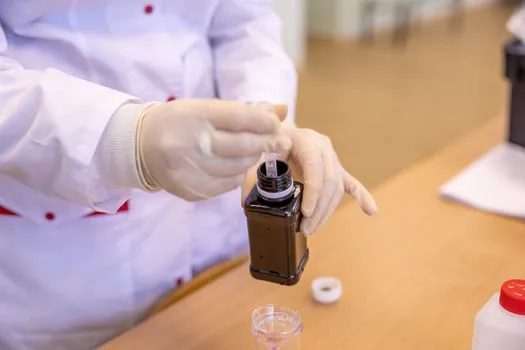
Aquaculture, pond, and field-screening work maps cleanly to Tier 1: $50 to $150 pen/handheld, galvanic or entry polarographic sensor, manual temperature/pressure compensation, IP54, and 4,000 to 5,000-hour membrane life on clean water [S4]. Municipal wastewater aeration tank DO control usually calls for Tier 2 or Tier 3 with mg/L output, automatic pressure compensation in the 450 to 850 mmHg range, and IP67 for the wash-down environment [S3]. Pharmaceutical water systems, brewery fermentors, and bioreactors call for optical RDO with a 12 mm or 25 mm process probe, in-line transmitter, and FDA-grade documentation; the Mettler Toledo InPro 6000 family and the Thornton M300 ISM are the typical references in this segment [S2][S5].
When the application involves intrinsically safe zones, the cost stack shifts: ATEX/IECEx-certified portable DO meters command a 2x to 4x premium over the same OEM's non-certified unit, and certified replacement probes can be 50 % more than the standard probe [S3]. A buyer who does not need hazardous-area certification should not pay for it; this is one of the cleanest places to cut 30 to 60 % off the spec without losing functional capability [S3].
Limitations and Common Spec Traps
Three failure modes show up repeatedly in 2026 DO procurement. First, membrane fouling: biofouling on a polarographic membrane can drive readings low by 1 to 3 mg/L within 2 weeks of service, with no obvious fault flag, so a routine monthly calibration against Winkler is non-negotiable in surface-water service [S1]. Second, altitude drift: a unit calibrated at sea level and used at 3,000 m without barometric correction will read 30 % low, which is the single most common error in field environmental work [S3]. Third, sensor-to-sensor swap mismatch: optical and polarographic probes are not interchangeable on the same meter body; an optical probe swapped onto a polarographic channel will read near zero and vice versa [S3].
A specifier comparing benchtop meters from Thermo Orion, Mettler Toledo, Hach, and WTW should weigh three published numbers: the accuracy spec (typically ±0.1 to ±0.2 mg/L on premium units), the warranty (1 to 3 years; Thermo Orion benchtop is 3 years, Mettler Toledo industrial is typically 2 years), and the probe-swap cost (often the costliest consumable in the system) [S3]. For environmental field work, the oxygen detector class overlaps with gas-phase analyzers and is priced differently from aqueous DO meters; do not let procurement cross-quote a Drager X-am across a BOD project, the sensing principle and consumable path are not the same [S1].
Lead Time, Sourcing, and What to Watch
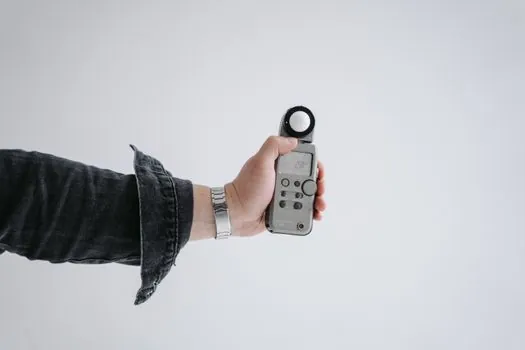
Lead times in 2026 sit in the 2 to 4 week range for Tier 1 Chinese-OEM DO300/BT820-class units at 1,000 sets/month, the published supply ability of the Bridgesi catalog entry being a fair benchmark for that segment [S4]. Branded process probe lead times are 3 to 6 weeks for in-stock items and 8 to 12 weeks for OEM-configured assemblies with custom cable length, special housing material, or ATEX/IECEx certification [S5]. See how a similar cost-stack methodology applies to other measurement instruments in our thermal mass flowmeter price and cost guide, and review probe-and-transmitter trade-offs in the radar level meter vs level transmitter comparison for adjacent process-instrument procurement context.
The underlying component specifications are covered under lighting equipment and electric lamps.