
Use extra-low dispersion glass to correct chromatic aberration in compact apochromatic objectives.
Standard crown and flint glasses remain economical for achromats and cost-sensitive systems, but their color correction is less complete and visible false color is more likely [S4][S5].
Dispersion and Abbe Number Define the Selection
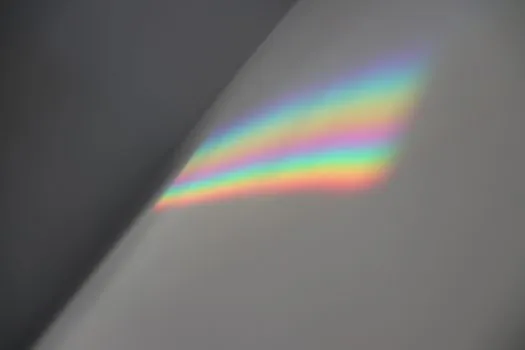
Dispersion is the wavelength dependence of refractive index, and a higher Abbe number indicates lower dispersion [S4]. Standard crown glass typically has moderate refractive index and relatively low dispersion, while flint glass has higher refractive index and higher dispersion [S5].
The manufacturer label “ED” is not a universal optical grade with a single industry-standard threshold; Nikon uses ED as a product designation, and other manufacturers apply terms such as LD, SLD, SD, and UD to different low-dispersion formulations [S1]. Compare the glass by refractive index, Abbe number, partial dispersion, transmission, thermal properties, and manufacturability, not by the label alone.
The practical target is not simply “no color.” The optical glass therefore remains part of a system-level design problem.
ED Glass Offers Stronger Color Correction
ED stands for extra-low dispersion, referring to the composition and optical properties of the glass used for lenses. Ernst Abbe developed the first truly color-free lens in 1868, and his microscope objective used the standard optical glasses available at that time and required 10 elements.
These are design tendencies, not guarantees: element shape, cement, spacing, alignment, wavefront quality, and the remaining aberrations still determine whether a finished lens is genuinely apo [S4].
Minolta has branded photographic lenses using low-dispersion elements as Anomalous Dispersion (AD). This behavior can be more useful than judging the material by a single visible-band Abbe number.
Manufacturing, Cost, and Supply Drive the Trade-Off
In telescope optics, material stability affects how consistently a material maintains its optical properties under changing conditions. ED glass is therefore the rational choice when fewer elements, stronger apo correction, or superior performance justify higher material and process complexity.
Specific glass codes provide a more defensible procurement basis than “ED” terminology. This does not make the codes interchangeable, because partial dispersion, coating compatibility, thermal response, availability, and batch consistency still require separate qualification.
Material Selection by Use Case
For a compact high-resolution refractor, select an ED or SD glass when the design target requires 3-wavelength focus convergence and low secondary spectrum; 2 or 3 elements may then be sufficient [S2][S4]. For a conventional achromat, standard crown and flint glass can deliver adequate color correction at lower cost, but noticeable false color should be expected in an accurately figured instrument [S4].
For ultraviolet, infrared, laser, or narrow-band systems, request partial-dispersion and spectral-transmission data for the actual operating band; visible-spectrum Abbe numbers and marketing labels are insufficient.
ED is not automatically preferable for every apochromatic design.
Side-by-Side Decision Criteria

Color correction: standard glass supports achromat-level correction with residual false color; ED supports much stronger correction and very small secondary spectrum when paired with another glass; SD offers the strongest correction among the three broad glass categories in the cited telescope comparison [S2][S4].
Optical complexity: standard-glass achromats can use 2 elements, while an apo using ED or SD glass can use as few as 2 or 3 elements; Abbe’s historical microscope apo required 10 standard-glass elements [S4]. Manufacturing: standard crown and flint glass is simpler and more established for production, whereas ED glass has lower melt viscosity, crystallization risk, and component-volatilization risk [S2][S5].
Cost and availability: standard glass is favored for entry-level and cost-sensitive systems; ED and SD glass normally carry a material or processing premium that must be justified by correction, contrast, element count, or optical compactness [S4][S5]. Heat management and coatings: the lower dispersion of ED glass does not eliminate sensitivity to thermal gradients, coating stress, or mounting-induced deformation, so full material data are required before qualification [S5].
Qualification Needs Glass-Level Data
Request the exact manufacturer and glass code, refractive index at the design wavelength, Abbe number, partial-dispersion values, transmission, thermal coefficient, strain-relief temperature, coating compatibility, internal transmittance, and environmental durability. Material properties such as refractive index, dispersion, transmission, and stability define the operating boundaries of the optical system before the lens design is applied [S5].
Also compare standard crown and flint glasses on the same basis. Their conventional inverse relationship between refractive index and Abbe number constrains design flexibility, while low-dispersion glasses, including many lanthanum-doped formulations, can provide a higher Abbe number for a given index [S1]. Detailed crown versus flint dispersion is a useful companion calculation when establishing the baseline correction target.
Before release, measure the completed objective rather than accepting a glass designation as proof of performance. Record longitudinal chromatic aberration at blue, green, and red wavelengths, plot focal shift, and verify spherical aberration and coma at 2 spectral positions [S4]. This establishes whether the selected ED material produced an actual apo rather than merely a lower-dispersion lens.
Track the final glass code, element count, coating stack, and measured chromatic-aberration curve; these four records provide a clear qualification path from material selection to production release.