Select EPDM for outdoor seals exposed to UV, ozone, water, and steam because it has a continuous service temperature of -40°C to +150°C and excellent resistance to ozone, UV, and weathering [S1][S2].
Choose neoprene, also called chloroprene rubber or CR, when weather exposure is combined with moderate petroleum-oil contact, good metal adhesion, and inherent flame resistance; neoprene is rated for continuous service from -40°C to 120°C [S2].
Weathering and Ozone Decision Criteria
EPDM and neoprene both resist weathering better than nitrile and natural rubber, but EPDM is the benchmark for UV, ozone, and outdoor endurance [S2]. Its saturated ethylene-propylene backbone leaves few reactive sites for ozone and UV attack, which supports long-term flexibility in roofing, weatherstripping, pond liners, and outdoor seals [S1][S2].
Neoprene remains a credible outdoor material because chloroprene offers genuine ozone and weather resistance, but it ranks behind EPDM for prolonged ozone exposure [S2][S7]. One ozone comparison rates EPDM as essentially unaffected by 10 ppm gaseous ozone, while classifying neoprene as moderate and indicating that long-term exposure to 10 ppm can be damaging [S8]. These material-level ratings do not define a service life without compound and geometry qualification.
For a part dominated by sunlight, atmospheric ozone, rain, and temperature cycling, use EPDM rubber. For weather-exposed equipment that also sees occasional petroleum oil, fuel splash, or mist, use neoprene after confirming the contact level and temperature.
Option Comparison Across Four Engineering Criteria
On weathering endurance, EPDM ranks excellent for ozone, UV, and weather resistance, while neoprene ranks very good but one step behind [S2]. On fluid compatibility, EPDM performs poorly with petroleum oils and fuels, whereas neoprene provides moderate resistance suitable for incidental contact rather than full oil immersion [S1][S2]. On flame behavior, EPDM is poor without additives, while neoprene is inherently self-extinguishing [S2]. On cost, EPDM is the lower-cost option and neoprene carries moderate compound cost [S1][S2].
Application Fit and Service Limits
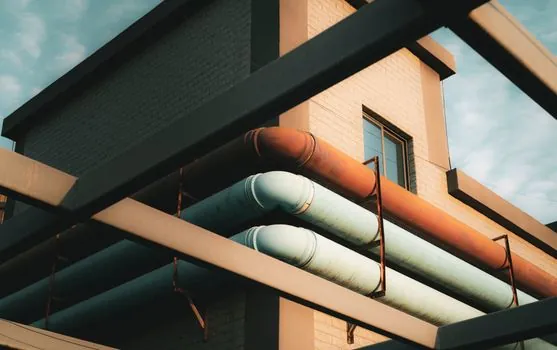
EPDM fits roofing membranes, automotive door and window seals, HVAC gaskets, expansion joints, pond liners, and solar or green-roofing membrane applications where UV, water, and weather dominate [S1]. Its stated continuous service temperature is -40°C to +150°C [S2].
Neoprene fits gaskets, conveyor belts, and outdoor applications that need weather, moderate oil, and flame resistance [S1][S2]. Its stated continuous service temperature is -40°C to +120°C [S2].
Neither material is a universal outdoor solution. EPDM should not be assigned to continuous petroleum-oil or fuel service, while neoprene can deteriorate during long exposure to hot water or steam [S1][S2]. For cellular weatherstripping specifically, the distinction between EPDM foam and closed-cell neoprene also involves compression recovery, sealant compatibility, and mounting geometry, not only ozone resistance.
Failure Modes and Qualification Checks
EPDM failure in outdoor service is more likely to originate from petroleum attack, incompatible chemicals, inadequate compression, or thermal limits than from ozone cracking [S1][S2]. Its resistance to alkalis, acids, and polar fluids such as water, steam, and alcohols makes it a poor choice for oil, gas, and hydrocarbon solvents [S1].
Neoprene failure risks include surface cracking under prolonged ozone exposure, softening from petroleum contact, and thermal aging above its 120°C continuous-service limit [S2][S8]. Neoprene is less suited than EPDM to sustained hot-water or steam service, and its moderate oil resistance should not be treated as equivalent to immersion-grade nitrile rubber [S2].
Compound construction can change the result. Hardness, curing system, plasticizer content, reinforcement, surface finish, and stress concentration at seal corners affect cracking and compression set [S1][S2]. Evaluate the finished part, not just the polymer family, under the actual ozone concentration, UV exposure, temperature range, fluid exposure, and compression duty.
Sourcing and Test Evidence
Specify the polymer, cure system, hardness range, continuous-use temperatures, fluid exposure, and required weathering test in the material drawing. For EPDM, request a compound intended for outdoor or ozone service and confirm compatibility with water, steam, glycol coolant, and any incidental chemicals; EPDM cure chemistry should be reviewed when compression set is part of the seal requirement. [S2]
For neoprene, identify it as chloroprene rubber or CR and state the petroleum exposure type, such as splash, mist, or immersion. Require confirmation of the flame classification and the relevant test report rather than treating generic neoprene data as a product qualification [S2]. Published property tables also differ, with one source describing EPDM and neoprene ozone resistance as broadly similar, while others rate neoprene below EPDM [S6]. Resolve that discrepancy with compound-specific testing.
As a documented selection rule, neoprene's chlorine content makes the material "inherently self-extinguishing" [S2]. For critical seals, require representative accelerated weathering and ozone data, then verify hardness, compression set, tensile properties, and visible cracking after exposure.
The traceable next step is to record the controlling exposure in one line: ozone concentration, UV exposure, fluid type, and maximum temperature. Use EPDM when the first three favor weathering and neoprene only when oil or flame requirements outweigh its lower ozone margin.