In a 2026 sputtering target quote, the line item that most engineers call "material" is usually only 30–60% of the total; purity grade, sintered density, machining tolerance, and the backing-plate bond together routinely add 40–70% on top, and for ceramic targets the fabrication share can exceed the powder cost.
Process engineers buying sputtering targets for semiconductor, display, or photovoltaic lines are usually quoted per piece or per kilogram, but those headline numbers hide a four-lever stack: chemistry, purity, density, and bonding [S1]. Knowing which lever dominates lets a buyer push back on the right line, not the wrong one.
Raw-Material Chemistry: The LME Track vs the Oxide-Powder Track
Commodity metallic targets (Ni, Cr, Ti, Cu, Al) track the LME metal price within an order of magnitude once a fabrication premium is added, whereas indium, tin, and rare-earth-bearing ceramics sit on a separate oxide-powder pricing curve disconnected from LME [S1]. A 2026-04 wholesale listing on Made-in-China put NiCr 80/20 at US$35.00/kg at a 1 kg minimum order, while In2O3 and ITO at 4N (99.99%) purity routinely priced 10–50x higher per kilogram than commodity metallic targets [S1]. The gap reflects feedstock route, melting method, and billet machining, not supplier margin: W and Mo targets can be powder-pressed and HIP-consolidated near net shape, while an ITO billet needs hot-press sintering of In2O3:SnO2 powder followed by diamond-tool grinding to flatness and density targets [S1]. For background on how a sputtering target differs from a generic ceramic body, the sputtering target reference page walks through the relevant families.
Purity Grade: The Largest Single Multiplier on Metallic Targets
Purity is the second lever and the single largest multiplier on metallic targets, with 3N (99.9%) sufficing for architectural glass and decorative coatings, 3N5 (99.95%) covering most automotive and display metallization, and 4N (99.99%) the entry point for semiconductor barrier/seed layers and photovoltaic TCO stacks [S1]. 5N and 6N grades are reserved for advanced-node logic, EUV pellicle-adjacent films, and GaN/SiC epitaxial-ready applications where single-ppm transition-metal control is non-negotiable [S1]. Each purity step is a refining pass, and refining cost scales superlinearly: stepping 3N5 to 4N on a reactive metal like Ti or W can add 2–4x to the powder line [S1].
Density, Flatness, and the Machining Premium
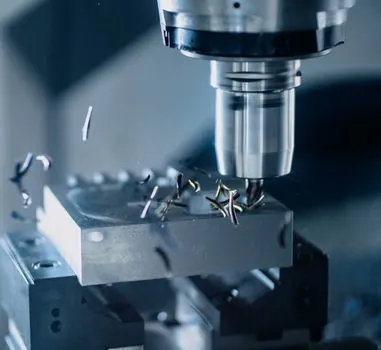
Sintered density is the third lever, and it carries an outsized share of ceramic-target fabrication cost: targets are typically specified at ≥95% of theoretical density for non-rotatable planar use, and ≥99% for rotating cylindrical magnetrons where sputter erosion uniformity is critical [S1]. A 300 mm planar target held to ≤0.1 mm flatness will scrap more billets than one held to ≤0.2 mm, and the diamond grinding that pulls a fully dense In2O3 billet into spec is slow and abrasive-tool wear is significant [S1]. Gen-8.5 planar ceramic targets for display production can list in the US$3,000–8,000 per-piece range even at moderate mass, because the grinding step, not the indium-tin oxide powder, sets the floor [S1].
Bonding: A Flat US$200–1,200 Surcharge Independent of Mass
Bonding is the fourth lever, and it is the one most often missing from a naive "material cost" calculation: indium-bonded, elastomer-bonded, and diffusion-bonded assemblies onto a Cu or Mo backing plate add a flat US$200–1,200 per target depending on diameter and bond type, independent of target mass [S1]. For a 2-inch R&D round the bond cost is a large fraction of the quote; for a Gen-8.5 planar it is a small fraction but a fixed one. Diffusion bonding dominates in semiconductor tools where thermal conductivity and fatigue life matter, while indium bonding remains common in R&D and small-lot display work where rework is cheap [S1][S4].
Side-by-Side: Where the Money Actually Goes

Comparing the four main target families on cost-share shows where fabrication dominates: commodity metals (NiCr, Al, Cu) sit at roughly 55–70% raw material, 20–30% machining, 5–15% bond, with purity-driven material premium small; refractory metals (W, Mo, Ti) shift to 40–55% material, 30–40% HIP and machining, 10–15% bond; TCO ceramics (ITO, AZO) invert to 25–40% oxide-powder, 45–55% sinter and diamond grinding, 10–15% bond; precious and rare-earth targets (Pt, Ir, Ru, ITO with high In) flip further to 15–25% feedstock, 50–60% refining and machining, 15–25% bond, because refining dominates the powder line [S1][S5][S7]. Engineers choosing a target for high-volume manufacturing should weight machining and bond shares more heavily than the headline $/kg, since those line items do not scale away with volume the way feedstock does.
Lifecycle Reality: Why Fabrication Share Keeps Growing in TCO
The fabrication share becomes more important the longer a target stays in service, because utilization, not initial price, drives cost per wafer: planar targets typically reach 25–50% material utilization before the erosion groove forces a change, while rotatable cylindrical targets reach 70–85% or higher, and advanced asymmetric/contoured planar designs push toward 50–60% [S3][S4]. Thin targets (1–5 mm) typically last 50–200 hours per campaign with 50–70% utilization, while thick targets (>10 mm) stretch to 500–2,000 hours and can exceed 75% utilization when bonding and cooling are tuned [S5]. A bond failure on a 300 mm production target is not just scrap: it shuts the chamber, forces a full clean, and costs hundreds of thousands of dollars in lost tool time per incident, which makes the US$200–1,200 bond surcharge look like insurance [S4]. For engineers cross-referencing volatility in adjacent commodity lines, the same LME-driven logic behind copper busway cost in 2026 shows up in Cu and Cu-alloy target pricing.
Selection Cheat-Sheet by Use Case

For R&D and short campaigns, thin planar targets (1–5 mm) with indium bonding keep upfront cash low and let you change chemistry often [S5]. For high-volume semiconductor barrier/seed layers, 4N+ rotatable cylindrical targets with diffusion bonding deliver the lowest cost-per-wafer despite a higher per-piece number, because utilization and uptime dominate [S3][S4]. For Gen-8.5+ display TCO stacks, expect 10–50x per-kg premiums over commodity metals and budget for diamond-grinding scrap, not powder, as the dominant cost line [S1]. For precious-metal R&D, use thin targets to cap working-capital exposure, since refining not fabrication sets the floor on those [S1][S5]. Two trackable signals for the next quarter: indium and tin spot price moves on LME, which directly reprice ITO and IZO billets, and any diffusion-bonding capacity expansion among Tier-1 suppliers, which usually tightens semiconductor lead times before it loosens them.
The underlying component specifications are covered under advanced material, and chemical material.