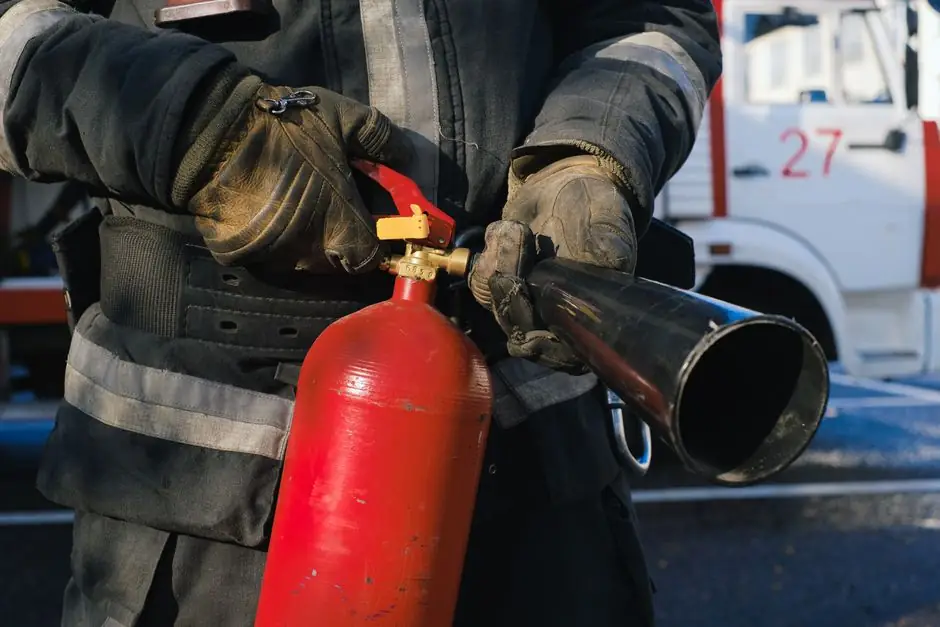
FK-5-1-12 and Novec 1230 denote the same fluoroketone extinguishing chemistry, with FK-5-1-12 serving as the generic name and Novec 1230 as 3M's trademark [S1][S2].
The compound is CF3CF2C(O)CF(CF3)2, also called dodecafluoro-2-methylpentan-3-one, and is used in gaseous fire suppression systems for occupied spaces [S5][S8].
Agent Identity: One Chemistry, Two Names
FK-5-1-12 is the chemical designation for the fire protection fluid marketed as 3M Novec 1230 Fire Protection Fluid [S1][S2]. Both names therefore describe an agent chemistry rather than two competing extinguishing agents.
The formal chemical string is CF3CF2C(O)CF(CF3)2, while dodecafluoro-2-methylpentan-3-one is the systematic chemical name [S5][S8]. The identification is also associated with CAS 756-13-8 [S3].
For procurement, use “FK-5-1-12” when brand-neutral specification is required, and identify “Novec 1230” when referencing the former 3M product. A purchase order that names only the trademark can create avoidable ambiguity if the brand changes.
This is a naming decision, not a choice between two agents. Any statement that compares FK-5-1-12 with Novec 1230 as separate performance classes is technically incorrect [S2][S3].
Why Both Labels Persist in Specifications
The 3M patent covering Novec 1230 Fire Protection Fluid expired on July 31, 2020, enabling additional manufacturers to produce FK-5-1-12 [S5]. Generic naming therefore became more useful as the market expanded beyond one manufacturer.
System manuals still use Novec 1230, including Viking's VSH1230 design manual, which identifies the agent and provides FK-5-1-12 mass requirements per unit volume [S7]. Equipment design documents should still match the listed agent formulation and approved system configuration.
Replacement-fluid marketing names such as SF-1230 and Fluoro-K require document review rather than a simple substitution decision [S4]. The question is whether the replacement fluid is approved for the complete system and required fire classifications, not whether its marketing name resembles Novec 1230.
For a complete gas fire suppression system, the safest specification practice is to state the generic chemistry, approved fluid, application, design concentration, and listed equipment as separate fields.
Performance Basis for FK-5-1-12
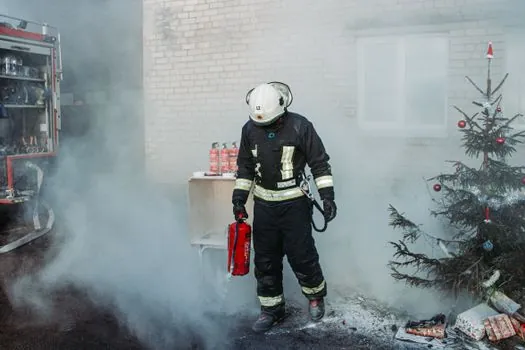
FK-5-1-12 extinguishment testing covered cup-burner, inerting, intermediate-scale, and large-scale fire scenarios [S1]. Cup-burner work followed ISO DIS 14520-1: September 2003 Annex B, while inerting tests used ISO 14520:2000 Annex D procedures [S1].
FK-5-1-12 inerting concentrations were determined for various methane and propane air mixtures in accordance with ISO 14520:2000 Annex D [S1]. FK-5-1-12 underwent multiple large-scale and small-scale fire-performance testing at 3M [S1].
The NIST paper also tested discharge and post-discharge temperature behavior against nozzle proximity and enclosure position [S1]. This matters because agent quantity alone does not establish protection: distribution, enclosure geometry, discharge time, and the listed design method remain part of the system solution.
FK-5-1-12 suppresses fire by absorbing heat [S6]. Its liquid storage and relatively high boiling point also support alternative delivery methods discussed in the NIST research, but those approaches still require an approved, engineered arrangement [S1].
Name Comparison Against FM-200
FK-5-1-12 and FM-200 are genuinely different chemical agents and should be compared as options, unlike FK-5-1-12 and Novec 1230. FK-5-1-12 is a fluoroketone, whereas FM-200 is a heptafluoropropane classified as an HFC [S5].
Both agents are stored differently in some designs: FK-5-1-12 is stored as a liquid, while FM-200 is stored as a gas, although both are discharged into the protected space as gases [S5]. FK-5-1-12 is identified as having a lower global warming potential than FM-200 [S5].
Both can be applied to Class A, B, and C fires and can be used in occupied spaces, subject to their respective listings and design requirements [S5]. That functional overlap does not make the fluids interchangeable in a listed system: agent identity, design concentration, cylinder arrangement, discharge hardware, and approvals must all align.
Do not inherit FM-200 agent quantities, container pressures, nozzle coefficients, or pipe sizing for FK-5-1-12. Use the design manual and listing for the selected FK-5-1-12 system, such as VSH1230 with its stated FK-5-1-12 mass requirements [S7].
Approval, Supply, and Compatibility Checks
FK-5-1-12 fluid can carry third-party approvals, including FM approval or UL listing where granted for the specific supplier and application [S5]. The governing system approval and the fluid approval must be checked as separate documents.
Those are supplier-specific claims and should not be generalized without the relevant listing evidence.
For an installed system, verify the agent's chemical identity, CAS 756-13-8, purity, manufacturer, approval listing, storage history, and whether the listed design uses the exact fluid being supplied [S3][S5]. A tank filled with an unverified substitute creates validation, maintenance, and resale problems.
System integration also depends on release control. Detection and release timing must be coordinated through the fire alarm control panel, while the design must provide the required enclosure integrity and safe discharge path.
Applications, Occupancy, and Material Limits
FK-5-1-12 is commonly selected for occupied areas where water discharge would damage equipment, including data centers, server rooms, laboratories, and control spaces [S5][S6]. Its non-residue behavior is operationally useful, but it does not remove the need for room-integrity testing.
Available safety information describes FK-5-1-12 as suitable for occupied spaces, with possible mild eye irritation but no skin irritation and a non-carcinogenic Ames-test result [S5]. This product information does not replace a project-specific hazard review or the safety data sheet for the fluid actually supplied.
The agent can damage materials through direct liquid contact or prolonged exposure, so elastomers, seals, adhesives, and coated equipment should be checked for compatibility. The Viking VSH1230 manual remains the controlling source for that listed system's materials, agent quantity, and installation requirements [S7].
FK-5-1-12 is not the right automatic choice where the risk assessment identifies an unacceptable environmental restriction, an incompatible process reaction, or an application outside the listing. Inert gases such as IG-541 and IG-55 also change storage pressure, cylinder quantity, discharge characteristics, and room design, so they require a separate comparison rather than a label substitution.
Specification Language and Procurement Record
Write “FK-5-1-12 fire protection fluid” as the primary agent description, followed by the chemical name CF3CF2C(O)CF(CF3)2 and the approved supplier's product designation [S1][S5].
Do not label a non-3M product as “3M Novec 1230.” If a legacy specification requires the trademark for continuity, add “also known generically as FK-5-1-12” and identify whether the phrase is a legacy reference or the actual supplier product [S2][S3].
Require the supplier to state the chemical identity, CAS number, concentration, manufacturing lot, storage conditions, and applicable listing for the delivered fluid. Retain those documents with the system design, commissioning records, and service history.
The next verifiable procurement check is straightforward: compare the fluid label and certificate against the listed system's approved-agent schedule, then verify refill identity and approval before any cylinder is accepted into service [S4][S5].