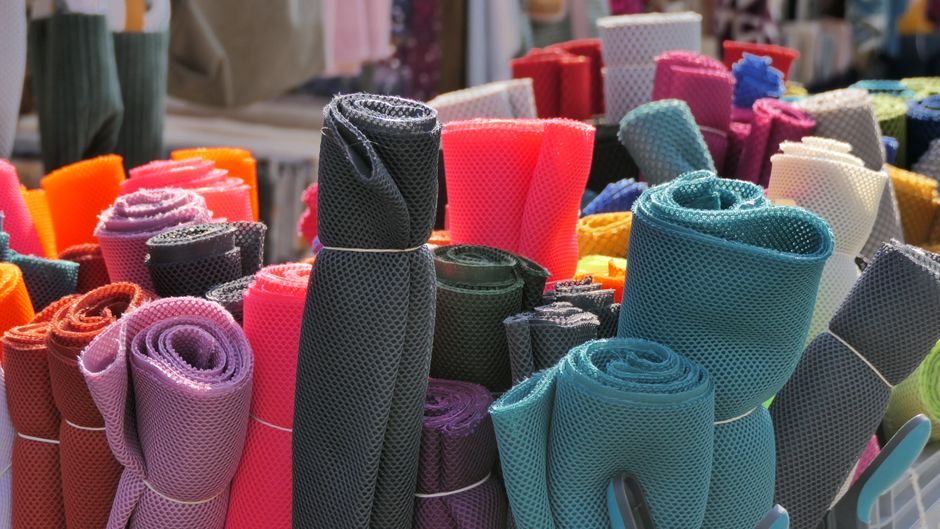
Foam fabrication cost is driven by five interlocking variables: base foam chemistry (polyurethane, polyethylene, melamine, metal-matrix), density in kg/m³, part geometry (sheet vs. 3D contour vs. closed-cell die-cut), tolerance band (commercial ±1.5 mm vs. precision ±0.25 mm), and order volume — with tooling amortization crossing meaningfully at roughly 500–1,000 parts for die-cutting and 2,500+ parts for CNC contouring [S3][S4].
The market spans commodity flexible PU cushion foam at low single-digit USD per board-foot equivalent, through engineered closed-cell PE/EVA at mid-single-digit, up to specialty metal-foam and auxetic PU foams where small-batch pricing reflects R&D recovery rather than raw-material spread [S1][S2].
Foam Material Families and Unit-Cost Bands
Closed-cell polyethylene, EVA, and cross-linked polyolefin foams price 30–80% above commodity PU due to their chemical cross-linking and moisture-impermeable cell structure, and are standard for marine flotation, military case inserts, and protective packaging [S3].
Specialty foams — melamine (acoustic), PVC nitrile (thermal/insulation), and auxetic PU (negative Poisson's ratio) — are made by the conventional thermo-mechanical route first reported by Lakes in 1987, which remains attractive for low-cost bulk production versus additive manufacturing [S1].
Fabrication Processes and Their Cost Drivers
The dominant conversion processes — waterjet/knife cutting, die-cutting, CNC routing, contour cutting, heat-laminating, and adhesive lamination — each map to a different cost structure.
For metal-matrix foams, the process shifts entirely: copper-graphene composite foam (TOCGF) is built by ultrasonic-assisted pressureless sintering combined with 3D-printed templates, with pure Cu powder 99.8% (4–50 µm) and 99% graphene (3–8 nm Z, 5–10 µm X-Y) as raw inputs; the strut width shrinks only 3.32 ± 0.15% relative to CAD, which is the spec a buyer should pin in any drawing [S2].
A buyer comparing auxetic foam manufacturing methods for an R&D pilot should note that 3D printing overcomes repeatability issues in auxetic geometries, but the thermo-mechanical compression route still wins on raw cost and scalability for open-cell PU auxetic foams [S1].
Density, Tolerance, and Geometry as Pricing Levers

Density is the single largest cost lever in flexible foams — a doubling from ~16 kg/m³ to ~32 kg/m³ typically raises material cost 80–100%, because raw polyol/isocyanate mass scales directly while the cubic-foot handling, storage, and freight cost barely changes [S3].
Tolerance class is the second lever. Commercial fabrication (waterjet/knife) holds ±1.0–1.5 mm on part edge and ±2 mm on thickness, and is the default for packaging, marine kits, and standard furniture. Precision fabrication (CNC routing, abrasive profile cutting) holds ±0.25–0.5 mm, costs 2–3× per part, and is required for medical positioning foams and tight-tolerance gasket stock [S3].
Comparison of Main Foam Types on Four Decision Criteria
For process engineers, the standard workflow recommended by an ESOP-structured fabricator follows a six-gate sequence: Discovery → Material Selection → Prototyping → Testing & Analysis → Manufacturing → Fulfillment, with the Material Selection gate acting as the single largest cost-decision node [S3].
Standards, Testing, and Documentation That Affect Cost

Foam-fabricated parts are typically specified against ASTM D3574 (flexible PU slab, bonded, and molded foam test methods) for density, IFD, tensile, and elongation; ASTM D1056 for closed-cell sponge and expanded rubber; UL 94 for flammability rating selection; and FMVSS 302 for automotive interior burn-rate, which is mandatory for transportation builds [S3].
For industrial valve sealing kits and similar fluid-handling assemblies, the foam-fabrication choice intersects with elastomer specification; the same project may pull in o-ring selection logic when the foam is acting as a secondary seal or compression limiter rather than the primary elastomer.
Sourcing, Lead Time, and Total-Cost Logic
Lead time at a multi-site US foam fabricator with three regional plants typically runs 2–3 weeks for prototype and 4–6 weeks for production after material is released; prototypes are quoted at a 25–100% premium per part versus production runs, and minimum-order quantities for custom die work are commonly 250–500 pieces to amortize tooling [S3].
Tooling cost itself is the next line-item to interrogate: flatbed die tools run $400–$1,500, matched-metal dies for molded foam run $5,000–$25,000, and rotary dies for high-volume die-cutting run $8,000–$40,000 — these are amortized into the per-piece quote above the breakeven volume [S3][S4].
For plants that already run forming equipment, it is worth checking whether hydraulic press tonnage is on-site for foam compression-molding, because transporting foam to an outside molder adds both freight and a 8–15% handling markup that an in-house press can avoid at sufficient internal volume.
Failure Modes, Limits, and Common Specification Errors

The most common foam-fabrication specification error is ordering to nominal density alone: a 32 kg/m³ foam with poor cell-structure uniformity (IFD variance above ±15%) will feel and age like an 18 kg/m³ foam, and many low-quote suppliers substitute cheaper density lots during production runs unless IFD tolerance is pinned in the PO [S3].
A second error is ignoring compression set. Standard PU foam at 50% compression set after 22 hours at 70 °C (ASTM D3574 Test D) loses 5–10% thickness, but high-resilience grades can be specified to under 5% — a 30–50% material cost premium that is mandatory for medical and premium-transport seating [S3].
A third error is conflating "flame-retardant" with a specific standard: a foam labeled CAL 117 passes a furniture-candle test, but will not pass UL 94 HF-1 or FMVSS 302; specifying the test method, not the marketing label, is the only reliable way to control cost-versus-certification tradeoffs [S3].
Buyers sourcing from China for volume runs should weigh the same matrix — material, density, tolerance, geometry — against the additional 8–14-week ocean transit, with the freight cost itself roughly $0.10–$0.40 per board-foot equivalent depending on density, which is meaningful enough to push mid-density orders back to domestic supply [S4].
Track the next two signals: (1) the ASTM D3574 revision cycle — D3574 was reaffirmed in 2024 with no major edits, and any 2026–2027 change to compression-set conditioning would re-cost HR-foam production runs; (2) auxetic foam patent licensing — Lakes' 1987 thermo-mechanical route remains open, but several 3D-printing auxetic patents filed in the 2013–2015 window begin to expire in 2026, which is a watch-item for anyone specifying auxetic PU for impact-mitigation builds [S1].
For component-level specifications, see linear guide.