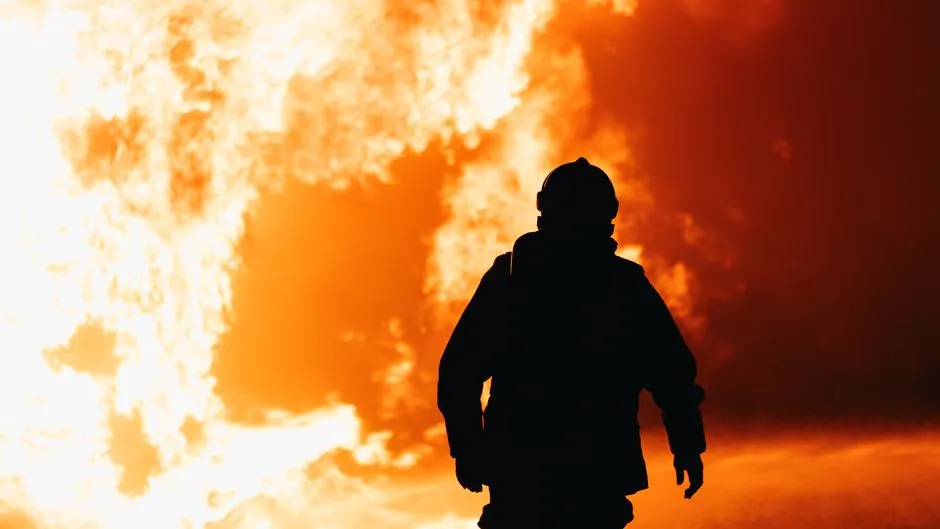
Gas fire suppression for one protected room commonly requires $5,000 to $20,000 for a clean-agent installation, with agent cylinders, detection and piping forming the main cost drivers.
The useful unit is the installed cost of a defined protected space, not a generic price per room, because volume, agent concentration, equipment and installation complexity materially change the result.
Gas suppression cost benchmarks for protected rooms
Clean-agent systems for server rooms are listed at $5,000 to $20,000 installed, with a 500 square foot room at $5,000 to $8,000 and larger facilities above 2,000 square feet reaching $15,000 to $20,000 [S1]. The gas fire suppression system must therefore be priced against protected volume and room geometry, not floor area alone.
Most commercial fire suppression applications cost between $2,000 and $15,000 installed, including equipment, installation labour, and basic system commissioning, while server-room clean-agent systems cost $5,000 to $20,000 [S1]. These figures cover application classes with different hazards, so they should be treated as screening ranges rather than interchangeable quotations.
Pye-Barker Fire & Safety published its FM-200 and Novec 1230 cost calculator on 2025-08-14 [S5]. That 1 ft height difference adds agent volume, cylinder capacity and potentially another discharge point, making the room height a required estimating input.
What determines the installed price
Coordinate these functions with fire detection, heat detectors and the required alarm interface.
Installation labour and engineering are separate budget risks. A full commercial kitchen fire suppression system typically costs $5,000 to $12,000 including installation [S4]. The quoted price may also exclude monitoring, annual inspections and specialised engineering for complex installations [S1].
A defensible estimate therefore identifies room dimensions, protected volume, hazard class, number and arrangement of discharge points, detection method, cylinder quantity, piping material, local labour, permits, monitoring and commissioning in one written scope.
Agent and system comparison
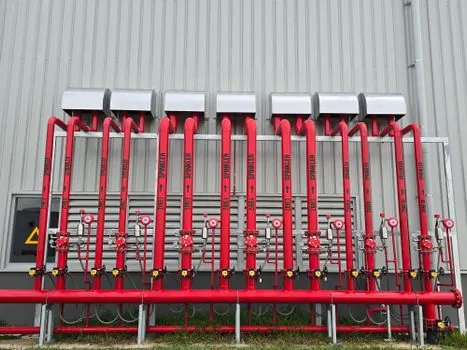
Clean-agent gas suppression is appropriate for equipment rooms where water damage is unacceptable, but it requires room-volume design and careful enclosure management. Pye-Barker Fire & Safety provides an FM-200 and Novec 1230 cost calculator [S5].
For comparison, a wet-chemical kitchen system for one 6 ft hood is listed at $3,500 to $5,000, a double-hood or 10 ft arrangement at $6,500 to $8,500, and an average full commercial kitchen at $5,000 to $12,000 including professional installation [S1][S4]. A residential stovetop system costs $1,295 to $2,805, while a food-truck installation ranges from $2,500 to $5,000 [S4].
The decision criteria differ by hazard. Wet chemical suits cooking-oil fires, clean agents suit enclosed equipment rooms with sensitive equipment, and foam may be needed where a specific industrial fuel hazard requires it. A foam-based kitchen system is listed at $35,000 to $45,000 [S4], making it materially more expensive than the common wet-chemical arrangement. The detailed trade-off between clean agents is covered in FM-200 vs Novec 1230.
Room applications and expected budgets
Server-room clean-agent fire suppression systems cost $5,000 to $20,000 [S1].
Dry chemical fire suppression systems for paint booths cost $4,000 to $12,000 [S1].
Wet chemical fire suppression systems for small commercial kitchens cost $3,000 to $6,000, while systems protecting multiple cooking appliances require more nozzles and agent storage, which can increase costs [S1][S4]. This makes hood length, appliance count and agent distribution more meaningful than the protected room’s square footage.
Ownership cost beyond installation
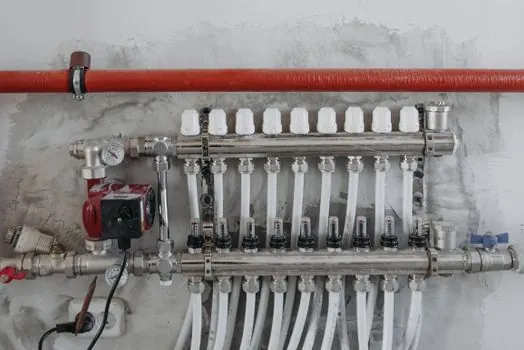
The purchase price is not the full cost of ownership. Published installation ranges exclude ongoing monitoring, annual inspections and specialised engineering for complex systems [S1]. A restaurant inspection example begins at $599 per semi-annual visit for a kitchen with one hood and one cylinder [S6], which illustrates that inspection and service remain separate lifecycle costs after commissioning.
For a gas system, service planning must account for cylinder replacement, agent condition, detection and alarm testing, discharge-path inspection and any facility monitoring subscription. The fire alarm control panel interface should be included in the maintenance scope because detection, manual release, notification and shutdown functions have to be verified as one sequence.
Water-based fire sprinkler systems use a different cost basis. A 2013 Fire Protection Research Foundation assessment covering 51 homes in 17 communities reported an average of $1.35 per sprinklered square foot, but the sample was expressly not representative of all new homes [S2]. Pennsylvania guidance lists $1 to $2.50 per square foot for introductory new-construction estimates, subject to regional, layout and labour differences [S2]. These figures are useful only for projects with the same sprinklered-area definition and scope.
Sourcing and scope controls for a defensible quote
Comparisons must use the same denominator. The sprinkler guidance requires contractors to identify covered area and included work, including whether garages, basements, water-supply connections and finish restoration are included [S2]. A lower square-foot rate that excludes those items is not comparable with a complete installed offer.
Request separate pricing for cylinders and agent, piping and nozzles, detection, manual controls, electrical connections, ventilation or shutdown interfaces, structural supports, permits, labour, commissioning, monitoring and annual service. Identify whether the figure covers one room only or includes shared plant, multiple protected zones and a building-level permit.
Also separate estimates from contracts. A preliminary estimate should identify unresolved information such as room height, underfloor voids, penetrations, fire rating, hazardous material quantity and shutdown sequence [S2][S5]. The contract should then fix the protected volume, agent quantity, design responsibility, acceptance tests and maintenance scope.
Track two signals before approving the budget: the confirmed protected volume and the quoted number of cylinders and discharge points. If either changes, recalculate the installation rather than absorbing the change as a unit-price adjustment.