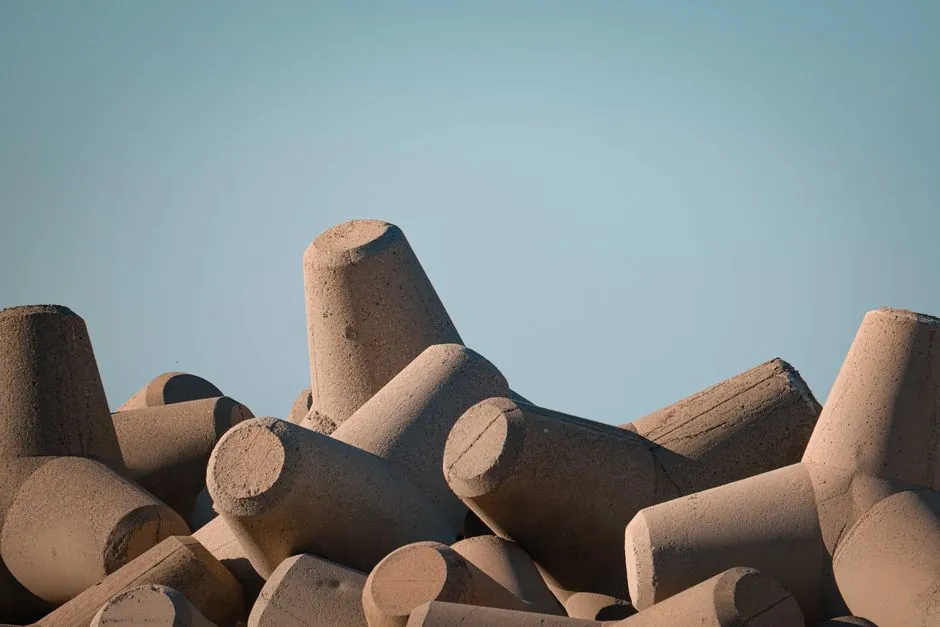
A cement-free ultra-high performance geopolymer concrete retained 150–167 MPa compressive strength after 12 months of marine exposure, with no detected carbonation or chloride penetration front [S2].
The result covers one slag and silica-fume formulation tested against an equivalent-strength Portland-cement UHPC reference, so it does not establish that every geopolymer mix matches Portland cement [S2].
Strength can match Portland cement under defined mixes
Reviewed geopolymer concrete formulations can exceed 60 MPa compressive strength, while selected mixes can match or surpass ordinary Portland cement in flexural strength, particularly under heat curing [S3]. Strength development can also occur over time in a pattern similar to Portland cement, attributed to continued geopolymerization reactions [S7]. These results show that binder chemistry, precursor selection, alkali dosage and curing regime, rather than the label “geopolymer,” determine structural performance.
The clearest strength-class comparison comes from a cement-free geopolymer UHPC containing ground granulated blast-furnace slag and silica fume. The [S2] study is a laboratory comparison with Portland-cement UHPC that was validated by real marine exposure.
Heat curing can accelerate early strength, but it adds process control and energy requirements. A practical specification should therefore include precursor chemistry, activator concentration, curing temperature and time, and a defined strength class rather than relying on a generic geopolymer strength claim [S3][S5].
Durability advantages depend on exposure
Geopolymer concrete combines low to medium chloride-ion penetrability with high resistance to acid attack and abrasion, while elevated curing temperatures can produce high compressive strength [S1]. These characteristics make the binder technically credible for chemically aggressive and marine environments when the mix has been validated under comparable exposure conditions.
This supports durability performance under chloride exposure, but it does not remove the need for project-specific testing because raw-material variability remains a recognized constraint [S3].
Chemical compatibility must be checked rather than inferred from generic “high chemical resistance” language.
Decision criteria separate viable and unsuitable applications
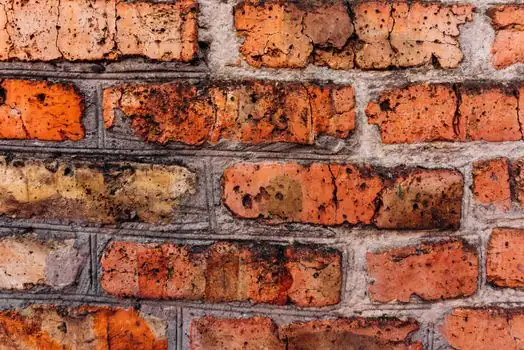
The [S2] study presents a laboratory durability comparison of a cement-free ultra-high performance geopolymer concrete with Portland-cement UHPC, with validation by real marine exposure. For chemical storage, performance depends on the acid and sulfate cation, because nitric-acid and sodium-sulfate behavior cannot be used to predict magnesium-sulfate resistance.
The material comparison below separates verified performance from unresolved qualification issues. It is based on the cited 100% cement-free slag and silica-fume UHPC study rather than the entire geopolymer family [S2].
High-temperature performance is the weak point
Geopolymer concrete has a ceramic-like aluminosilicate network and a history as a fire-resistant material, but a specific mix, reinforcement arrangement, heating rate and loading condition must be tested before it is credited for a fire rating [S1][S5].
Construction practicality narrows adoption
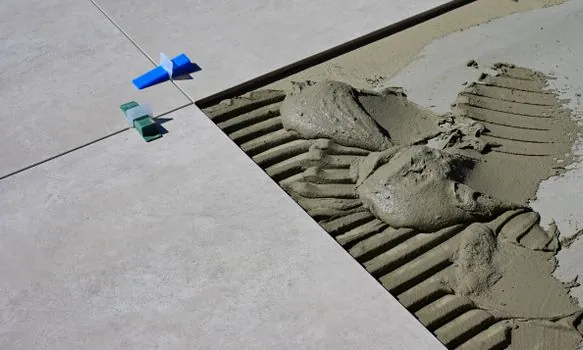
Geopolymer production requires an alkaline activator and a suitable aluminosilicate precursor such as fly ash, slag, metakaolin, rice husk ash or silica fume [S1][S3]. Conventional concrete does not require comparable site handling of concentrated alkaline solutions, and Portland concrete can normally rely on ambient curing without dedicated heat-curing infrastructure [S5].
User-friendly geopolymer concrete is defined in the reviewed literature as material that can be produced safely on a construction site with less chemical activator, while curing under ambient conditions without additional energy or resource inputs [S5]. That definition captures a real barrier: mix reproducibility and contractor familiarity can outweigh laboratory advantages when a project lacks activator storage, mixing controls, heat-curing capacity and a qualified supply chain.
Fly ash availability is also variable because it is an industrial by-product rather than a primary manufactured cement. Slag, metakaolin and other precursors have different reactivity, impurity content and supply profiles, so a trial mix is necessary before transferring laboratory results into a production specification [S3][S7].
Specification and qualification route
A defensible geopolymer specification needs at least four controlled elements: precursor identity and source, alkali activator composition and dosage, curing regime, and performance testing under the actual exposure class. The reviewed 2026 material identifies raw-material variability, gaps in long-term durability data and a need for standardization as principal barriers to broad adoption [S3].
Project testing should cover compressive strength and flexural strength, chloride penetrability under ASTM C1202, dimensional stability under the relevant sulfate chemistry, and field exposure where marine conditions justify it. ASTM C1012 provides a concrete sulfate-exposure framework, and its 0.10% expansion criterion was breached by both mixes in magnesium-bearing solutions in the cited study [S2]. These tests should not be reduced to a general statement that geopolymer concrete resists chemicals [S4].
The best path is comparative qualification: trial the intended geopolymer mix beside the Portland-cement reference under the same curing, mechanical loading and chemical exposure. For marine work, 12 months of exposure in atmospheric, splash and immersed zones produced more persuasive evidence than an accelerated laboratory test alone [S2].
Application fit, not universal parity
Geopolymer concrete is a strong candidate where the design prioritizes chloride resistance, acid resistance, low permeability and rapid strength development under controlled curing [S1][S3][S4]. It is not the automatic substitute for Portland concrete in fire-exposed primary structures, magnesium-sulfate environments, projects without ambient-cure capability, or applications lacking long-term qualification for the selected precursor [S2][S5].
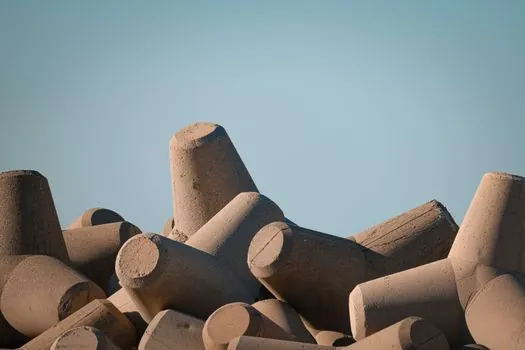
For port construction, the most defensible uses are marine-exposed precast or structural elements supported by mix-specific testing, while conventional Portland concrete retains advantages in standardized supply, familiar site handling and high-temperature strength retention. A project should approve geopolymer concrete only when the selected formulation closes the strength, exposure and construction-method gaps, not because the binder class has passed elsewhere.
Track the qualified mix through at least 12 months of marine exposure, verify residual compressive strength and chloride penetration, and require separate magnesium-sulfate and fire testing where those hazards govern the design [S2].