Glass fiber selection for energy equipment is moving from composition-led to performance-led: a June 2026 review in Materials Today Communications argues the choice should be driven by service conditions, not by fiber chemistry alone [S2]. That shift is visible across wind blades, transformer insulation, battery enclosures and optical sensor links, where E-glass, S-glass, AR-glass, E-CR-glass, C-glass, D-glass and R-glass each map to a narrow operating envelope [S2][S7].
Demand is scaling to match. The global glass fiber textiles market was sized at USD 12.2 billion in 2025 and is forecast to reach USD 21.9 billion by 2035 at a 6.0% CAGR for 2026 to 2035, with wind energy, electrical and electronics, and construction listed as the lead application segments [S5]. For energy-equipment OEMs, that growth translates directly into tighter roving supply, longer qualification cycles, and a need to lock fiber type to a verifiable spec sheet rather than a brand name. Background on the broader glass fiber family and its dielectric, thermal and mechanical variants is the first filter any specifier should run before opening a supplier portal.
Fiber-type decision map: seven chemistries, seven service envelopes
Selection of a glass fiber type is governed by the dominant service stress: alkali attack in concrete, acid attack in chemical plants, dielectric loss in HV insulation, or high specific strength in rotor blades [S2]. E-glass (alumino-borosilicate, <1 wt% alkali oxides) remains the default reinforcement for glass-reinforced plastics and is the lowest-cost baseline [S4][S7]. S-glass (alumino silicate, no MgO/CaO) is specified where higher tensile strength and modulus justify the premium, and R-glass sits in the same high-mechanical niche as S-glass [S4][S7].
For corrosive service, E-CR-glass (alumino-lime silicate, <1 wt% alkali, high acid resistance) and C-glass (alkali-lime, high B2O3) are the two chemistries to evaluate, with C-glass typically used as staple fiber for chemical-resistant veils [S4]. AR-glass (alkali-resistant) is mandatory in cementitious matrices because standard E-glass degrades rapidly in the high-pH pore solution of concrete [S7]. D-glass (borosilicate, low dielectric constant) is the choice for high-frequency electrical insulation where signal loss must be minimized, and it is the right answer for many transformer and PCB applications inside energy management cabinets [S4]. Specifying without identifying which of these seven chemistries the supplier is offering is the single most common root cause of field failures, because the price gap between E and S-glass is small compared with the gap between, for example, E-glass and AR-glass in a concrete environment.
Energy equipment applications and the spec each one locks in
Wind energy is the single largest pull on the textile market through 2035, and it maps to E-glass for the bulk of the blade skin and S-glass or R-glass for the spar cap where specific stiffness drives blade length [S5][S4]. Glass-fiber-reinforced polymer (GFRP) is explicitly identified by the U.S. Department of Energy as a high-potential lightweighting material, with its strength-to-weight ratio cited as the technical basis for structural use in energy equipment [S1]. The same composite is the default for nacelle covers, hub fairings and transformer housings, where E-CR-glass is often substituted for standard E-glass to extend service life in coastal or polluted-industrial atmospheres [S4].
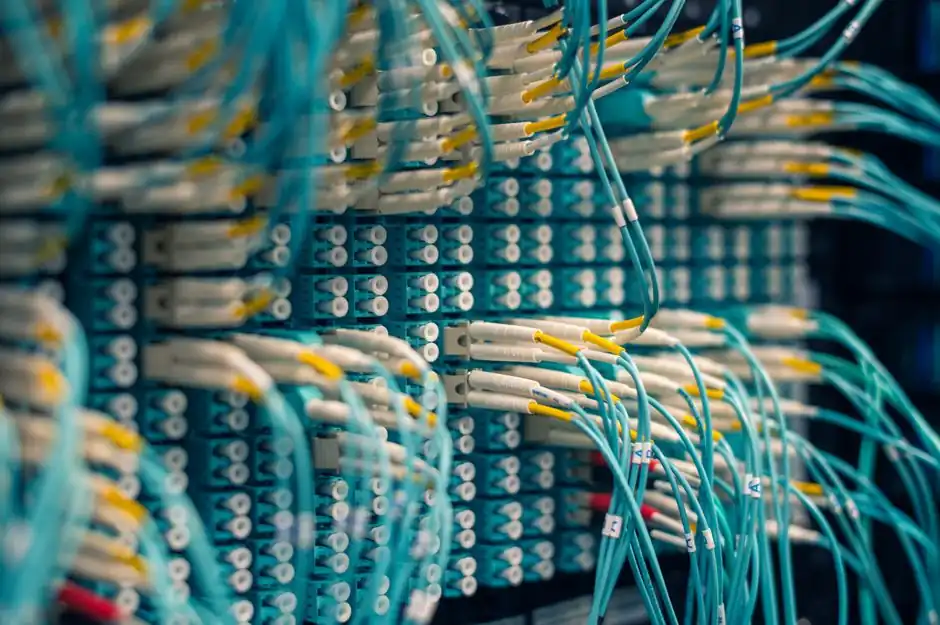
Inside electrical equipment, the chain of decision points is different. D-glass and high-purity silica dominate where low dielectric loss matters, while E-glass roving wrapped with epoxy or polyester serves the mechanical side of bushings, slot wedges and switchgear supports [S4]. In energy meter and sensor assemblies, glass optical fibers (high-purity silica core, doped silica cladding) are specified for immunity to electromagnetic interference and for operation across high and low temperature, corrosive and vacuum environments that plastic fibers cannot survive [S3][S6]. Three numerical apertures bracket the choice: about 0.2 for telecoms-grade silica, 0.37 to 0.39 for doped silica used in fiber-optic measurement, and up to 1.0 for multi-component borosilicate light and image guides with acceptance angles up to 120 to 180 degrees [S3].
Thermal and acoustic insulation: glass wool as a system component
For thermal and acoustic insulation inside boilers, generator housings, battery rooms and modular substations, the relevant product family is glass wool: a bonded fiber matrix whose trapped air cells give the characteristic low thermal conductivity [S4]. Glass wool was industrialized at Owens-Illinois between 1932 and 1933, with first commercial production in 1936, and remains a genericized trade name across the industry [S4]. Its operating envelope is bounded by the binder, not the silica: standard phenolic-bonded glass wool is typically rated to roughly 230 to 250 degrees C continuous service, with higher-temperature grades using different binders or alkaline-earth silicate compositions, and it is the standard insulation behind the casing of most stationary energy equipment.
Mechanical GFRP, by contrast, retains useful properties well above 200 degrees C when the matrix is a high-temperature thermoset or thermoplastic, and that is why S-glass and R-glass composites show up in fire-rated panels and exhaust-grade equipment [S2][S4]. Specifiers should treat insulation selection and structural composite selection as two independent decisions, with two different fiber chemistry log-sheets, even though both ship from the same supplier network.
Comparison: E-glass, S-glass, AR-glass, E-CR-glass at a glance
On the four criteria that drive most energy-equipment decisions, the four common reinforcements line up as follows. Cost: E-glass is the lowest, AR-glass and S-glass command premiums, and E-CR-glass sits between E and S [S2][S4][S7]. Corrosion resistance: E-CR-glass leads in acidic media, AR-glass is the only acceptable option in alkaline (concrete) environments, E-glass is acceptable in neutral or mildly aggressive service, and S-glass is selected primarily for mechanical not chemical reasons [S4][S7]. Tensile strength and modulus: S-glass > R-glass > E-glass ≈ E-CR-glass, with AR-glass positioned for crack control rather than primary load [S7]. Dielectric performance: D-glass is the explicit low-loss choice, E-glass is acceptable in most low-frequency LV insulation, and the high-alkali variants (A-glass, AR-glass) are unsuitable for HV insulation [S4].
This four-axis map is the minimum a specifier should run before opening a quote. A practical pattern is to fix the matrix and processing route first (epoxy pultrusion, polyester lay-up, phenolic binder, or extrusion-wound pipe), then pick the glass chemistry that survives the service environment. For wind blade spar caps, the result is S-glass in epoxy; for chemical-plant pipework, E-CR-glass in a vinyl ester or epoxy matrix; for transformer spacer blocks, D-glass or high-purity E-glass in epoxy; for concrete turbine foundations, AR-glass in a cement or geopolymer matrix [S2][S4][S7].
Market signals and capacity moves through 2026
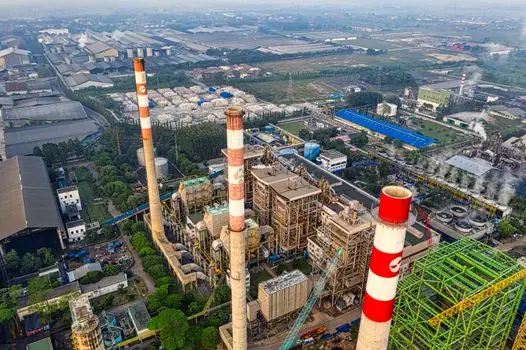
The headline supply-side signal of 2026 is the Fysol acquisition of Turkish producer Beşler Cam Elyaf, announced in January 2026, with an 85,000 square metre facility targeted to reach 120,000 tons of annual capacity through new investment, focused on high-performance glass fiber and composite materials for aerospace and thermoplastics [S5]. That move increases the addressable roving supply for European energy OEMs and tightens the link between thermoplastic-compatible glass grades and downstream wind and electrical equipment.
Two verifiable signals to track through 2026 are the wind-energy share of the textile market, which the segmentation explicitly identifies as a primary growth vertical alongside electrical and electronics, and the uptake of nanoparticle-coated and re-sized glass fibers for interphase-controlled composites, which the Materials Today Communications review flags as a near-term R&D direction tied to service-life prediction [S2][S5]. For anti-static equipment used in battery and hydrogen plants, where surface resistivity and ignition risk dominate, E-CR-glass with a conductive sizing is the emerging pairing, with field data still being collected across 2026 deployments.
Limits, failure modes, and what glass fiber will not do
Glass fiber is cheaper and far less brittle than carbon fiber, but it is also less stiff, and that is the hard mechanical ceiling for any blade or pressure vessel where stiffness drives geometry rather than strength [S4]. In alkaline service, standard E-glass loses mass and strength rapidly through alkali-silica reaction, which is why AR-glass exists and why the wrong pairing in a concrete matrix is a service-life, not a procurement, failure [S7]. Glass optical fibers will not replace plastic fibers in low-cost, short-reach sensing links where the environment is benign and cost-per-channel dominates, because plastic fibers are easier to terminate and survive tight bend radii that glass cannot [S6].
Recyclability is the open sustainability question. The June 2026 review highlights remelting, re-sizing and recycling as emerging routes to extend service life and reduce embodied energy, but none of these are yet at industrial scale for high-modulus S- or R-glass composites [S2]. The U.S. DOE bandwidth study, while published in 2017, remains the reference baseline for energy intensity in GFRP manufacturing and the framework for state-of-the-art versus practical-minimum versus thermodynamic-minimum energy bands; the methodology (2017) is still cited in current composite-energy discussions [S1]. For procurement teams building a 2026 supplier scorecard, the verifiable next node to track is the S-glass and E-CR-glass capacity additions tied to the Fysol-Beşler integration, with a second signal being the first commercial releases of nanoparticle-coated rovings from the major E-glass lines.
Background reading: Riser Cutting Machine Selection for Mining Castings.