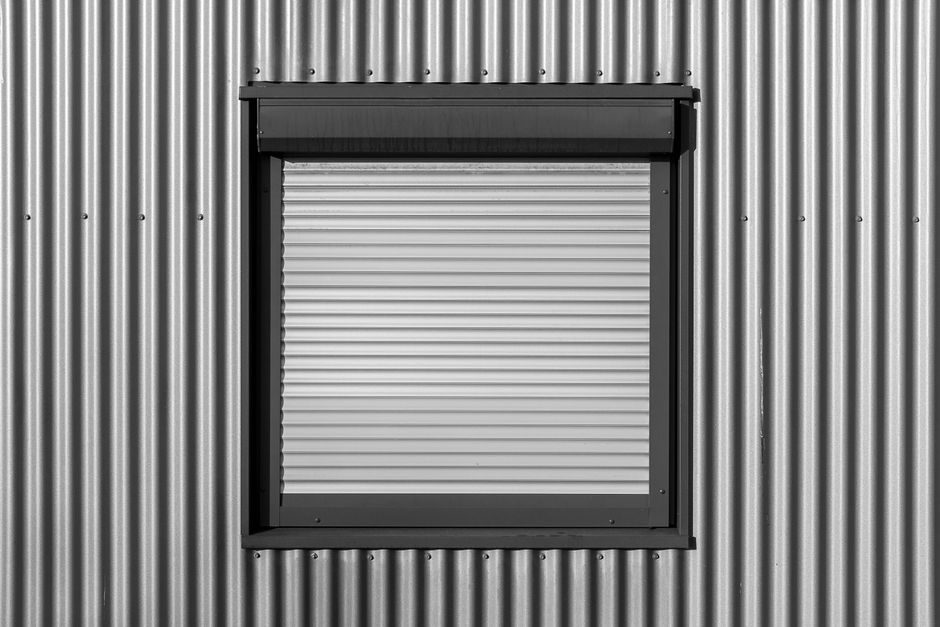
A corrugated metal panel is a cold-formed steel, galvanized, Galvalume, or aluminum-magnesium-manganese sheet pressed into a repeating sine, trapezoidal, or ribbed profile and used as roofing, wall cladding, decking, or siding [S1][S9].
Specifying one means locking down four decisions: base metal and coating, panel profile (rib height and pitch), thickness, and fixing method (exposed-fastener vs hidden-fix). Get the substrate wrong and the panel fails in 5 years; get the profile wrong and it never meets span or load.
Substrate and Coating: Galvanized, Galvalume, or Al-Mg-Mn
The most common substrates in the 2026 supply base are hot-dip galvanized steel (G90 / Z275), Galvalume (AZ150, 55% Al-Zn), and aluminum-magnesium-manganese alloys (typically AA3004 / AA5052) [S1][S8]. Galvalume and Al-Mg-Mn dominate coastal and high-humidity projects because the aluminum-rich coating sacrifices preferentially to zinc-rich galvanize, giving 2-4x the service life in marine atmospheres; galvanize is cheaper per square meter and remains the workhorse for inland agricultural and light-commercial buildings [S1].
For prepainted stock, two coating families are specified almost exclusively: PE (polyester) for economy interior and budget roofing, and PVDF (polyvinylidene fluoride, typically 70/30 Kynar 500/Hylar 500) for architectural façades and color-retention-critical roofs [S8][S10]. PVDF carries a documented color-fastness advantage and is the default for CE-marked and architect-specified projects; PE is acceptable for warehouses, farm buildings, and temporary structures where a 5-8 year color life is acceptable. A 25 mm-rib-height Al-Mg-Mn standing-seam panel with PVDF coating was the spec on a 2026 Tianjin-listed CE-approved prefabricated-house roofing sheet priced at US$14.9-36 per meter at 500 m MOQ [S8].
Profile, Rib Height, and Panel Geometry
Corrugated profiles fall into three families by rib height: shallow-wave (rib height 12-18 mm, classic sinusoidal "AG" or "W" panel), medium-rib (25-38 mm, R-panel / 7.2 rib / 5V crimp), and deep-rib standing seam (38-65 mm) [S8][S10]. A 25 mm flat-seam 360° lock panel and a 65 mm reinforced-mid-stiffener panel are both offered in the same Al-Mg-Mn product line, illustrating how rib height tracks with structural duty: 25 mm for residential and light commercial, 65 mm for stadium, airport, and large-span projects [S8].
Pitch (the centre-to-centre distance of ribs) controls both aesthetics and water-shedding. Common pitches are 76 mm (3"), 152 mm (6"), 200 mm, and 310 mm. Trifacade58-310, a hidden-fix corrugated wall panel from a 2026 Hangzhou listing, is named explicitly for its 58 mm rib height x 310 mm pitch geometry, and is sold in 1,000 m MOQ at US$1.25-2.10 per meter [S10]. For roofing in snow/wind zones, narrower pitch (76-152 mm) and deeper rib (38-65 mm) raise the panel's negative-wind uplift rating; for wall cladding where aesthetics dominate, wider pitch (200-310 mm) and shallow rib are typical.
Thickness, Span, and Structural Duty
Common thicknesses in 2026 commercial supply are 0.30, 0.40, 0.45, 0.50, 0.60, 0.70, and 0.80 mm for steel, and 0.7-1.0 mm for Al-Mg-Mn [S3][S8][S10]. Below 0.40 mm steel is reserved for temporary fencing, partition, and interior liner; 0.45-0.50 mm is the residential-roof default; 0.60-0.80 mm is the commercial/industrial roof-and-deck range. Al-Mg-Mn at 0.7-1.0 mm replaces 0.5-0.8 mm steel on a stiffness basis because aluminum's modulus is roughly one-third that of steel, so designers commonly up-gauge aluminum one thickness step to match steel span tables.
Span tables are not generic: a 0.5 mm R-panel typically purlins at 1.0-1.2 m centres under residential roof load, while a 65 mm standing-seam panel at 0.9 mm Al-Mg-Mn clears 1.5-2.0 m purlin spacings on low-slope commercial roofs. Always pull the manufacturer's tested span table, not a rule-of-thumb; corrugated deck in composite floor systems follows a different load regime again (concrete-shore, wet-concrete, and composite stages).
Roof vs Wall vs Deck: Who Should NOT Pick the Same Panel
A common spec mistake is reusing a roofing panel as wall cladding, or a wall panel as roof decking [S1][S3]. Roofing panels must carry positive rain load, negative wind uplift, and often foot-traffic during install; they specify deeper ribs, higher tensile steel (G550 / 550 MPa minimum yield), and frequently a siphon or anti-capillary side lap. Wall panels carry only wind suction and impact, so a shallow-rib, lower-yield (G300 / G340) panel is acceptable and saves cost per square meter.
Decking panels (floor and roof deck) are a third family entirely: they are designed for composite action with concrete or as structural formwork, with embossments and indentations in the web that a wall panel never has. Putting a wall panel under a concrete slab is a structural failure; putting a deck panel on a façade wastes money and creates an overly stiff, hard-to-install sheet. Roof, wall, and deck are three different products that share a corrugated geometry but nothing else.
Comparison: Four Main Panel Types Against Selection Criteria
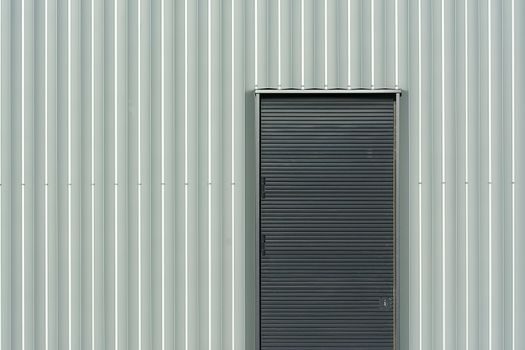
Side-by-side, the four workhorse profiles in the 2026 market sort cleanly on cost, span, aesthetics, and corrosion duty [S1][S8][S9][S10]. Galvanized corrugated (G90, 0.45 mm, 76 mm pitch) is the lowest cost at roughly US$3-6/m² in bulk, fits 1.0-1.2 m purlin spans, and is rated for inland, non-coastal service only. Galvalume corrugated (AZ150, 0.50 mm, 76-152 mm pitch) sits one step up at US$5-9/m², the same span band, but extends into coastal and light-industrial atmospheres. Al-Mg-Mn standing seam (0.7-0.9 mm, 65 mm rib, 310-400 mm pitch, PVDF) is the architectural tier at US$14-36/m, with 1.5-2.0 m spans and a 25-30 year design life. Hidden-fix trapezoidal wall panels (e.g. Trifacade58-310, 0.45-0.50 mm, PVDF) sit at US$1.25-2.10/m in 1,000 m MOQ and are wall-only by design.
Selection logic from this: pick galvanized for budget agricultural and temporary buildings; pick Galvalume for mainstream commercial and inland industrial; pick Al-Mg-Mn standing seam for coastal, architectural, or long-life projects; pick hidden-fix trapezoidal for façade-only architectural wall.
Standards, Tolerances, and What to Verify on the Mill Certificate
Quality corrugated stock is produced to national equivalents of ASTM A653 (hot-dip galvanized/Galvalume steel sheet), EN 10346 (continuously hot-dip coated steel flat products), and GB/T 12754 for prepainted steel. The mill certificate should state coating weight (G60/G90/G100 or Z180/Z275 in g/m², AZ100/AZ150 for Galvalume), yield strength (G300/G350/G550), and the paint system (PE 18-25 µm or PVDF 25-27 µm topcoat over 5-10 µm primer). Buyers should reject any certificate that lists only "galvanized" without a coating weight and a yield-strength class — those two numbers are the spec, everything else is marketing. [S1]
For aluminum-magnesium-manganese, the equivalent reference is GB/T 3880 (wrought aluminum alloy sheet) and EN 1396 (precoated aluminum); alloy temper is typically H14 or H44 for AA3004 standing-seam stock [S8]. For deeper reading on substrate selection in a related alloy family, see the aluminum coil spec map; for the broader metal-stamping context behind formed panels, the metal stamping spec and process map is a useful cross-reference. Buyers comparing substrate economics can also consult the aluminum ingot price stack and grade bands to ground raw-material assumptions.
Fixing Method, Fire, and Code Considerations
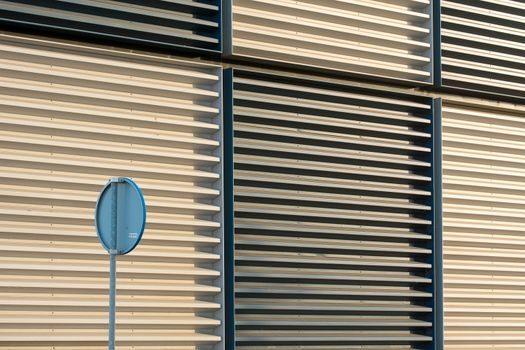
Exposed-fastener panels (classic corrugated, R-panel, 5V crimp) use coated self-drilling screws through the panel face into purlins; they are faster to install and easier to repair but the fastener penetrations are the dominant leak path over a 20-year service life. Hidden-fix / standing-seam panels use clips beneath the rib or a 360° mechanically seamed lock; the panel face is unbroken, leak risk drops sharply, and thermal movement is accommodated by the clip slot. CE-marked Al-Mg-Mn standing seam on the 2026 Tianjin listing is sold with a "360° seam" lock option, which is the higher-end of the two hidden-fix variants and is the spec for airport and stadium roofing [S8].
For fire, prepainted steel and Al-Mg-Mn panels are non-combustible (Euroclass A1) as a substrate; the paint film is organic and contributes negligibly. Where a fire-rated assembly is required (e.g. external wall on a high-rise), the test is usually a system-level façade fire test, not a panel-only result, so ask the supplier for the full assembly test report, not just the substrate data. For aluminium-alloy substrate chemistry behind these panels, the aluminum sheet selection map covers the underlying alloy-and-temper logic.
Final node: lock the spec by writing a four-line purchase clause — substrate and coating weight, profile code and pitch, base-metal thickness, paint system and topcoat thickness — and require the mill certificate to match all four on delivery. For a related view of how coated metal panels sit inside the broader metal-curtain-wall category, the encyclopedia entry on metal curtain wall panels covers the architectural cladding family these products belong to; the aluminum veneer panel entry covers the flat-sheet cousin for non-corrugated façades. Trackable signal: Al-Mg-Mn 65 mm standing-seam stock at 0.9 mm with PVDF is now available ex-China at the US$14-36/m band at 500 m MOQ [S8], and Trifacade58-310 hidden-fix wall stock at the US$1.25-2.10/m band at 1,000 m MOQ [S10].
Component reference pages worth checking: metal powder.