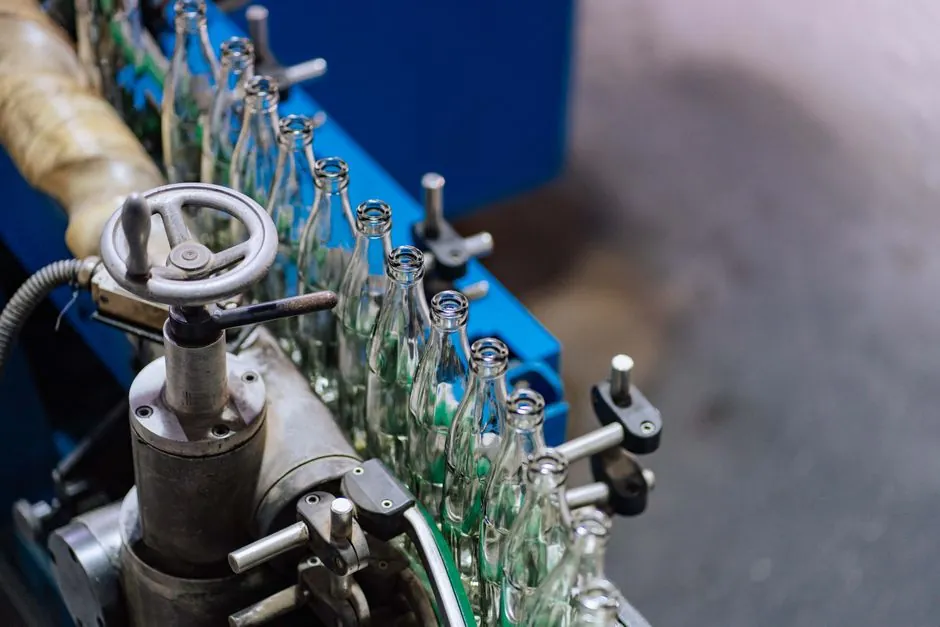
IP69K-rated 316 stainless-steel food-grade actuators are available for food and beverage washdown applications.
Hydraulic actuation suits high-force, continuous-duty valves and clamps, but hydraulic oil, hoses, seals, and drains must remain isolated from product zones.
Define the hygienic duty before choosing an actuator
Food-processing machinery must prevent bacteria, lubricant, hydraulic fluid, and wash chemicals from contacting the product [S1]. An actuator is therefore a sanitary component, not merely a mechanical power source.
For direct product-contact duties, require smooth, drainable surfaces, tight sealing, corrosion-resistant materials, and no crevices that retain food particles [S3]. Polished stainless steel is commonly specified at Ra ≤ 0.8 µm, while broader sanitary selections accept Ra ≤ 0.8–1.6 µm [S4]. These limits are procurement requirements, not substitutes for validation of the complete valve or machine assembly.
Cleaning exposure must be classified before actuator selection. An IP69K actuator addresses high-pressure, high-temperature water jets, but it does not by itself establish steam, detergent, chemical, or lubricant compatibility [S2][S3].
Use hydraulic power only where the duty justifies it
Hydraulic actuators provide the highest force density of the three principal choices and can hold substantial load when the hydraulic circuit remains pressurized [S7]. They fit heavy clamps, large valve operators, fillers, and packaging machinery where electric motors would be oversized or where pneumatic cylinders lack the required force.
Hydraulic systems also carry contamination and maintenance liabilities. A failed hose, rod seal, or fitting can release oil near a washdown zone, while hydraulic power packs require controlled oil selection, filtration, leakage control, and regular inspection. If the actuator is outside the sanitary zone, its hydraulic circuit should remain outside that zone as well.
Do not select hydraulic actuation for every food application. Small, clean, intermittently operated motions are usually better served by a stainless electric actuator with IP69K protection, while simple pneumatic operation can suit sanitary valve actuation [S2][S4]. For comparison with the broader motion-control decision, see hydraulic actuator selection for chemical processing.
Compare hydraulic, pneumatic, and electric options

The actuator choice should be based on force, speed, duty cycle, control accuracy, and exposure rather than a preference for one power source. The following comparison defines practical decision bands: [S2]
The decisive thresholds are application-specific rather than universal: require hydraulic force above what a compact pneumatic cylinder or electric actuator can deliver, and require electric positioning when repeatable low-speed control matters more than force density [S7]. Published food-industry guidance identifies rod-style electric actuators as common in dairy and beverage washdown duties [S8].
Specify stainless steel, seals, and surface finish
Type 316 or 316L stainless steel is the preferred actuator housing material for corrosive washdown environments, while type 304 and 304L are also used [S2]. For product-adjacent or highly sanitary duties, 316L is the stronger default because of its corrosion resistance and established use in sanitary equipment.
Food-processing machinery should be designed to be properly cleaned and sanitized after every use, with hygienic design requirements addressing cleaning and sanitization. For procurement, define the required finish more tightly, commonly Ra ≤ 0.8 µm for polished product-contact surfaces and no looser than Ra ≤ 1.6 µm for less exposed sanitary hardware [S4].
Sanitary pneumatic actuators can use FDA-compliant seals, and seal selection must account for the requirements of the application. The actuator manufacturer must identify the exact elastomer and lubricant grade in the submittal.
Validate IP69K, CIP, and chemical exposure
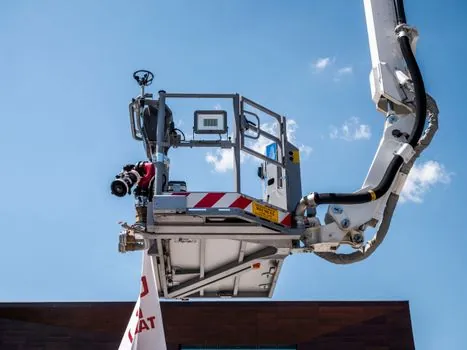
IP69K was created for enclosures regularly exposed to high-pressure or high-temperature cleaning environments such as those encountered in washdown applications. IP69K originated in DIN 40050-9 and addresses protection against dust and high-pressure, high-temperature water [S3].
An IP69K enclosure rating does not prove that an actuator is suitable for SIP at 121–140°C, nor does it establish resistance to caustics, acids, sanitizers, or cleaning-agent concentrations [S4]. Require written confirmation of the cleaning temperature, duration, pressure, nozzle distance, detergent concentration, and seal exposure. Food-grade actuator designs also need tightly sealed interiors so lubricant cannot migrate into the product zone [S3].
Verify that the actuator can be clean-in-place without dismantling. Nook describes its IP69K food-grade actuators as capable of exterior washdown while operating, with tightly sealed internal chambers [S3]. Treat this as a manufacturer-specific capability unless the purchased model has equivalent certification and test documentation.
Design the power unit and installation boundary
Keep the hydraulic power unit, hoses, manifolds, and filtration components outside the washdown zone wherever possible. Where crossing is unavoidable, use sealed hydraulic connections, routed hoses protected from direct jets, stainless interfaces, and containment provisions that isolate a leak from product-contact surfaces [S1].
Actuator-to-valve geometry is a contamination and reliability control. A misaligned stem connection can impose side loads, wear seals, and reduce stroke accuracy. Use the actuator manufacturer's stated allowable side load and mounting orientation, and verify full stroke clearance before ordering. For integral valve packages, sanitary suppliers offer angle-seat actuators with self-draining, high-temperature-capable designs, but the valve operator alone does not qualify an external hydraulic actuator [S4].
For process control, the positioner must match the actuator and valve stroke. Food and beverage selection can involve integrated pneumatic and electric valve packages, so pneumatic torque, air quality, exhaust filtration, and signal type must be checked separately from the actuator body [S4].
Reject actuators that fail the sanitary pre-screen
Reject any hydraulic actuator with painted or coated aluminum in a washdown area, unsealed cable entries, open vents, sharp external fasteners, inaccessible drain pockets, or an unqualified elastomer seal. Coated aluminum can corrode, inadequate ingress protection can admit moisture, and a non-self-draining geometry can retain product and support bacterial growth [S4].
Reject a candidate if its documentation states only “food grade” without identifying the housing alloy, surface finish, seal compounds, lubricant registration, and cleaning limits. Type 316 stainless steel alone is insufficient, since exposed threads, crevices, and dead zones can still collect material [S2][S3].
Three-A Sanitary or EHEDG certification may be required by the equipment owner or OEM, and material compliance may also be assessed against FDA requirements, but those requirements apply to the finished equipment, not automatically to every actuator component [S3][S4]. Specify the required certification in the purchase order and verify the exact model in the certification document.
Build the final shortlist from documented evidence
The shortlist should contain actuators with documented IP69K protection, 316 or 316L stainless construction, smooth drainable geometry, identified food-grade seals, and verified compatibility with the actual cleaning cycle. Require dimensional drawings, allowable side-load data, stroke and speed, force or torque, mounting orientation, fluid compatibility, and application-specific test records before commercial approval. [S4]
For a high-force hydraulic duty, retain only units that keep the power unit and hose circuit physically separated from product and wash zones. For precision positioning without large-force requirements, compare the hydraulic design against a stainless IP69K electric actuator and a sealed pneumatic option using the same four gates: force, control, ingress protection, and contamination containment [S2][S4][S7].
A trackable pre-production test should include full-stroke cycling, side-load verification, repeated washdown at the specified pressure and temperature, seal inspection, and a leakage check around all hydraulic connections. Record lubricant, seal compound, housing grade, and revision of each approval document, then route the validated configuration into the equipment sanitary design file.