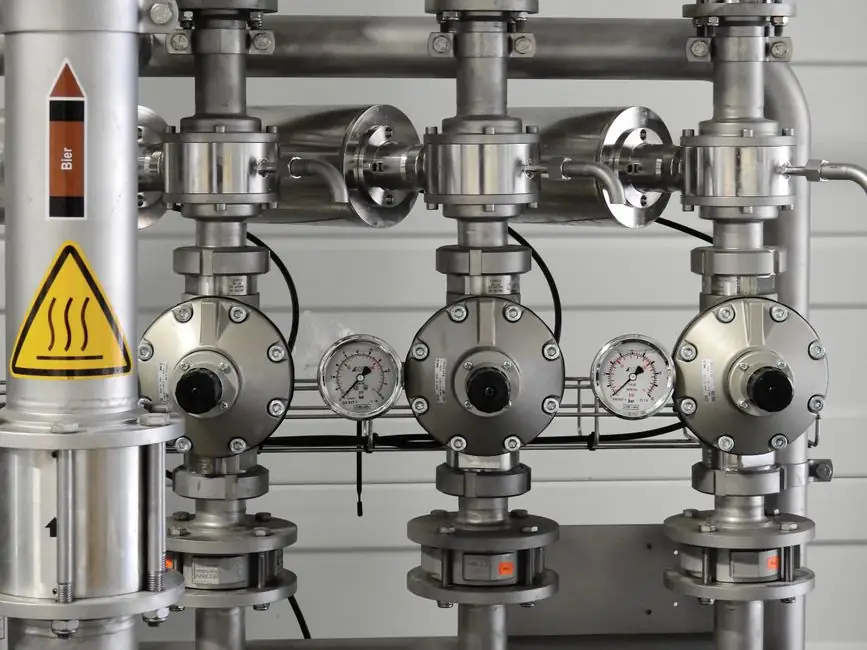
A new 4-20 mA, 2-wire hydrostatic level transmitter from a Chinese OEM such as Holykell's HPT604-A typically lists between 80 and 220 USD for a 316SS body, 500 m range, IP68 submersible unit [S1]. Equivalent European-built units with ATEX/IECEx hazardous-area approval, such as the MJK Expert 3400 in PPS housing rated to 300 m and 40 bar, generally land in the 900 to 2,500 USD band [S2].
Across 34 manufacturers and 77 catalog models indexed on DirectIndustry's hydrostatic category page, list prices are gated by three structural variables: wetted material (PP, 316SS, PVDF, Hastelloy), maximum head rating (0.1 bar to 40 bar), and the presence of an intrinsically safe barrier or explosion-proof housing [S3]. Specifiers who treat the sensor as a commodity usually miss that a 0.69 inch slimline body, such as the AMETEK/U.S. Gauge SST 316L unit (105 m, 10 bar), commands a 30 to 60 percent premium over a standard 1 inch OD probe because the narrow geometry limits boresite access in deep wells [S4].
Price Bands by Build Tier
Entry-tier hydrostatic level transmitters in PP or 316SS body with ceramic sensor and 0-10 m range, exemplified by the DIVATEC DV401 (40 mm OD, 10 bar, 0-250 mbar to 0-10 bar selectable), cluster at 80 to 250 USD FOB for single-piece orders [S5]. The DIVATEC DV401 ships standard with 10 m of double-sealed CS-700/CS-800 cable including a pressure-equalization reference tube, and extra cable length adds roughly 2 to 4 USD per linear meter [S5].
Mid-tier stainless-steel submersible units with 4-20 mA plus RS-485/Modbus output, surge protection, and 200 to 500 m range sit between 300 and 900 USD; the SGM LEKTRA KPL (1-200 m, IP68/IP67, -40 to 80 degrees Celsius) is a representative data point at 320 to 550 USD [S1][S7]. High-tier pharmaceutical and sanitary builds from Anderson-Negele with compact stainless housing, 3A/EHEDG documentation, and 4-20 mA loop-power routinely exceed 1,500 USD, and ATEX-ceramic-capacitive Expert 3400 variants with 5 pressure-range options (4, 6, 10, 18, 40 bar) and built-in air-pressure compensation move into the 1,800 to 2,500 USD window [S2][S6].
Cost Drivers That Move the Quote
Wetted material is the single largest non-certification driver: a 316SS body adds roughly 60 to 120 USD over PP for the same sensor cell, and PVDF or Hastelloy upgrade paths add another 200 to 800 USD depending on the alloy surcharge [S5][S1]. Sensor cell technology is the second driver, and ceramic capacitive cells (used in the MJK Expert 3400 and the DIVATEC DV401) command 15 to 30 percent over piezoresistive silicon cells when paired with the same housing, because long-term stability in aggressive fluids justifies the premium for wastewater and chemical service [S2][S5].
Hazardous-area certification is the third driver and the most step-function: a non-ATEX HPT604-A in standard build costs a fraction of the ATEX/IECEx twin-document variant (8-page separate ATEX/IECEx datasheet published for the same model) and the delta is typically 1.2x to 1.8x the base sensor price [S1]. Cable termination, vented reference tube routing, and lightning-protection options (offered as an "optional lifetime" add-on on the Holykell HPT604-A) further lift the unit price by 50 to 180 USD per option, and these costs recur on every reinstall [S1].
Specs That Lock the Specification, Not the Catalog
Process temperature window is a hard qualifier before price even enters the conversation: standard PP/316SS bodies stop at 80 degrees Celsius, and the SGM LEKTRA KPL's -40 to 80 degrees Celsius window is typical for general liquids [S7]. Higher-temperature service at 100 to 150 degrees Celsius requires a Contite-style condensate-resistant cell, used in the Endress+Hauser Deltapilot FMB50 (0-100 m, 100-10,000 mbar, -10 to 100 degrees Celsius), and that specification alone limits the supplier pool [S3].
Range-to-pressure ratio and density compensation separate usable hydrostatic units from borderline ones. The Fuji Electric FKE-FCX-AIV V6 series covers 0.01 to 30 bar process pressure across -40 to 150 degrees Celsius, while the FKD seal-differential variant extends from 3.2 mbar to 200 bar, useful for closed-vessel level where head pressure must be subtracted from static line pressure [S3]. Specifiers should note the inherent hydrostatic limitation: measurement depends on liquid density, and foam, agitation, and tank venting all degrade accuracy, which is why buyers comparing technologies often evaluate a magnetostrictive level transmitter for interface-critical service rather than upscaling the hydrostatic spec [S1].
Selection Criteria and Comparison Pass
Four decision axes dominate a hydrostatic spec: media compatibility, depth/pressure rating, signal output, and certification. On media compatibility, PP (DIVATEC DV401) handles aggressive fluids including marine service at the lowest cost, 316SS (Holykell HPT604-A, AMETEK SST) covers most industrial water and light chemicals, and PPS (MJK Expert 3400) is rated for acid, base, and iron chloride exposure [S1][S2][S4][S5]. On depth/pressure, the Holykell HPT604-A reaches 500 m at 0.05 bar full scale, the AMETEK SST caps at 105 m / 10 bar, the MJK Expert 3400 spans 0-300 m with five discrete range choices to 40 bar, and the DIVATEC DV401 is fixed-range 0-10 bar in 40 mm OD [S1][S2][S4][S5].
On output, the default 2-wire 4-20 mA loop remains cheapest, while 3-wire voltage, RS-485, and Modbus options add 50 to 250 USD per unit and the MJK Expert 3400D/7060D RS-485 variants carry documented digital calibration over USB [S1][S2]. On certification, the ATEX/UL-approved MJK Expert 3400 and the ATEX/IECEx HPT604-A datasheet are the two clear options for hazardous-area service; the Anderson-Negele SX with stainless compact housing targets pharmaceutical storage rather than hazardous-area use [S1][S2][S6]. A spec-first buyer working through this matrix usually converges on two or three candidate part numbers before opening a quote, and at that point a structured level transmitter cross-reference saves more time than it costs.
Total Cost of Ownership Beyond Sticker Price

Installed cost typically runs 1.5x to 2.5x the unit price once engineers add cable (2 to 4 USD/m for PUR-jacketed hydrostatic cable with reference tube), surge protection, junction boxes, and intrinsically safe barriers for ATEX loops [S5][S1]. The Holykell HPT604-A datasheet lists 8 pressure holes and an "optional lifetime" lightning protection, which is a meaningful TCO line for outdoor wellhead and reservoir service where induced transients are common [S1].
Recalibration intervals and probe accessibility dominate the 5- to 10-year maintenance envelope: submersible probes are easy to install but expensive to retrieve from a deep well, and a ceramic capacitive cell in the MJK Expert 3400 is specified for long-term stability specifically to avoid pulling the probe annually [S2]. Buyers evaluating capacitance level transmitter alternatives often do so on TCO grounds rather than unit price, because the capacitance probe typically avoids the vented-cable reference-tube complication entirely. Spare-parts stocking (one calibration-certified probe per 10-20 installed) and the cost of proof-testing ATEX units round out the realistic 10-year cost stack at roughly 2.5x to 4x the initial purchase order.
Limits, Failure Modes, and When to Walk Away
Hydrostatic level transmitters are not specified for hydrocarbon service in open tanks where product density varies, and they cannot resolve interface between two liquids of near-equal density, both of which are foundational limits of the technology rather than brand-specific weaknesses [S1][S3]. Foam, agitation, and tank-venting effects can each add 1 to 3 percent of full-scale error that the catalog accuracy spec does not include, so any spec tighter than plus or minus 0.5 percent FS in a turbulent vessel should drive a re-evaluation rather than a higher-priced unit.
For non-condensible gases, slurries above 5 percent solids by weight, or any application above 150 degrees Celsius, the specifier should move to a different technology: a TDR level meter for steam and hot condensate, a magnetic level gauge for visual-standby redundancy on chemical sumps, or a radar level meter for hydrocarbon bulk storage. None of these alternatives removes the hydrostatic probe from a wastewater or raw-water well, where the technology remains the lowest-cost-per-meter-of-vertical-measurement option in the specifier's catalog.
Specifiers pricing projects due in 2027 should request both standard and ATEX variants on the RFQ so the price gap is documented before the certification lead time is committed.