Evidence strength: single-signal
Industry reading
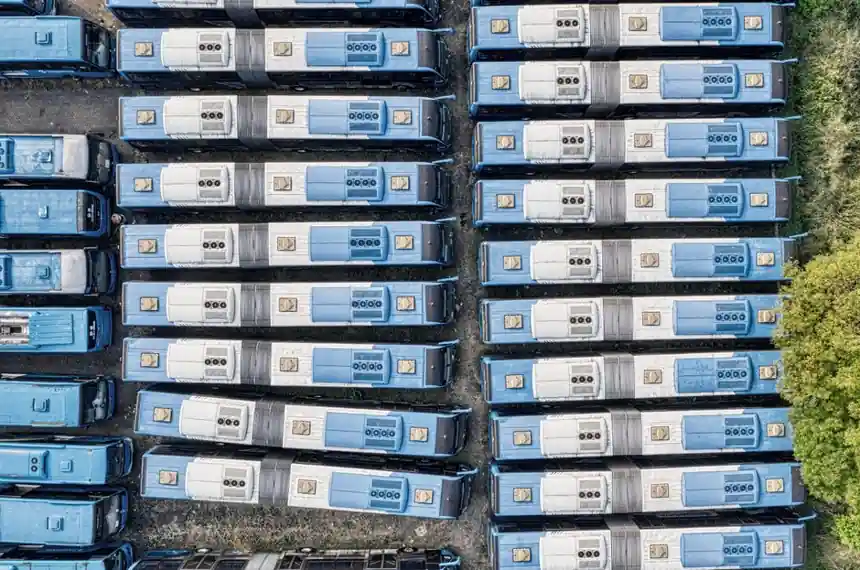
The notice on find-tender (source_date 2026-08-10) confirms a Single Supplier Framework covering CPV 34121000 buses and coaches, with Contract 1 P-3370 valued at £60,000,000 excluding VAT (£72,000,000 inc. VAT) and an award decision dated 10 August 2026. Standstill runs to 19 August 2026, 8 working days, with signature from 1 September 2026 and an initial term of 1 October 2026 to 30 September 2029, extendable to 30 September 2034 (up to 60 months). 3 tenders were received, 2 tenders assessed in the final stage, and 0 were submitted by SMEs, which signals a barrier to entry for smaller body-on-chassis builders. Geographic scope is UKN (Northern Ireland) and the main procurement category is Goods rather than services, so the supplier carries whole-vehicle homologation, type approval and aftersales support. The technical scope is narrow: diesel, double-deck, low emission and wheelchair accessible for stage-carriage service under the Goods procurement category. Awarding a single supplier on a framework of this size concentrates aftermarket and parts demand with one OEM, which matters for second-tier suppliers positioning chassis, seating, wheelchair ramp and telematics content. The decision is post-award rather than a live solicitation, so headline risk is now execution against a four-year base term. The single-supplier structure is the most actionable element for competitors: losing this round means no second-place safety net, and Translink retains the right to draw down the £60,000,000 excluding VAT base before any extension kicks in. The 8-year horizon gives the winner a long service-parts and refurbishment tail that adjacent suppliers should treat as a multi-year opportunity, even though they are not on the framework itself. Funding source, depot infrastructure spend and any zero-emission transition clause are not visible in the excerpt and should be confirmed before re-bid positioning. An adjacent transport-adjacent item illustrates how a different award pattern reads in this column.
- P-3370 Supply of Double Deck Diesel Buses (find-tender, 2026-08-10, grade C)
Procurement implications
A single supplier on a framework with a £60,000,000 excluding VAT base and an initial term running from 1 October 2026 to 30 September 2029 leaves no contractual hedge if a build slot slips, so warranty milestones, acceptance testing windows and penalty clauses need scrutiny. The wheelchair-accessibility requirement is binding across the lot under CPV 34121000 (Buses and coaches), meaning any deviation in door geometry, ramp rating or passenger capacity will reset homologation on this fixed-price goods contract. The 8-year total horizon (with extensions up to 30 September 2034) creates a long aftermarket tail that should be negotiated now, not at extension gates. Compliance exposure sits with the operator under the diesel low-emission scope, so Translink should lock emission documentation and accessibility audit trails before vehicle acceptance. The £72,000,000 including VAT figure also implies a VAT recovery path, worth flagging to finance. With 0 tenders submitted by SMEs in the final two of 3 tenders received, the next re-procurement should consider how to broaden supply-base resilience.
Supplier implications
One supplier has just secured a near-monopoly window on Northern Ireland's double-deck replacement pipeline through 2034 under a Single Supplier Framework. Losing bidders need to decide quickly whether to wait for a possible mini-compete under the framework or target adjacent fleets before re-bid positioning. Tier-1s selling wheelchair ramp systems, destination signage, telematics and seating should approach the winning OEM now with multi-year pricing rather than wait for a competitive RFQ later in the framework. Because the award is diesel low-emission, suppliers with battery or hydrogen product lines should not read this as a zero-emission signal. Channel partners and dealer networks in Northern Ireland should expect a single point of accountability for warranty and recall, so service capacity planning around Belfast and Derry depots is the next commercial conversation. Smaller bodybuilders were screened out by the framework's scale and accessibility scope, so re-entry is realistic only via sub-contract to the winning OEM or via a future Translink mini-tender for niche variants. Competitor intelligence should focus on the standstill closure on 19 August 2026 and the 1 September 2026 signature date for any residual challenge window.
Related coverage: Two answer periods flag US grid build-out as Senegal gas-to-power advances.
What to verify next
- Open the find-tender notice P-3370 at the primary notice (see Sources) to confirm supplier name, lot structure and any zero-emission transition clause
- Check the Department for Infrastructure publications for co-funding or grant support behind the Translink framework
- Review Translink's Fleet Strategy on translink.co.uk for confirmed double-deck replacement volumes and depot plans
- Search CPV 34121000 on find-tender for parallel double-deck awards to benchmark pricing per bus
- Monitor the Public Contracts Bulletin for any Irish accessible bus notices that could absorb spillover capacity
- Request the procurement pipeline from Translink's procurement contact to confirm whether a zero-emission overlay tender is planned before 2029
Related Encyclopedia
Browse related product pages in the Industrial Encyclopedia.