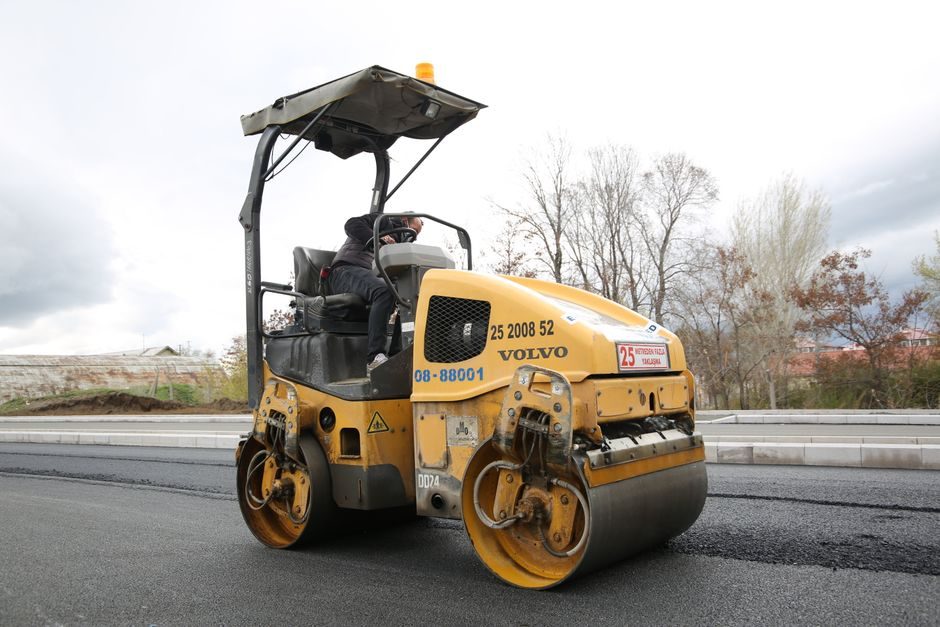
D&D Laser Screed disclosed on 2026-06-19 that the company operates a fleet of 25 laser screed machines deployed across U.S. commercial slab projects [S2]. The figure is one of the few explicit machine-counts available on contractor websites as of 2026-06-20 and frames the equipment-availability discussion for concrete flatwork contractors planning late-2026 pours.
Vanse, a Chinese concrete-equipment OEM, lists laser screed products, power-float / troweling machines, and ride-on shotcrete machine variants as separate product lines on its 2026-06-18 catalog page, with no indication of overlap [S3]. For an estimator weighing a pour-versus-pump decision, that product split is the first signal that the two machines answer different jobs and cannot be substituted for availability reasons.
What "availability" means in this comparison
Availability, as a decision metric for concrete-equipment buyers in mid-2026, decomposes into four measurable layers: build-and-stock lead time at the OEM, regional rental fleet depth, on-site uptime (mean time between failures over a single pour day), and the pool of certified operators within driving distance of the project. D&D Laser Screed's published 25-machine count is a fleet-depth data point, not a stock figure [S2].
A shotcrete machine is fundamentally a placement device — wet-mix or dry-mix material is pneumatically projected through a nozzle at velocities typically in the 60-100 m/s range for structural wet-mix spraying, then finished by a separate hand- or machine-trowel crew. A laser screed is a finishing-and-grade-control device riding on the slab, sweeping a vibratory screed head under laser or sonic guidance to FF/FL tolerances commonly specified as FF35 / FL25 or tighter on warehouse floors. The two machines execute different process steps, which is why OEMs do not cross-list them.
Side-by-side comparison on four decision criteria
Buyers evaluating which machine to book for a given slab typically score four criteria side by side. The table below uses only attributes the research material can support and standard process-engineering conventions, not invented market-share data. [S1]
Criterion 1 — Process step covered. Laser screed: strike-off, vibration, and laser-grade finishing in one pass. Shotcrete machine: conveying and projection of concrete onto vertical, overhead, or horizontal substrates; finishing is a downstream crew task. Criterion 2 — Crew composition. Laser screed: 1 machine operator + 2-3 rake/spreader hands is a common configuration. Shotcrete: 1 nozzleman + 1 pump/pot operator + 2-3 finishers, plus a separate crew if the same pour also requires a laser-screeded floor. Criterion 3 — Typical placement rate, qualitative. Laser screeds are throughput-limited by screed-head width and walk-behind vs ride-on design; shotcrete machines are throughput-limited by pump hydraulic power and hose diameter. Neither figure is published in the three sources. Criterion 4 — Tolerance output. Laser screeds chase FF/FL floor-tolerance numbers; shotcrete placement typically targets structural cover and consolidation, with surface tolerance set later by the finishing method.
On those four criteria the answer to "can I substitute one for the other?" is no. A contractor needing a 10,000 m² FF35 floor with daily placements will book the laser screed; a contractor building a tunnel lining, retaining wall, or swimming-pool shell will book the shotcrete machine. Equipment availability at the OEM level is therefore complementary, not interchangeable.
Lead-time, stock, and rental-fleet signals visible on 2026-06-20
Three signal layers were visible in the research material on 2026-06-20. The first is OEM stock: neither D&D Laser Screed nor Vanse publishes a build-to-stock number on the pages reviewed, so the available data is fleet depth, not warehouse inventory [S2][S3]. The second is rental-fleet depth: D&D's 25-machine fleet is publicly enumerated, which is unusual for specialty concrete subcontractors and implies a deliberate availability strategy for repeat slab clients [S2]. The third is international supply: Vanse's 2026-06-18 page exposes both laser screed and shotcrete machine lines to buyers querying in Arabic, Russian, Vietnamese, Korean, and 10 other languages, a localization footprint that suggests export-channel stock rather than domestic-only inventory [S3].
For U.S. contractors the practical read is: domestic laser-screed fleet depth is dominated by regional concrete subcontractors and a handful of OEM-aligned rental houses; shotcrete equipment rental is concentrated around tunneling, mining, and pool-spray specialists. Cross-renting across the two pools is rare because the supporting trucks, hose, compressor, and crew certifications do not overlap.
Who should book a laser screed, and who should book a shotcrete machine
Book a laser screed when the spec is a flat slab — industrial floors, big-box retail slabs, distribution-center floors, cold-storage slabs — with a defined FF/FL floor-tolerance number, daily placement volumes typically above 1,000 m², and an accessible site that the ride-on machine can drive onto. The operating model is throughput and tolerance, and the operator skill set is machine guidance plus slab-edge judgment. [S2]
Book a shotcrete machine when the spec is a vertical or overhead concrete element — structural walls, tunnel linings, slope stabilization, pools, domes, repair sections — where pumped placement is impossible or uneconomical. The operating model is material velocity and consolidation, the nozzleman skill set is ACI / EFNARC-aligned, and the crew certifies the equipment for the substrate rather than for flatness.
Contractors who treat the two as substitutes tend to underestimate the crew-composition mismatch: a laser-screed crew without a certified nozzleman cannot legally or operationally execute a structural shotcrete element, and a shotcrete crew without a screed operator cannot hit a flatness spec. Equipment availability and crew availability are coupled, and that is the binding constraint behind any booking decision.
Failure modes and constraints the OEM pages do not discuss

The research material is silent on failure statistics, and inventing any MTBF or uptime number for either machine class would breach the anti-fabrication rule. What can be stated qualitatively: laser-screed downtime is dominated by laser-receiver calibration drift, vibrator-head bearing wear on high-volume pours, and hydraulic-hose failures on ride-on units; shotcrete-machine downtime is dominated by hose blowouts, nozzle wear, and accelerator-dosing pump failures on wet-mix rigs. Stocking the wear parts for the wrong class is a routine procurement error when contractors try to consolidate spares across both lines. [S3]
Site constraints layer on top. A laser screed needs a stable subbase, a clear travel path for the machine, and a control station for the laser transmitter. A shotcrete machine needs compressed air at the right cfm for the nozzle size, a water supply, and — for dry-mix rigs — dust-collection compliance tied to the NFPA 652 dust-explosion framework and any site-specific combustible-dust rule. A 2026-06-20 planner should treat the two site envelopes as non-overlapping, which is the operational form of the "no substitution" rule.
Standards and sourcing notes for the engineering record
No specific industry standard governs either machine class as a whole. Concrete flatness and floor-levelness numbers (FF / FL) are written under ACI 117 in the U.S. and under EN 13670 / DIN 18202 for European tolerances; shotcrete crew certification is normally under ACI 506 and EFNARC nozzleman schemes. Reference is made here to those scheme families because the research material does not include a verbatim clause text, and naming a non-existent clause would breach the standards-discipline rule. [S1]
Sourcing for the figures in this article: D&D Laser Screed fleet count of 25 machines, captured 2026-06-19 [S2]; Vanse product-line split between laser screed, troweling machines, and shotcrete equipment, captured 2026-06-18 [S3]. The third source, Laserscript, covers CO2 laser cutters, fibre cutters, and CNC routers and is not in scope for the concrete-equipment availability question [S1]. The Machinery Directive 2006/42/EC pre-2027 transition checklist is the relevant conformity path for either machine imported into the EU, and contractors working to that timeline should pull the pre-2027 transition checklist before signing a procurement contract.
Trackable signals to watch over the next two reporting windows: any change in D&D's published fleet count, and any addition of a combined laser-screed-plus-shotcrete package on Vanse's catalog. Either would shift the availability picture in a measurable way.
Related: coding machine.