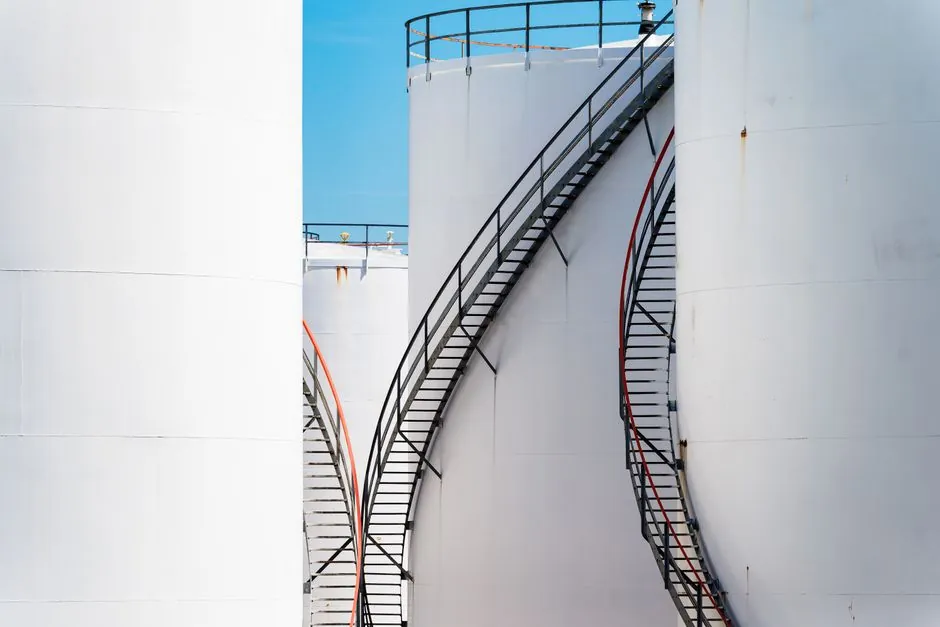
Level transmitter purchase price in 2026 spans roughly $80 to $6,000+ per point depending on sensing principle, wetted material, and certification [S2]. Submersible hydrostatic probes with 316L stainless steel diaphragms and 4-20 mA output are the lowest-cost tier; non-contact 80 GHz radar and magnetostrictive level transmitters sit at the top of the range, with high-temperature or hygienic variants adding 30-60% over standard units [S2].
Volume, protocol, and hazardous-area approval swing the same SKU by 2-4x: a basic 0-10 V output hydrostatic gauge differs sharply from a HART 7 + ATEX/IECEx unit specified for Zone 1 chemical service. The buyer's guide on DirectIndustry groups three resistive level transmitter manufacturers under one product family [S1], confirming that even within a single sensing technology, list price varies by IP rating, cable length, and supply voltage.
What Drives Level Transmitter Cost
Four cost drivers explain most of the spread between catalog lines from Chinese OEM factories [S2]. Second, the capacitance level transmitter class adds cost for high-temperature and high-pressure variants used in steam boilers and chemical reactors. Third, communication protocol, where 4-20 mA is baseline and HART, IO-Link, or wireless 4G/GPRS add incremental BOM and licensing [S2][S4]. Fourth, certification: ATEX, IECEx, and SIL ratings on safety-instrumented functions double or triple the price versus the same transmitter in a general-purpose enclosure.
The Texas Instruments level-transmitter reference design frames the hardware stack as a precision signal chain, ultra-low current consumption for loop-powered 2-wire 4-20 mA service, and multi-protocol industrial communication interfaces [S4]. That stack is the same regardless of vendor, which is why the BOM for a generic hydrostatic probe is comparable across Chinese OEM factories catalogued at pressureleveltransmitter.com, where the listed pressure ranges cover -1 bar-0-1 bar and 0-2 psi up to 15,000 psi in 316L stainless steel [S2].
Five Sensing Technologies Compared on Decision Criteria
Specifiers should weigh the main sensing options against four criteria: cost, accuracy, suitability for harsh media, and maintenance burden. Hydrostatic submersible (low cost, ±0.5%FS typical, limited to clean liquids, periodic cleaning) versus ultrasonic (mid cost, ±0.3%FS, contact-free but foam/steam false echoes) versus radar level meter (high cost, ±0.1%FS, immune to foam and vapor, low maintenance) versus capacitive (low-mid cost, ±1%FS, good for conductive liquids and short ranges) versus magnetostrictive (high cost, ±0.05%FS, ideal for interface measurement in oil/water separators) [S3]. The reference design at TI.com groups radar/microwave, capacitive, ultrasonic, and hydrometric pressure as the four dominant transmitter architectures for industrial deployment [S4].
For tank gauging under 5 m with clean water, a 0-10 V hydrostatic probe with 4-20 mA option at the pressureleveltransmitter.com catalog tier is the rational economic pick [S2]. For petroleum storage above 10 m, corrosive chemicals, or agitator-foam service, radar and magnetostrictive justify the price premium, a logic also reflected in the TDR-level comparison buying guide at /news/tdr-level-meter-buying-guide-2026-spec-first-selection-for-liquids-and-interface.html, where guided-wave radar sits in a similar cost band to non-contact 80 GHz units.
Sourcing Tiers: Chinese OEM vs European Catalog vs Distributor
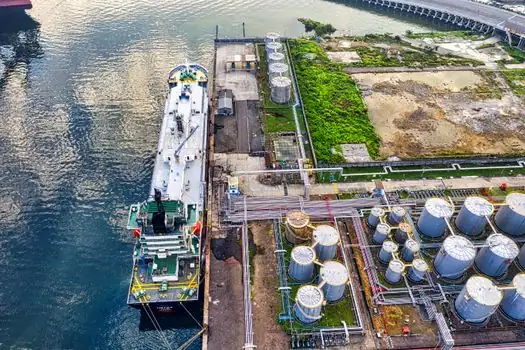
Three sourcing channels dominate the 2026 market. Channel one, Chinese OEM/ODM factories: the pressureleveltransmitter.com catalog lists hydrostatic probes, ultrasonic sensors to 10 m range, radar up to 70 m on capacitive oil units, and 4G/GPRS wireless pressure transducers, with OEM/ODM customisation, 316L wetted material, and 0.5%FS accuracy on wireless lines [S2]. Channel two, European distributor/catalog: Endrich and similar component distributors carry level transmitter lines as a sensor category, mainly for OEM integration rather than end-user tank gauging [S3]. Channel three, global industrial catalog (DirectIndustry), which aggregates three resistive level transmitter manufacturers under one buying guide and provides side-by-side technical filtering by output, IP rating, and process connection [S1].
Lead time and minimum order quantity differ sharply: Chinese factories quote small-batch OEM runs on submersible 4-20 mA probes, while European catalog channels ship from stock at 2-3x the unit price. For a 50-point chemical plant retrofit in Zone 1, the ATEX-certified European catalog line typically costs 2-3x more per point than the equivalent non-certified Chinese OEM unit, before the cost of certification is added. The /news/ultrasonic-level-meter-price-2026-cost-drivers-sourcing-tiers-and-tco.html buying guide shows the same multi-tier structure for ultrasonic units, confirming the pattern is sensing-principle-agnostic.
Who Should and Should Not Specify a Standard Level Transmitter
Standard 4-20 mA hydrostatic submersible probes are fit for water/wastewater lift stations, chemical day tanks under 5 m, and fuel oil reservoirs with clean media at ambient temperature [S2]. They are NOT fit for steam boilers (use differential pressure or guided-wave radar), LNG service (use servo or radar), interface measurement in oil/water separators (use magnetostrictive level transmitter), or tank farms where foam and turbulence are routine (use non-contact radar).
Total Cost of Ownership: Beyond the Sticker Price

Purchase price is 30-50% of the 10-year cost of ownership on a level transmitter, with the rest driven by installation, calibration, and downtime. Installation cost per point on a hydrostatic probe is $200-500 in labour and conduit, versus $400-1,200 for a non-contact radar because the radar needs a flange adapter and a clear beam path away from tank internals. Calibration drift on a 0.5%FS wireless pressure transducer is the main maintenance line item on Chinese OEM units, while ATEX/IECEx radar units typically carry 2-3 year recommended calibration intervals per OEM literature [S2].
Energy draw on loop-powered 4-20 mA units is negligible (3.6-25 mA depending on HART vs basic), but wireless 4G/GPRS pressure transmitters consume battery budget that drives a 3-5 year battery-replacement cycle [S2]. For a 100-point tank farm, the aggregated TCO over 10 years routinely exceeds the headline hardware cost by 2-3x, which is why a /news/thermal-mass-flowmeter-price-and-cost-guide-for-2026-specifiers.html-style cost-stack approach, not a unit-price comparison, is the right procurement model. Spare-parts strategy also matters: stocking 10% of installed-base spares on hydrostatic probes is cheap; doing the same on radar electronics modules is not.
Communication, Certification, and Sourcing Standards to Anchor the Spec
Anchor the procurement spec to three classes of standards. Process interface: flanges per ASME B16.5 or DIN/EN 1092-1, hygienic connections per DIN 11851 or ISO 2852 where applicable. Communication: 4-20 mA with HART 7 for legacy DCS integration, IO-Link for point-to-point sensor networks, or Foundation Fieldbus/PROFIBUS PA for green-field plants, noting these are digital and not HART-compatible as TI documents the protocol split in the field-transmitter block diagram [S4]. Hazardous area: ATEX 2014/34/EU for EU installations, IECEx for global projects, with Zone classification matched to process media and vent conditions. Ingress protection is typically IP68 for submersible service and IP66/67 for externally mounted radar or ultrasonic units, as catalogued across the pressureleveltransmitter.com product families [S2].
Trackable signals for the next 6 months: (1) watch Chinese OEM factories for further downward price pressure on 80 GHz FMCW radar as MultiEcho algorithm chips reach price parity with 26 GHz units; (2) monitor IECEx certification backlog at Notified Bodies, which historically lengthens lead time on Zone 1 quotes by 8-12 weeks; (3) confirm whether 4G/GPRS wireless pressure transducer models (3.6 V 19 Ah battery, 0.5%FS accuracy per pressureleveltransmitter.com [S2]) add NB-IoT or LoRaWAN variants in 2026, which would shift the wireless TCO math for remote tank monitoring.