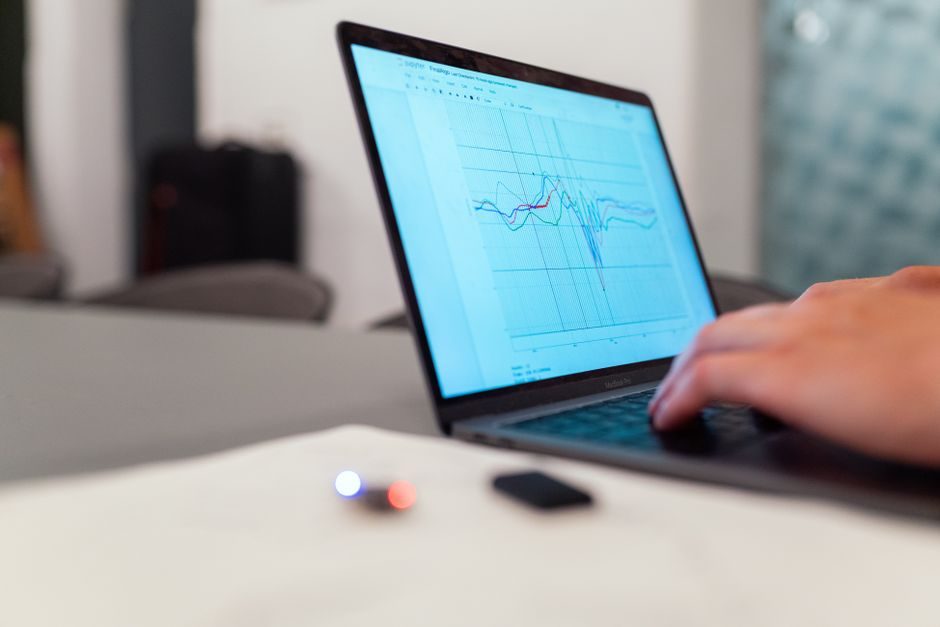
A spec-grade multi-gas detector carries purchase price as only the visible slice of a much larger bill: industry-side TCO frameworks treat acquisition, use, maintenance, support and disposal as five cost buckets whose weights shift dramatically with sensor technology, calibration discipline and hazardous-area certification [S3].
For portable and fixed units alike, the practical question is not "what does the instrument cost" but what the same instrument costs per year of compliance-grade service, where calibration gas cylinders, sensor replacement cycles, bump-test labour and ATEX/IECEx recertification dominate the denominator [S3][S4].
What TCO Actually Captures on a Gas Detector Fleet
Total Cost of Ownership is defined as a financial analysis tool covering direct and indirect costs across a system's service life, with the explicit goal of exposing hidden costs missed during budget planning [S4]. Applied to a portable gas detector fleet, that means the line-item price of the unit, the consumables (calibration gas, filters, batteries), the labour (bump tests, sensor swaps, record-keeping), the downtime (units out for calibration, failed audits) and the disposal (sensor cells containing electrolytes, batteries, electronic waste) [S3][S4].
Toolshero's framework breaks the lifecycle into acquisition, operation and end-of-life phases, and recommends that each be costed independently before any procurement decision [S4]. For a 50-unit detector pool running 8-hour shifts, that decomposition typically reveals calibration consumables and sensor replacement together exceed the original capital outlay inside the third year of service — a pattern consistent with the TCO principle that "hidden costs easily overlooked during budget planning" drive the bulk of lifetime spend [S3].
Sensing Technology Choice and Its Multiplier on Consumables
The detector's sensing principle sets the consumables envelope. Semiconductor-cell units such as the New Cosmos XP-3000II series target combustible gases (propane, methane, butane, pentane, hexane, heptane, octane, ethanol, acetone, benzene, LPG, natural gas) plus oxygen and hydrogen, use replaceable AA cells (alkaline or Ni-MH), and ship with features — built-in sounder, LCD, data logging, ATEX rating, IP67 — that shift cost from the sensor to the ruggedisation layer [S2].
Photoacoustic units such as the Gasera ONE PULSE use a patented cantilever-enhanced cell with chemometric algorithms drawing on up to ten measurement signals to reject interferents such as high moisture, and can be paired with a 12-point multipoint sampler to amortise one analyser across many sample lines [S1]. That multiplexing is itself a TCO lever: one instrument + one sampler replaces twelve discrete point detectors, changing the per-measurement-point cost basis substantially [S1].
Where the application needs LEL combustible plus H2S, CO and O2 in one wearable, electrochemical plus catalytic-bead sensors dominate; the typical 24-36 month sensor life on the toxic-gas channels is the single largest mid-life TCO event, and it is the first place a spec engineer should pressure-test vendor warranty language.
Calibration Gas, Bump-Test Cadence and the Hidden Op-Ex

Calibration gas and bump-test frequency are the variables most often under-budgeted. A four-gas cylinder (CH4, O2, CO, H2S at NIOSH-equivalent balance) runs through quickly on a fleet doing pre-shift bump tests; a 50-unit site doing daily bump tests can consume one cylinder per 2-3 weeks, and the cylinder cost plus regulator plus shipping plus disposal of expired cylinders is a line item that does not appear on the detector quote [S3].
Two structural choices move that number: (1) a docking station that runs automated bump + cal on every shift, which trades labour cost for docking hardware and consumable throughput; (2) a fleet-management software layer that logs every bump and cal event for audit, which converts what would otherwise be a hidden compliance risk into a paper trail auditors can verify [S3][S4]. Springer Nature's TCO treatment frames the same trade-off as "optimising relevant cost elements" — the savings come from process discipline, not unit price [S5].
For a fixed gas detector point, the equivalent lever is calibration gas plumbed permanently to the sensor head versus technician-carried cylinders, with the permanent system winning on labour and auditability but losing on installation cost and cylinder replacement logistics.
Hazardous-Area Certification as a One-Off Versus Per-Unit Cost
ATEX and IECEx certification appear on the datasheet as a feature, but they are a TCO component with a specific behaviour: certification is paid once per SKU at the factory, yet every individual unit bears the ongoing cost of compliance with the certified usage envelope (no substitutions, no field repair beyond OEM kits, mandatory documentation trail) [S2]. The XP-3000II datasheet flags ATEX plus IP67 as standard features, which is a procurement decision made once and amortised over the full fleet [S2].
Field returns to a non-OEM repair shop, or substitution of an uncertified sensor cell from a third party, voids that amortisation and converts a fixed cost into a per-incident liability. On a TCO spreadsheet this is the line that explains why two apparently identical detectors from two vendors diverge sharply in 10-year cost: the cheaper unit often lacks the certification umbrella that lets it live in the hazardous area at all.
Use-Case Comparison: Combustible-Gas Spotter, Toxic-Gas Wearable, Area Monitor
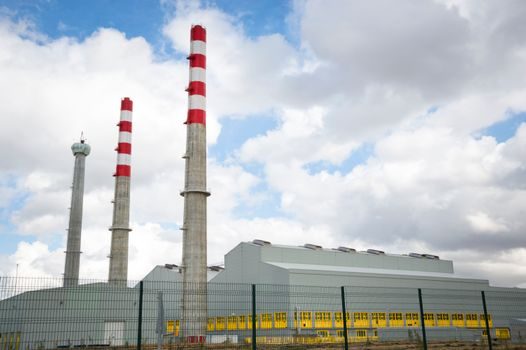
Three use cases illustrate how the same TCO buckets re-weight: [S1]
(a) Combustible-gas spotter for confined-space entry (tank, manhole, tunnel) — units like the XP-3000II series with their rugged housing, AA power, 1-metre sample probe, shoulder strap and built-in flashlight target short-duration, pre-entry checks. Here TCO favours low purchase cost, easy battery logistics and the ability to convert to 32 different target gases via firmware, because the unit is bought in volume and cycled through many jobs [S2].
(b) Toxic-gas wearable for refinery turnaround — four-gas (LEL, O2, CO, H2S) continuous-wear unit on every worker. Here TCO favours long sensor life, reliable bump-test docking and an OEM sensor-replacement program with predictable pricing, because downtime = stand-down cost and an undetected sensor failure = incident cost [S3][S4].
(c) Area monitor for emissions or greenhouse gases — a photoacoustic analyser such as the Gasera ONE PULSE at ppb sensitivity, optionally multiplexed across 12 sample points, where the TCO calculus is dominated by analyser cost amortised over many measurement locations [S1].
For a deeper cut on the spec trade-offs across the multi-gas family, the Multi-Gas Detector Types and Classifications spec map lays out the same comparison across sensor principles and form factors.
What TCO Misses if You Skip the Indirect-Cost Layer
A TCO model that only tallies purchase + consumables undercounts three real costs: (1) record-keeping labour for OSHA-equivalent and ATEX audit trails, (2) unit-pool sizing to absorb units out for calibration (a 50-worker site typically runs 55-60 physical units to keep 50 always available), and (3) training and re-training every time a new sensor type enters the fleet [S3][S4]. These are precisely the "hidden costs easily overlooked during budget planning" that the USPS TCO reference calls out as the saving lever [S3].
Canon's public-facing TCO calculator — though aimed at printers, not detectors — illustrates the same principle: vendors who publish a structured TCO tool force both sides to count the same buckets, and the buyer who runs the numbers typically finds the "cheaper" device loses on consumables inside 18-24 months [S6].
Likely Next Watch-Items in Detector TCO

Two trackable signals will move multi-gas detector TCO over the next 12 months: (a) tighter sensor-replacement pricing from OEMs as electrochemical cell volumes grow with the wearables market, and (b) wider adoption of docking stations with fleet-management software that converts bump-test labour from a hidden recurring cost into a fixed subscription line item, similar to the managed-print model in the Canon TCO framework [S6]. For a parallel reference on how certification choices affect per-point cost in fixed installations, the Fixed Gas Detector trade-offs write-up covers the same economics on the stationary side. The combustible gas detector family — where the New Cosmos XP-3000II sits — is also the segment where the LEL sensor channel has the longest stable replacement pricing and the most predictable mid-life TCO curve [S2].