
A paperless recorder replaces chart paper, pens, ink wheels, and chart drives with electronic data storage, eliminating paper jams, failed pens, and manual trace interpretation [S1].
The trade-off is a shift from a self-contained mechanical instrument to a data system that depends on storage media, configuration files, communications, and retrievable records [S1][S2].
Where paperless recording fits in industrial data acquisition
A paperless recorder captures process measurements as electronic data rather than leaving a continuous trace on physical chart paper. Its defining scope is long-term process surveillance, batch-record documentation, alarm review, and later data analysis, rather than a mechanical chart that operators read directly [S1].
Electronic storage permits faster and more comprehensive analysis than manually interpolated chart traces. It also removes the resolution questions, manual interpolation, and spreadsheet-transfer errors associated with extracting values from paper [S1].
That distinction makes a paperless recorder suitable when the recorded data must remain searchable, analyzable, and transferable after collection. A conventional chart recorder remains useful where a visible trend at the instrument, limited data handling, or independent mechanical recording has greater operational value [S1][S4].
Advantages that reduce operating work
Paperless recording eliminates chart consumables such as charts, pens, and ink wheels [S1].
A paperless unit can reduce maintenance and operating costs by eliminating paper-recorder mechanical parts such as chart drives and pen mechanisms [S1].
This does not eliminate commissioning work; it moves more of it into a controlled engineering workflow [S1].
Data handling, archive space, and review speed
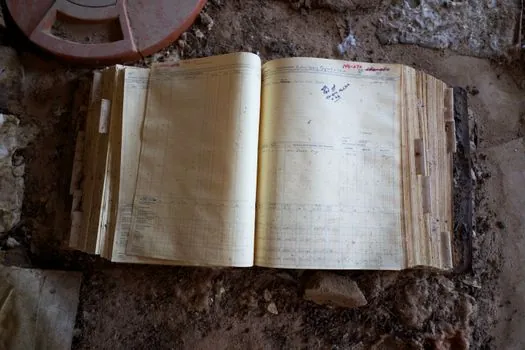
Electronic archives reduce the floor space required for filing cabinets, chart folders, and boxed records.
Retrieval changes from locating the correct chart, unrolling it to the required date and time, and copying the observation to storage-analysis software. Electronic information permits faster and more comprehensive data analysis without interpolating trace values from a chart or transferring data to a spreadsheet for further analysis [S1].
Digital files also transmit more easily between systems and users. The benefit is largest where users repeatedly retrieve the same time window, compare multiple batches, or transfer records from field equipment to engineering offices.
Selection trade-offs among paper, digital, and hybrid workflows
Paperless recording wins on consumables, searchability, transferability, and data resolution because it removes paper and ink and retains machine-readable measurements [S1]. Paper chart recording wins on immediate visual interpretation and operation independent of a connected computer, network, or archive server [S1][S4].
This comparison applies to the documented operating characteristics, not to every product model. Sampling rate, input count, memory capacity, communication options, alarm behavior, and environmental ratings must be checked against the required measurement and retention duty before selection [S1][S4].
Disadvantages, failure modes, and operating limits

A paperless recorder creates new failure domains that a chart recorder does not have: failed storage media, full memory, communication loss, incorrect configuration, clock error, inaccessible files, and server or software outages. The source material establishes the archive options and configuration workflow, but it does not provide universal capacity, sampling, or retention figures [S1].
Cyber and access control are practical weaknesses of networked electronic archives. File transfer can move sensitive process or production data beyond the physical custody of the instrument, so account permissions, network segmentation, backup policy, and retrieval procedures must be evaluated rather than assumed [S2].
Loss of the recorder, archive server, or original media can also remove the apparent simplicity of “no paper.” A robust installation therefore needs tested backup and retrieval procedures. Printing selected records or retaining them on controlled local media remains an available fallback, rather than treating digital storage as the only copy [S1].
Implementation checklist for operating and compliance teams
The first evaluation should define the recording interval, number of channels, required display behavior, alarm requirements, analysis method, and record-retention period. Paperless systems remove manual trace interpolation, but they do not eliminate the need to specify what must be captured, how long it must remain accessible, and who may alter it [S1][S2].
Storage architecture needs a named primary destination and a tested recovery route. The documented options include a local hard drive, remote PC server, recorder media, and cloud storage, while printed hard copies can be retained when required [S1][S2].
Configuration control should identify who creates PC-based setup files, how they are approved, what revision is loaded, and how the operating unit verifies that the recorder holds the correct configuration. The same discipline applies to clock settings, event logs, alarm thresholds, and archived data access [S1].
For regulated or high-consequence processes, the record itself does not prove process compliance by itself. Equipment approval, calibration, data-integrity controls, retention, and audit procedures must be assessed separately for the installation and its governing quality system; the supplied research does not establish a universal standard for paperless recorders [S1][S2].
The strongest upgrade case is a facility replacing paper-chart handling with an archive that users can search and transfer electronically; the strongest reason to retain paper is a requirement for an independent, immediately visible trace [S1][S4]. Track recorder availability, failed retrievals, archive growth, configuration revisions, and the time required to extract a batch record, then compare those measures with the paper workflow before full rollout.