
Polyether ether ketone (PEEK) is a semi-crystalline high-performance thermoplastic specified for automotive parts that survive sustained temperatures above 150 °C, exposure to fuels, coolants, and transmission fluids, and tribological wear at sliding interfaces [S3][S4].
Among FFF-grade high-performance polymers, PEEK sits at the top of the thermal-and-chemical ladder above polyetherimide (PEI) and polyphenylene sulfide (PPS); its position is justified by a glass transition near 143 °C and a melting point of 343 °C, versus roughly 215 °C Tg for PEI and a melting point near 280 °C for PPS [S3]. PEEK is therefore the polymer of record when the design brief crosses into under-the-hood or powertrain territory, not the first pick for cabin trim.
Where PEEK fits, and where it is the wrong call
PEEK is specified for under-the-hood components such as fuel line connectors, coolant system parts, and transmission seals, plus sliding bearings, thrust washers, and pump impellers where its low coefficient of friction and hydrolytic stability outrank cheaper polymers [S3]. In 3D-printed engine prototyping, PEEK and PEI are listed alongside aluminum, titanium, and steel alloys as the polymer options for parts that must hold dimensional tolerance under thermal cycling, with PEEK preferred where peak surface temperature approaches the upper end of polymer viability [S4].
PEEK is the wrong call when the part sees no sustained temperature above 120 °C, when the volume exceeds what 3D printers or small-batch injection runs can economically serve, or when the budget anchors on material cost alone: PEEK pellets and filament run several times the price of PPS, and the processing window (chamber 120-150 °C, nozzle 380-420 °C) rules out commodity FFF hardware [S3]. For those jobs, the spec-first fallback is PPS for chemically loaded ducts, or PEI where flame-smoke-toxicity ratings dominate the brief.
PEEK vs PEI vs PPS on the criteria that actually decide a build
Three decision criteria separate these high-performance FFF polymers in practice: peak continuous service temperature, chemical resistance to automotive fluids, and specific gravity-adjusted part cost. PEEK leads on thermal headroom with a continuous service ceiling commonly cited around 260 °C and a melting point of 343 °C, ahead of PEI (Tg ~143 °C, deflection temperature near 200 °C) and PPS (melting point ~280 °C, continuous service typically under 220 °C) [S3].
On chemical resistance, PPS is described in the literature as far more chemically resistant than PEI and is therefore the polymer of record for chemical-resistant automotive fluid-transfer ducts, while PEEK occupies the same chemical-resistance tier as PPS for hydrocarbons, acids, and glycol-based coolants but with a higher temperature ceiling [S3]. On cost per kilogram and on printability, PPS is the cheapest and the most forgiving on a standard FFF machine; PEEK is the most expensive and requires a heated chamber above 120 °C to suppress warping and the porous interlayer structure that drags down mechanical performance [S3].
For engineers, the trade collapses to a single question: is the part's continuous operating temperature above roughly 200 °C, or is the chemical attack severe enough that the extra 2-4x material cost of PEEK pays back in service life? If yes, PEEK. If no, drop to PPS for fluid handling, or to PEI for cabin and avionics-adjacent parts where flammability and outgassing dominate the brief.
Spec windows that matter when you write the data sheet
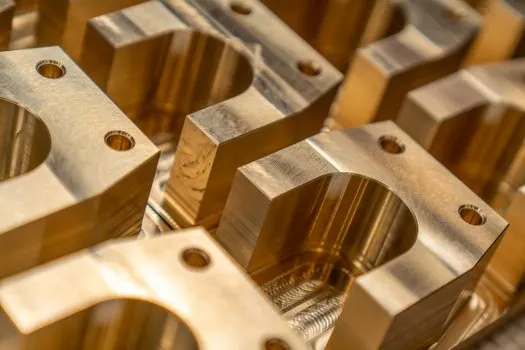
PEEK filament should be specified with tensile strength in the 90-100 MPa range (oriented, 3D-printed coupons typically fall below this; injection-molded references sit near 100 MPa), a glass transition near 143 °C, and a melting point of 343 °C; density sits around 1.30-1.32 g/cm³, which gives PEEK a specific gravity advantage over most metals used in the same engine bay [S3]. Continuous service temperature is widely published at 260 °C, with short-term peaks tolerated higher; this is the headline number engineers should anchor their derating curves against.
For 3D-printed PEEK parts, the interlayer bonding window is the spec that decides whether the part meets its mechanical brief: nozzle setpoint typically 380-420 °C, bed 120-160 °C, ambient chamber 120-150 °C, and a print speed well below commodity PLA defaults because neck growth between adjacent rasters is bounded by crystallization kinetics [S3]. A useful rule of thumb from the additive-manufacturing literature is that the gap between adjacent-layer temperature during bonding must stay above the polymer's crystallization onset, otherwise the chain diffusion step that builds interlayer strength is cut short and porosity rises [S3].
For FFF-grade high-performance polymers generally, the filament portfolio narrows to three names, PEEK, PEI, and PPS, and each requires a different printer class: PEI and PPS print on enclosed but moderately heated machines, while PEEK really needs an actively heated industrial chamber to hit usable mechanical properties [S3]. When evaluating the broader PEEK material landscape, treat the chamber and bed temperatures as gating specifications, not nice-to-haves, because skipping them produces a part that looks like PEEK and behaves like a sintered powder.
Processing routes: FFF, injection molding, and the AM decision
PEEK is processed by three routes relevant to automotive tier-1 and tier-2 suppliers: injection molding for high-volume functional parts, FFF for prototyping and low-volume production, and compression molding of stock shapes for machined billet parts. The automotive industry is among the top adopters of additive manufacturing because of its fast production cycles and complex design demands, and FFF is the most commonly used technique of that group [S3].
Within AM process selection, the literature treats the choice as a multi-criteria decision problem: a recent Pythagorean-fuzzy CRITIC-EDAS study on automotive AM process selection confirms that no single additive process dominates, and that selection turns on cost, accuracy, build volume, and material compatibility, with polymer FFF competing against polymer powder-bed fusion, metal powder-bed fusion, and binder jetting for different part classes [S2]. For PEEK specifically, the realistic AM options are FFF and selective laser sintering (SLS); both can deliver functional parts, but SLS avoids the interlayer-bonding problem that haunts FFF at high speeds and is preferred for lattice and internal-channel geometries.
For high-volume production, injection molding remains the reference process: PEEK injection molding uses melt temperatures of 360-400 °C, mold temperatures above 170 °C to crystallize the part, and post-cure cycles that hit the part's specified crystallinity. Engineers sourcing PEEK for an injection program should confirm with the resin supplier the achievable crystallinity window (typically 30-35%) and the associated mold-shrinkage figure, because a 1.5-2.0% shrinkage drives the gate and ejector layout.
Standards, qualification, and supply-chain signals to track
Automotive PEEK programs ride on three qualification frames: OEM-specific material datasheets (the IATF 16949 quality system is the umbrella standard most tier-1 molders operate under), OEM fire-smoke-toxicity specifications for cabin and under-hood parts, and endurance testing aligned with the relevant OEM cyclic load and temperature profile. For FFF-printed PEEK, the qualification bottleneck is interlayer bond strength under elevated temperature and humidity, not the bulk material datasheet, and this is where the spec should be re-read against the actual printer, not the resin TDS. [S3]
Adjacent electronics that ride the same engine bay use wound metal-alloy inductors such as the Murata DFEC/DFES series for high-current power circuits in powertrain, while smaller multilayer parts (LQM series, 0603 to 0805 inch footprints) cover infotainment rails at lower currents up to about 1.6 A [S1]. This is relevant context for any PEEK part that houses or mounts a power inductor: the local magnetic field and winding heat load can shift the polymer's effective service temperature window, and the inductor's rated current (1.7-6.2 A on the DFE201612P_D wound metal-alloy line) is the right anchor for thermal modeling of the surrounding housing [S1].
Two supply-chain signals to track: resin grade qualification (virgin vs recycled-content PEEK, with recycled-content grades typically 5-15% glass-filled for stiffness recovery), and printer-class availability. As of mid-2026, industrial PEEK-grade FFF machines with active chamber heating are concentrated in a handful of OEMs, and the lead time for a new install still runs 12-16 weeks in most regions, which caps how fast a PEEK AM program can scale. For broader additive-manufacturing context, see additive manufacturing material and the related polycarbonate selection for general fabrication: a spec-first buying guide for a side-by-side read on how PEEK sits against amorphous engineering thermoplastics in the same FFF workflow.
Spec-level background on the components involved: pressure transmitter.