A benchtop pH meter with 0.01 pH resolution and 3-point auto calibration lists between $582 and $1,188 at major US lab distributors in 2026, with the entry-level OHAUS Starter ST2200 at $582, the OHAUS Aquasearcher AB23PH kit at $711, the Accumet AB315 at $1,127, and the Orion Versa Star at $2,980 [S3].
Wholesale channels out of Fuan, Shenzhen, and Yan'an sell PHS-25C-class benchtop units with 0.00-14.00 pH range and 2-point manual calibration at MOQ 1, while pen-style testers from the same supply base sit in the $20-$60 range with 0.1 pH resolution and 2-point manual calibration [S4][S5]. For a broader view of how a pH meter compares to other process-laboratory instruments, the price bands follow electrode architecture more than brand.
Price Bands by Form Factor
Pen testers (Hanna HI98108 class) measure 175x41x23 mm at 90 g, run on 4x AG13 alkaline cells, deliver 0.1 pH resolution with ±0.1 pH accuracy, and price at the low end of the market because the housing, single-junction electrode, and manual 2-point calibration are commodity parts [S4].
Mid-range benchtop meters (PHS-25C, KL-016A) add 0.01 pH resolution, ±0.01 pH or ±0.05 pH accuracy, BNC composite electrodes, ATC across 0-50°C, 4-digit LCD, and AC220V input with an external DC 6V transformer; weight climbs to 736-980 g, and the BOM adds an electrode holder plus a buffer kit [S5].
Premium lab meters such as the OHAUS Aquasearcher AB23PH add a 5-inch LCD, 99-point memory, automatic data logging, ±0.01 pH / ±0.5°C / ±1 mV accuracy, 0-100°C temperature range, and a 3-point calibration routine with auto buffer recognition, justifying the $711 list with the bundled ST320 electrode and four 50 mL buffer mini kits [S3].
Cost Drivers That Move the Quote
Electrode type is the single largest variable: a refillable glass body with double junction and a built-in temperature sensor can add $80-$250 to the kit versus a sealed gel-filled single-junction probe, and BNC vs DIN connectors change the cable assembly cost. [S3]
Calibration routine, ATC range, and memory size form the second tier of drivers; 2-point manual calibration with 0-50°C ATC keeps the controller in the budget band, while 3-point auto buffer recognition across 0-100°C with 99 datasets is what carries a benchtop meter from the $300 range to the $700+ tier [S3][S5].
Ingress protection, output options, and certifications stack on top: industrial pH/ORP controllers from Shenzhen OEM lines are quoted around $110 per set at MOQ 100 with a universal power supply and 4-20 mA output, while a panel-mount IP65 unit with relays and PID lands in the $250-$500 band [S1].
Pen vs Benchtop vs Industrial Controller
A 2-criteria comparison helps frame the decision: pen testers win on cost ($20-$60) and field portability (90 g, 4x AG13, 4 min auto shut-off) but lose on accuracy (±0.1 pH) and electrode service life; benchtop meters win on accuracy (±0.01 pH) and ATC range (0-100°C) but cost $300-$1,200 and need AC line power; industrial controllers win on output (4-20 mA, relays) and process integration but require panel cutout, wiring, and calibration buffers on the plant side [S1][S3][S4][S5].
For aquarium, hydroponics, brewing, and educational labs, the pen and entry-level benchtop tier is sufficient because samples are near neutral, temperature is ambient, and resolution beyond 0.1 pH does not change the process decision [S1][S4]. For QA/QC, foodstuff, and water-treatment labs, the 0.01 pH benchtop with auto buffer recognition and 3-point calibration is the minimum spec because audit trails and method validation need documented accuracy [S3].
Total Cost of Ownership Over 3 Years
Beyond the unit price, the running cost is dominated by the replacement electrode (typical 12-24 month service interval in dirty or hot samples) and by buffer solution consumption. A lab running 100 mL of pH 4.00, 7.00, and 10.00 buffer per week will spend more on consumables than on the meter body over a 3-year horizon. [S1]
OEM sourcing from Shenzhen and Fuan compresses the purchase line: MOQ 1 is honored on most pen and benchtop SKUs, and pH/ORP controllers list at $110/set at MOQ 100 with custom packaging and calibration buffer kits bundled, which is the path most aquarium, winery, and hydroponics buyers use to land landed cost well under Western distributor list [S1][S5].
For related process-laboratory spend planning, the Radar Level Meter Price and Cost Guide for 2026 Specifiers follows similar OEM-versus-distributor cost curves, and pairing tank-level and pH control in a single skid is common in brewery and water-treatment retrofits.
Standards, Calibration, and Compliance Notes
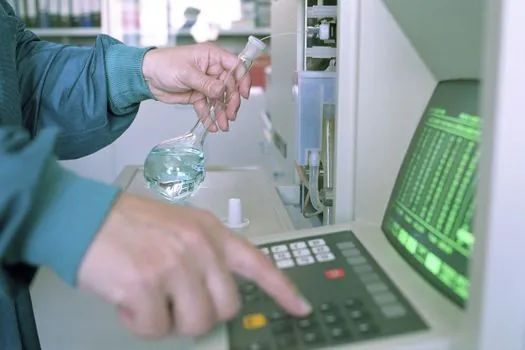
Buffer traceability to NIST is the practical compliance lever for ISO 17025 labs, and most benchtop meters in the $300-$1,200 band accept user-defined buffer sets so the lab can plug certified reference material directly into the calibration routine [S3][S5].
Where the Quotes Cluster in 2026
Pen testers: $20-$60 (Hanna HI98108 class, 0.1 pH, 2-point manual). Entry benchtop: $300-$450 (PHS-25C class, 0.01 pH, 2-point manual, AC220V). Mid benchtop with auto buffer: $582-$711 (OHAUS ST2200, Aquasearcher AB23PH). Lab/research: $1,127-$2,980 (Accumet AB315, Orion Versa Star). Industrial pH/ORP controller: $110 at MOQ 100, scaling up with IP rating, relay count, and output options [S1][S3][S4][S5].
Next signals worth tracking: 2026 Q4 distributor promotional cycles on benchtop kits, any CE/RoHS documentation refresh from the major Shenzhen OEM lines, and the release of NIST-traceable buffer SKUs at sub-$15 pricing, which would further compress the consumable line in TCO models. For spec-first comparison methodology, the Electromagnetic Flowmeter Price and Cost Guide 2026 applies a similar cost-driver breakdown across a different sensor class.
The underlying component specifications are covered under lighting equipment and electric lamps, and linear guide.