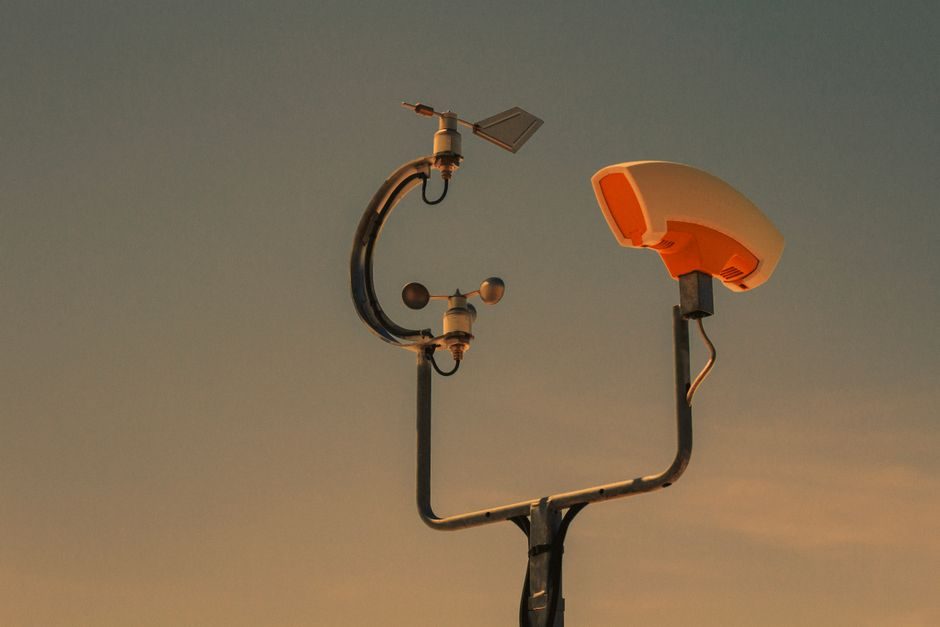
An inductive proximity sensor detects only metal targets within a short, well-defined zone — typically 0.8 mm to 30 mm depending on housing size — while a photoelectric sensor uses a modulated light beam to detect virtually any material at distances from roughly 10 mm out to 30 m on retroreflective and through-beam models [S4][S1].
The two families share a non-contact, solid-state output (usually PNP/NPN transistor or a relay contact) and a cylindrical M8-M30 form factor, but their physics, sensing range and target restrictions diverge sharply. DirectIndustry's 2026 industrial-manufacturer index lists 10 manufacturers and 13 product lines for "photoelectric proximity switch" alone [S1], while Chinese vendors such as ADTEK, EMA Electronics and Luoshida sell parallel SKU families split by sensing principle [S1][S3].
Operating Principles: Eddy-Current Damping vs Modulated Light
An inductive proximity sensor contains an oscillator coil, a detector and a trigger circuit; when a metal target enters the high-frequency alternating magnetic field, eddy-current losses damp the oscillation, and the threshold detector flips the output. This is why inductive units ignore plastics, wood, liquids and most non-metals — no conductive target, no eddy-current loss, no switching. [S1]
A photoelectric sensor instead emits a modulated LED or laser beam (red, infrared, or class 1-2 laser at 650-660 nm red or 850-940 nm IR) and reads the returning light on a photodiode or phototransistor. Three geometries dominate: diffuse-reflective (target is the reflector, range typically 5-1000 mm), retroreflective (uses a prism reflector, range to ~8 m), and through-beam (emitter and receiver separated, range 0.1-30 m) [S4][S1].
Selection Criteria: Target Material, Range, Environment
Target material is the first decision gate. Inductive wins on metal-only lines — steel, stainless, aluminium — because the sensing distance is stable across the same target family and the sensor survives oils, coolants and weld spatter in IP67 housings [S4].
Photoelectric is the correct call when the target is plastic, glass, cardboard, wood, liquid level, food, or a coloured surface that must be sorted by contrast. Diffuse reflective sensors are common on packaging conveyors at 50-500 mm; retroreflective units gate garage doors and pallet shrink-wrap lines; through-beam pairs count bottles on filling monoblocks at 1-3 m [S4][S1].
Range bands drive the housing: an M8 inductive is usually rated 1-2 mm; M12 sits at 2-4 mm; M18 lands at 5-8 mm; M30 reaches 10-15 mm — past that, photoelectric with a through-beam pair becomes cheaper and more reliable than chasing a larger inductive coil [S4].
Comparison Table: Four Decision Criteria
Lining the two technologies against the criteria a spec engineer actually uses at the desk: [S2]
- Target material: Inductive — ferrous and non-ferrous metals only; Photoelectric — any opaque or reflective surface, including transparent film with polarised retroreflective filters [S4].
- Typical sensing range: Inductive — 1-30 mm depending on barrel diameter; Photoelectric diffuse — 0.1-1 m; retroreflective — 0.1-8 m; through-beam — 0.1-30 m [S1][S4].
- Environmental tolerance: Inductive — IP67 standard, immune to dust, smoke, water spray, transparent contamination; Photoelectric — IP65 typical, but lens contamination, steam, mirror-like backgrounds and strong ambient light can false-trigger without pulsed modulation and background-suppression optics [S4].
- Switching frequency: Inductive — typically 100 Hz to 5 kHz depending on series; Photoelectric — 100 Hz to 1 kHz for diffuse, up to 5 kHz for through-beam with fast rise-time amplifiers [S4][S1].
Output Wiring and Integration: PNP/NPN, IO-Link, and the IFM/SICK Pattern
Both families ship in the same 3-wire DC PNP/NPN, 4-wire complementary, and 2-wire AC/DC variants. Chinese vendor catalogues (ADTEK, EMA, Luoshida) cluster models around 10-30 V DC, 100-200 mA load, and M8/M12 connectors, with NO/NC selectable outputs [S1][S3].
European-tier suppliers (IFM, SICK, Pepperl+Fuchs, Turck, Schneider, Siemens) layer IO-Link on top of the same DC-3-wire interface, exposing measured light intensity, temperature, operating-hours counters and diagnostic flags over the point-to-point digital channel.
Use-Case Examples from Active 2026 Catalogs
DirectIndustry's June 2026 listing surfaces the IFM IFOD 10-30-10/01P as a representative photoelectric-proximity switch in the cylindrical M18 form factor with PNP NO output, intended for 10-30 V DC loops [S1]. HWL Sensor's HRP series covers retroreflective and diffuse photoelectric SKUs in the same barrel family, with 2 m cable and M12 connector options [S2].
Luoshida (founded 2012, Dongguan) packages its photoelectric-proximity line alongside laser proximity sensors in the same cylindrical housings, advertising operating temperatures of -25 °C to +55 °C and IP67 ratings as the standard build [S3]. These three data points — voltage window, temperature window, IP rating — are the three values any spec sheet should carry before sourcing is opened.
Limitations and Failure Modes
Inductive proximity sensors fail predictably: sensing distance drifts with target steel grade (stainless cuts nominal range by roughly 10-40 % versus mild steel), aluminium and copper cut it further, and the embedded oscillator can be damped by welding fields if unshielded. Mounting in metal — flush vs non-flush — is a binary choice that changes rated range by 30-60 %. [S3]
Photoelectric sensors fail because the beam is blocked, reflected too well, or not returned at all. Steam, oil mist, condensation on the lens, transparent targets without a polarisation filter, and shiny background surfaces all cause nuisance trips. Diffuse units lose range on dark or matte surfaces; retroreflective units blind on highly reflective or angled targets; through-beam pairs need precise alignment and a clean lens [S4]. Specifying background-suppression (BGS) or coaxial optics is the usual fix, and adds roughly 20-40 % to unit cost versus a standard diffuse SKU.
Standards, Sourcing Signals and 2026 Pricing Reality
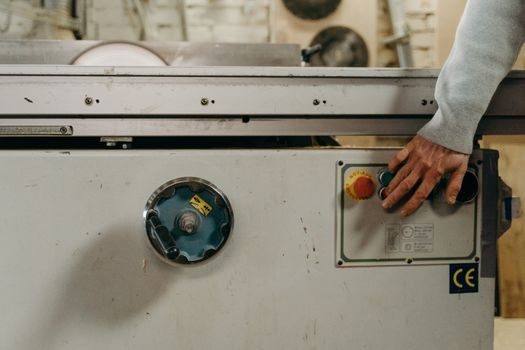
Industrial photoelectric and proximity sensors sold in Europe are expected to carry CE, and where specified, ATEX/IECEx for zones 1/21 or 2/22, plus UL 508 / CSA C22.2 No.14 for North American panels. The functional-safety variants used in Category 3 / PL d guard circuits follow ISO 13849-1, with type-2 or type-4 photoelectric safety devices (ESPE) per IEC 61496-1/2/3 — safety light curtains, not the general-purpose SKUs discussed here. [S4]
For spec-driven sourcing, the three numbers that gate a PO are: housing thread and length (M8/M12/M18/M30, with 30/40/50/60 mm barrel length), sensing range in mm, and output type (PNP NO, PNP NC, NPN NO, push-pull, IO-Link). Compare 2026 SKU bands and spec levers on the Proximity Sensor Price & Cost Guide: 2026 SKU Bands, Spec Levers and Sourcing Reality page. Watch for the OEM pattern of ASi and IO-Link retrofit modules to migrate from European-tier pricing into the ADTEK/EMA/Luoshida tier through Q3-Q4 2026 [S1][S3].
Bottom line: if the target is metal and the range is under 30 mm, the inductive proximity sensor is the cheaper, tougher answer. If the target is anything else, the range is over 100 mm, or the application needs a safety light curtain, photoelectric is the only viable family — and the right sub-type (diffuse, retroreflective, through-beam, BGS) matters more than the brand on the label.
For component-level specifications, see proximity probe.