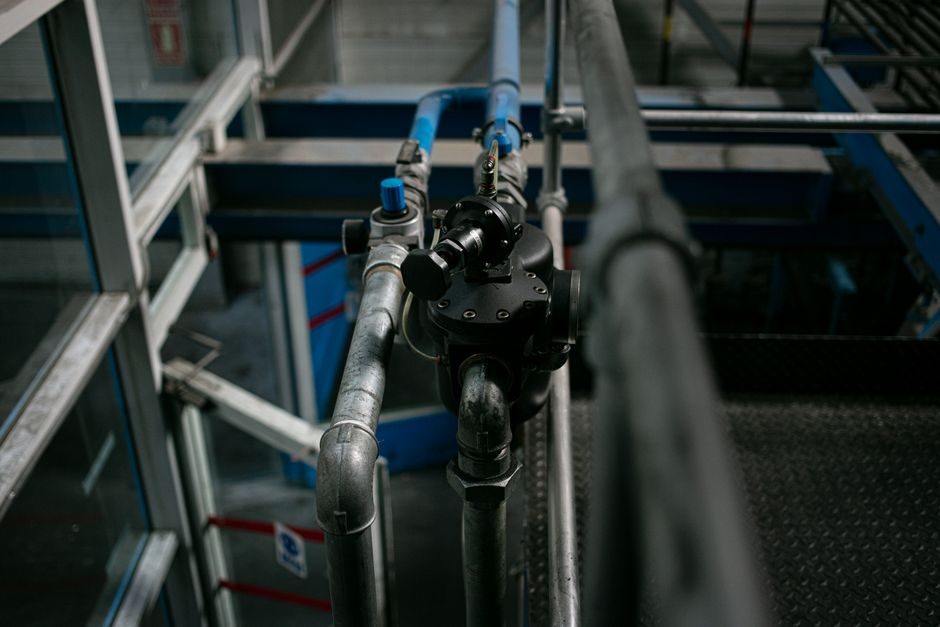
Pneumatic valve actuator selection in 2026 turns on four hard numbers — required breakaway torque, available supply pressure, fail-safe mode, and the certification envelope (SIL 3, ATEX, IP66/IP67) — before any brand is even shortlisted [S6].
This guide walks the spec engineer through ISA-75.24 force-balance logic, Scotch yoke vs rack-and-pinion trade-offs, supply pressure selection, and the safety-instrumented envelope that increasingly gates the bid list in oil & gas and chemical service [S1][S6].
ISA-75.24 Force Balance: Where the Sizing Math Actually Starts
The ISA-75.24 subcommittee scope is explicit: "Identify the forces that act on closure components and actuators" and "prepare equations required to determine an actuator (i.e. pneumatic, hydraulic, or electric) size based on piston or effective diaphragm area and spring characteristics" [S1]. In practice the spec engineer reduces this to one inequality — actuator output force (or torque) at minimum supply pressure must exceed the sum of valve breakaway, packing friction, and any safety margin applied against the worst-case process unbalance at shut-off [S1].
For a quarter-turn ball or butterfly valve the equation collapses to torque: T_actuator(P_supply_min) ≥ T_break + T_seat × K_margin, where K_margin is commonly 1.25–1.5 in modulating service and 1.1 in on/off isolation per the 2026 Bray Series 98 spec sheet [S6]. For globe and other linear-motion trim the same committee scope drives a piston-area vs spring-balance calculation rather than a torque ratio [S1]. Reading the closure-component unbalance (ΔP × A_trim) at the maximum expected shut-off differential — not at the normal operating drop — is the single most common cause of undersized pneumatic actuators in the field.
Scotch Yoke vs Rack-and-Pinion: Match the Torque Curve, Not Just the Peak Number
Scotch yoke pneumatic actuators deliver peak torque at the start and end of stroke with a sinusoidal curve drop in mid-stroke; rack-and-pinion units deliver a near-constant torque across the full 90° travel, with a small air-volume penalty for the same torque class [S2][S6]. The Bray Series 98 publishes a high-torque-to-weight ratio specifically to win quarter-turn duty where initial breakaway (seating unseating a sticky ball or resilient-seated butterfly) is the binding constraint [S6].
Rack-and-pinion, by contrast, is the compact default for small-to-mid bore ball and butterfly service and is also offered in stainless (Emerson Bettis "Stainless Steel M Series") for corrosive or hygienic plants where a Scotch yoke housing would collect condensate [S2]. For a working comparison in 2026: on a 6″–24″ triple-offset butterfly in ASME Class 150# service with a specified shut-off ΔP of 10 bar, a Scotch yoke is typically the lower-weight option at the same air-supply class; on a 2″–4″ full-port ball in Class 300# with a low breakaway, a rack-and-pinion is usually smaller and cheaper to instrument [S2][S6]. The third leg of the comparison is linear pneumatic actuators on globe/cage trim — covered in the encyclopedia entry on pneumatic cylinder sizing, where piston area, stroke, and spring pre-load replace the torque term.
Supply Pressure Class and Fail-Safe Mode Are One Decision, Not Two
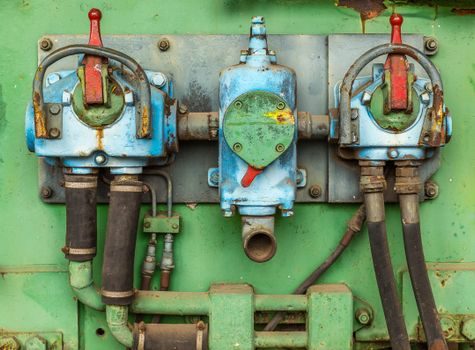
Most quarter-turn pneumatic valve actuators in oil & gas and chemical service run at 4.0–8.0 bar (60–120 psi) instrument-air supply, and the output torque is essentially linear in gauge pressure over that range [S6]. Drop the supply to 4.0 bar and you lose roughly half the available thrust — meaning the same actuator that seats cleanly at 6.0 bar will not pass a 1.25 safety-margin check at 4.0 bar against the same valve [S6].
Fail-safe direction then layers on top. Spring-return (single-acting) units store energy in a pre-compressed spring set, and that spring set both biases the fail direction and consumes roughly 30–50% of the available piston area on the powered stroke — which is why spring-return Scotch yokes for Class 600# ball service get visibly larger than their double-acting siblings at the same torque rating [S6]. Double-acting units need an external air reservoir or a separate trip valve to fail in a defined position; if the plant cannot guarantee that reservoir volume, spring-return is the conservative answer. The encyclopedia reference on pneumatic actuator construction walks through how that spring volume is calculated and where the practical 8.0 bar ceiling comes from for shop-air-fed systems.
Certification Envelope: SIL, ATEX, IP — Read All Three Together
For any actuator specified into a Safety Instrumented Function (SIF) on a hydrocarbon or chemical service line, the proof-test interval, the systematic capability (SC), and the dangerous-failure fraction have to be on the same certificate page as the torque curve [S6]. The Bray Series 98 datasheet states it is "certified to SIL 3, ATEX, and IP66/IP67" as a single bundled envelope rather than three independent ratings [S6]. Reading them separately — e.g., quoting SIL 3 from a marketing page without confirming Ex d vs Ex ia on the actual nameplate — is the second most common field-failure cause in 2026 EHS audits.
Ingress protection also has a process meaning, not just a weather meaning: IP66 covers powerful jets, IP67 covers temporary immersion, and plants with wash-down or sub-flooded-tray service routinely need both, while a desert gas plant may only need IP65. ATEX/IECEx marking then partitions further by zone, gas group, and temperature class — and the spec engineer should be reading the certificate numbers, not the brochure, before releasing the purchase order [S6].
Selection Map: Who Should and Should Not Default to Pneumatic
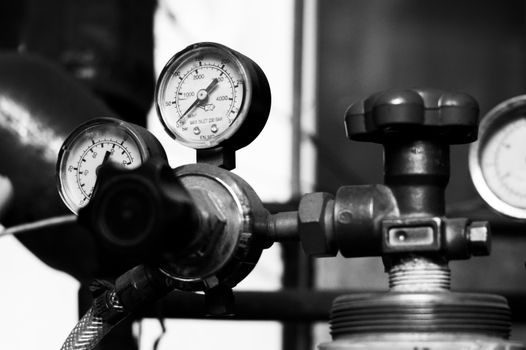
Pneumatic valve actuators are the right call for hazardous-area on/off and modulating service where instrument air is already on site, where sub-second stroking is required, and where the SIL target is 2 or 3 with a short proof-test interval [S2][S6]. They are the wrong call on remote wellheads with no instrument-air supply (electric with solar/battery I&P wins), on subsea trees (electro-hydraulic), and on hygienic pharmaceutical skids where condensate and exhaust-oil carryover from a lubricated airline is a contamination risk [S2].
For buyers already past the "is pneumatic right?" gate, the shortlist logic is: pick Scotch yoke if breakaway torque is binding and weight matters; pick rack-and-pinion if mid-stroke torque must be flat (e.g., large resilient-seated butterfly) or if the package needs a compact envelope for skid mounting; pick linear pneumatic on globe/cage trim where positioner resolution and stem friction dominate; and on every bid, write the minimum supply pressure (4.0 bar), the fail direction, and the certification standard into the datasheet query line, not the cover letter [S2][S6]. The working background on the pneumatic valve actuator category, including typical output curves and torque-to-weight trade-offs, is on the encyclopedia page. A useful adjacent spec read for the same family of decisions is the selection logic for electric actuator sizing and selection, since the bus-protocol, duty-cycle, and SIL choices overlap even when the prime-mover changes.
Either of those is the next decision-driving data point on this topic.