
Automotive engineers choosing a polyurethane elastomer in 2026 are picking from four distinct families, each tied to a different process route and a different spec band: millable PU, thermoplastic polyurethane (TPU), two-component (2C) PUR sealing foam, and cast/molded PU components for forming tools and dampers [S1][S2][S3][S4].
The high-performance TPU segment alone reached $8.2B in 2025, with automotive end-use taking 42.3% of revenue and polyester-based grades holding 38.5% of the chemistry mix; the segment is forecast at $13.8B by 2034 at a 6.8% CAGR [S4]. That share is the reason TPU is now specified for hybrid and battery-electric powertrain seals, not just traditional rubber replacement.
Millable Polyurethane Elastomer: Chemistry and Hardness Bands
Millable PU is synthesized by step-growth polymerization of a long-chain polyol (soft segment, typically poly-ε-caprolactone diol at 1,000–5,000 Da), an aromatic or aliphatic diisocyanate (MDI, TDI, NDI or PPDI), and a short-chain diol or diamine extender, with the NCO/OH molar ratio held between 1.1:1 and 1.9:1 to give residual NCO of 2–8 wt% [S2].
Published millable grades reach Shore A 70–85 and tensile strength of 18–22 MPa, with breaking elongation tunable from 400% (high crosslink, 2–10 phr micromolecular diol) to over 1,500% (bulky diamine extenders, double-metal-cyanide-catalyzed polyether polyol) [S2]. Glass transition stays below -20°C when polydispersity is kept tight (Mw/Mn 1.0–1.5), which is the operating window most automotive interior seal profiles target.
TPU vs. Millable PU vs. 2C PUR Foam: Decision Criteria
TPU, millable PU, and 2C PUR foam are not interchangeable, and the picking rule is set by part geometry, lot size, and thermal duty rather than by raw tensile number [S2][S3][S4]. TPU is the right call for continuous extrusion profiles and overmolded EV battery seals that need thermoplastic reprocessing; millable PU fits compression-molded, rubber-machined parts where extrusion is not available; 2C PUR foam gaskets (e.g. RAKU® PUR systems) are specified for in-line foam-in-place gaskets on body and battery enclosures [S3][S4].
On a four-criterion comparison, the families line up roughly as follows. Process route: TPU is melt-extruded or injection molded; millable PU is rubber-milled then compression molded; 2C PUR foam is dispensed and cured on the part. Hardness range: TPU commonly Shore A 80–95; millable PU Shore A 70–85 (tunable lower or higher); 2C foam is a soft gasket (typically below Shore A 60 cured). Continuous-use temperature: TPU and millable PU both rated to roughly 120°C continuous with peaks higher for short cycles; 2C foam targets sealing duty under 100°C [S2][S3][S4]. Lot-size economics: TPU wins high volume, millable PU wins short-run and large-format parts, 2C foam wins when the gasket is formed in place on a non-planar flange.
Forming Pads, Compression Springs, and Press Brake Tooling
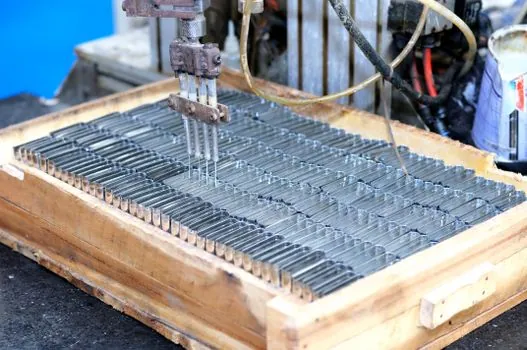
A separate sub-family of automotive PU parts is metal-fabrication tooling, where cast polyurethane pads, V-dies, and compression springs replace steel springs in stamping cells [S1]. Polyurethane compression springs are produced to GM, Ford, Chrysler, and J.I.S. Die metric standards, and the material is also stocked as sheets, rods, bars, tubes, and rollers for fixturing and bumpers [S1].
Standard load ratings run in the same Shore A 70–95 band as general millable PU, and the wear-resistance claim that pushes them into press shops is the same one that puts urethane on conveyor rolls and crane bumpers: abrasion life several times that of natural rubber at comparable hardness, with no marring of the cosmetic sheet being formed [S1]. For shops running Smart-Pad-style large-radius forming or hemming dies, the urethane pad is effectively the die, so hardness tolerance and lot-to-lot Shore A repeatability are the actual procurement spec.
Sealing Foams for Body-in-White and Battery Packs
Two-component polyurethane foam gaskets have become a separate engineering category from extruded TPU seals, because they are dispensed as a liquid bead and foamed in place on the flange [S3]. The RAKU® PUR portfolio, presented at the International Foam Materials Innovation & Application Conference in Shanghai on April 7, 2026, is built around three OEM-facing claims: reliable sealing under harsh cycles, lightweight design, and stable dispense behavior on automated lines [S3].
For battery-electric vehicles, the spec driver behind 2C PUR foam is the same as behind TPU: thermal cycling and dimensional stability across -40°C to +80°C service, with foam-in-place capability on complex battery-cover flanges that an extruded profile cannot follow [S3][S4]. The foam route also replaces die-cut EPDM gaskets where lot-to-lot dimensional scrap is a problem on mixed-model lines.
Wear Parts, Rollers, and Custom Urethane Components
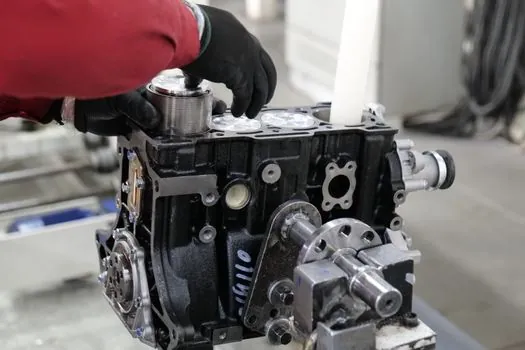
Custom-molded urethane remains the default for low-volume automotive wear parts where rubber compounds cannot meet the abrasion or load-bearing target, and where steel is too noisy or too hard on mating surfaces [S5][S7]. The product list includes seals, bumpers, bushings, rollers, diaphragms, and wear components, with hardness and compound tuned per application rather than pulled from a catalog [S5].
The market data puts polyurethane elastomers (TPU) as the fastest-growing slice of the broader high-performance elastomer category, at roughly 6% CAGR through the forecast horizon, driven by abrasion resistance and by EV-specific sealing duty that older rubber compounds cannot meet [S6]. For a process engineer writing a requisition, that translates into a sourcing reality: TPU and 2C PUR foam are gaining standard-stock status with the major chemical suppliers, while cast and millable PU remain a custom-shop buy.
Selection Checklist and Common Failure Modes
A pragmatic PU elastomer selection passes through five filters, in order: thermal duty (continuous and peak), chemical exposure (battery coolant, automatic transmission fluid, road salt), dynamic load and abrasion cycle count, part geometry (continuous profile vs. foam-in-place flange vs. molded block), and finally processing route available on the receiving line [S2][S3][S4][S5].
Common failure modes map to skipping one of those filters: hydrolysis of polyester-based TPU in hot humid battery environments (use polyether or polycaprolactone TPU instead); crystallization and brittle mill behavior when polyol polydispersity drifts above Mw/Mn 1.5; foam-gasket compression set above 25% when the 2C system is miscatalyzed for the line temperature window; and UV-driven discoloration of aromatic-diisocyanate (MDI/TDI) millable PU in exterior cosmetic parts where aliphatic HDI is the correct call [S2]. For chassis and interior sealing, aromatic millable PU is acceptable; for any visible exterior skin, plan on a UV-stable topcoat or an aliphatic-grade PU.
Two trackable signals to watch: the next round of TPU capacity announcements from BASF, Covestro, and Chinese TPU majors over 2026, and any revision of OEM foam-gasket compression-set specs for battery enclosures as field data from 2024–2025 EV fleets matures. For a deeper read on material behavior across polyurethane families, the polyurethane elastomer encyclopedia entry covers crosslink chemistry and hardness-temperature tradeoffs, while related spec work on adjacent chassis elastomer choices is mapped in EPDM rubber for rail selection and in automotive gearbox spec bands, which often share the same thermal-cycling and fluid-exposure envelope as drivetrain PU seals.
For the relevant spec sheets and selection criteria, see additive manufacturing material, and polyurethane insulation.