
The 2026 process gas analyzer market is fragmenting into three clearly-priced lanes — sub-ppm laboratory isotopic, multi-MEuro oil & gas NDIR/paramagnetic skids, and sub-20 kEUR pharmaceutical dew-point probes — and the buyer's first move is to pick which lane the analyzer actually belongs in [S1][S2][S3].
Cost-Effective Humidity probes such as the MBW CALIBRATION 473 cover humidity, temperature and dew-point on a real-time probe platform aimed at monitoring, process and pharmaceutical duties [S1]. At the opposite end, MANVIA's oil/integration NDIR/paramagnetic systems ship as full analyzer shelters, cabins, racks, sampling probes, pre-conditioning and sample conditioning skids for chemical and oil & gas plants [S2]. In between, benchtop continuous-flow platforms like Elementar's iso FLOW handle isotopic analysis of gases, liquids and carbonate minerals for food and trace-elemental work [S3].
Sensor Principle vs Matrix: Where Each Technology Wins
NDIR and paramagnetic analyzers dominate combustion and oil & gas matrices where the gas is clean, dry and at moderate pressure; MANVIA packages them into shelters, cabins and racks with sampling probes and validation systems explicitly for chemical and oil & gas plants [S2]. Tunable diode laser (TDL) platforms such as the GPro 500 family are sold on in-situ measurement, sub-2-second response, low maintenance and tolerance to process dust and moisture — i.e. dirty, hot, wet stacks where extractive NDIR fails.
For pharmaceutical monitoring and process applications, the MBW CALIBRATION 473 is configured as a real-time probe that measures humidity, temperature, and dew-point, with control output and high-performance characteristics [S1]. Benchtop continuous-flow isotope-ratio mass-spec or IRMS front-ends such as iso FLOW are a different category entirely — fully automated, continuous flow, sampling, trace and elemental measurement on gases, liquids and carbonate minerals for food and research labs [S3]. Buyers who lump these four families under "gas analyzer" usually end up overspending 2-5x.
Decision Criteria Matrix: 4 Lanes Against 5 Buyer Criteria
Five criteria separate the four families cleanly. Range/sensitivity: TDL and IRMS-grade benches reach sub-ppm and isotope-ratio territory; NDIR/paramagnetic sit at percent and 100-ppm ranges; dew-point probes resolve to 0.1 °C frost/dew point. Matrix tolerance: TDL handles dust and moisture per the GPro 500 spec sheet; NDIR needs sample conditioning (MANVIA explicitly lists pre-conditioning and sample conditioning systems in its scope of supply) [S2]; chilled-mirror probes need clean, particulate-free gas [S1]. Hazardous area: oil & gas skids are routinely specced to ATEX/IECEx zone 1 or 2 with flameproof enclosures, while pharmaceutical dew-point probes typically sit in safe-area wall-mount or in-line housings. Footprint: a dew-point probe is a 1/4-NPT or 6-mm tube fitting; a MANVIA shelter is a containerized analyzer house; iso FLOW is a benchtop instrument [S1][S2][S3]. Cost band: probe < rack < shelter < IRMS bench, often by an order of magnitude per step.
The pragmatic mapping: combustion flue gas → TDL or extractive NDIR with paramagnetic O2; natural gas calorific value → NDIR/paramagnetic with sample conditioning; pharma cleanroom or dryer dew point → chilled-mirror or polymer probe; food authenticity and origin → continuous-flow IRMS front-end. Mixing these lanes is the most expensive mistake a 2026 spec engineer can make.
Who a Gas Analyzer Is For — and Who It Is Not For
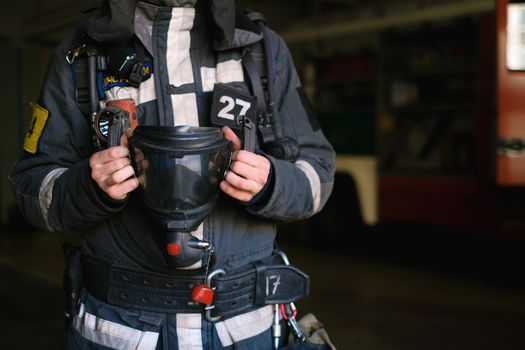
A process gas analyzer is for a plant or lab that needs a continuous, quantitative measurement of one or more gas-phase species tied to safety, emissions, product quality or process control — for example combustion O2/CO, NH3 slip in DeNOx, HCl in stacks and scrubbers, hydrocarbon dew point in natural gas, moisture in a pharmaceutical dryer, or δ13C/δ15N in a food adulteration test [S1][S2][S3]. It is not for spot-checking with a handheld electrochemical or for occupational safety — that is a confined-space or personal monitor with different certification, response-time and drift targets, and lumping them into the same budget line usually ends in either overspec or under-spec.
It is also not for buyers who only need a binary "gas present / not present" signal; a catalytic-bead or infrared point detector with a relay output is cheaper and more robust for that duty. The crossover cases are stack-emission monitoring (where a process analyzer and a CEMS share hardware but differ in QA/QC cadence) and biogas upgrading (where an NDIR CH4/CO2 analyzer doubles as a fiscal meter if it has a validated flow input).
Sampling Architecture: In-Situ vs Extractive vs Probe
The architecture choice drives 30–60% of the installed cost. In-situ probe-type TDL analyzers mount directly on the stack or duct, eliminate the sample line, and are sold on response under 2 s and tolerance to dust and moisture per the GPro 500 datasheet. Extractive systems pull a slipstream back to a remote analyzer, which lets the analyzer sit in a safe, temperature-controlled shelter but forces the buyer to specify a sampling probe, pre-conditioning, sample transport line and sample conditioning systems — MANVIA's product scope literally itemizes all of these in its offering [S2].
Pharmaceutical and laboratory dew-point work almost always uses a direct-insertion probe configuration, often with a display and 4–20 mA + HART output for integration into the process gas management loop, as in the MBW CALIBRATION 473 [S1]. Isotope-ratio work needs a benchtop continuous-flow front-end with an autosampler, so the sampling architecture is a laboratory plumbing problem, not a plant plumbing problem [S3]. Cross-link a fixed gas chromatograph setup with the gas chromatograph architecture guide when the species of interest is a complex hydrocarbon or VOC mixture rather than a single gas.
Calibration, Validation and Lifecycle Cost
Total cost of ownership is dominated by calibration gas, reference standards and validation labor, not by the analyzer itself. METTLER TOLEDO's published buying guide explicitly recommends evaluating use-life and total project cost with the supplier and reviewing with stakeholders, and warns against long internal discussions and rushed edits that lead to mis-specification [S4]. For oil & gas analyzer shelters, the scope of supply already includes validation systems as a line item, so the spec should ask for documented repeatability and drift on certified test gases before acceptance [S2].
Pharmaceutical moisture probes need a chilled-mirror reference check or a factory-recalibration cycle; the MBW 473 datasheet highlights "real-time, high-performance, control, cost-effective" operation, which in practice means the buyer must budget annual multi-point calibration against a transfer standard [S1]. For IRMS-grade benches like iso FLOW, the lifecycle cost is dominated by reference gases, consumables and certified reference materials (e.g. VSMOW, VPDB), so the bench is unsuitable for plants that cannot store and handle those cylinders safely [S3]. A 5-year cost model that ignores consumables typically understates TCO by 40–60%.
Regulatory, Hazardous-Area and Documentation Hooks
Hazardous-area certification is non-negotiable for any analyzer that touches a flammable atmosphere in Zone 1/2 or Div 1/2. For European chemical-plant builds the spec sheet should require ATEX 2014/34/EU conformity with the appropriate equipment category and gas group, and for global projects the equivalent IECEx scheme; MANVIA's analyzer shelter scope is designed around chemical and oil & gas plant requirements and ships with that documentation package [S2]. Pharmaceutical buyers usually need GMP/CSV documentation, IQ/OQ protocols and 21 CFR Part 11-friendly data integrity, which is why the MBW 473's "process" and "for pharmaceutical products" tags are the actual selection driver, not the sensor type [S1].
For combustion and emissions duty, buyers should anchor the spec to a published standard such as EN 14181 (QAL1/QAL2/QAL3) for CEMS, or to local equivalents; do not invent standard numbers in the tender. For moisture in industrial gas pipelines, dew-point measurement is governed by ISO 8573 and ASTM D1142-style methods, and the analyzer should be specified to match the required range and units (°C frost/dew point, ppmV, lb/mmscf). Buyers who skip the standards reference end up with a paper trail that auditors will not accept.
Selection Workflow That Survives a 2026 Audit
A defensible 2026 selection runs in five steps. First, fix the measured species, matrix composition, range, required accuracy and response time on a single page. Second, write the hazardous-area and standards list (ATEX/IECEx zone, EN 14181 tier, ISO 8573 class, GMP class) and stop there — do not add sensing principles to the spec yet. Third, run a sensor-principle shortlist: TDL for wet/dirty stacks, NDIR+paramagnetic for clean dry gas, chilled-mirror for low dew point, IRMS for isotopic work [S1][S2][S3]. Fourth, choose sampling architecture: in-situ probe, extractive with conditioning skid, or direct-insertion probe. Fifth, run a 5-year TCO with calibration gas, consumables, spares and validation labor, and only then shortlist two or three vendors for a side-by-side trial [S4].
For buyers who already have a moisture analyzer line item, a gas detector line item and a gas chromatograph line item, keep the gas analyzer separate — different calibration cadence, different hazardous-area rules, different documentation. The cheapest way to derail a 2026 analyzer project is to merge three separate instrument budgets into one tender. Track the next move: monitor whether the supplier's stated use-life and total project cost match the 5-year TCO in your model, and confirm the validation system scope of supply (sampling probe, pre-conditioning, sample conditioning, validation skid) in writing before placing the PO [S2][S4].