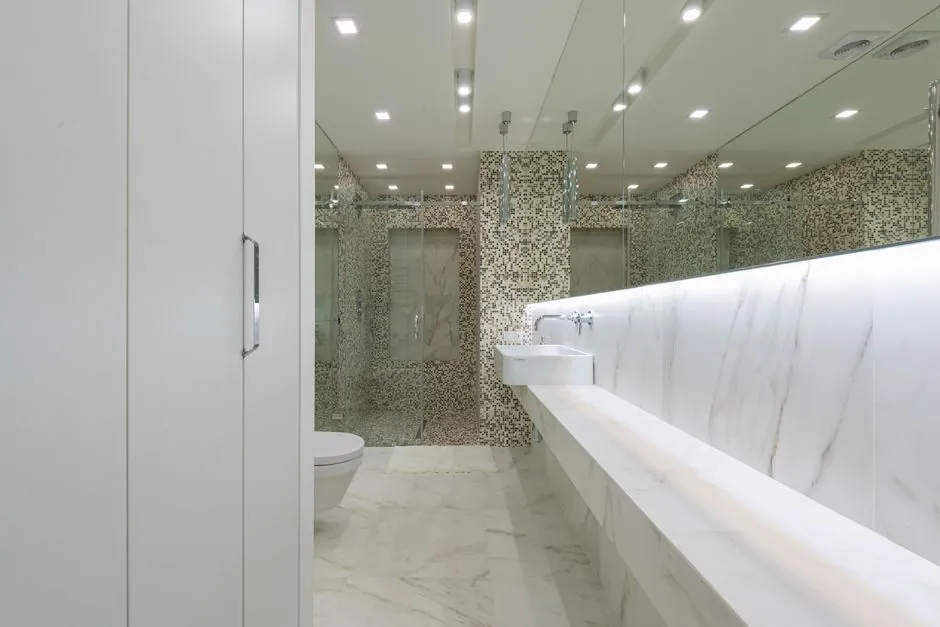
For high-touch public restroom doors, specify satin chrome, satin stainless steel, or a durable powder coating, then coordinate the same finish across locks, levers, hinges, and closers.
The decision balances visible wear, cleaning exposure, corrosion risk, code 626 or 630, and coordinated procurement across the complete door opening.
Satin Finishes Reduce the Visibility of Daily Contact
Satin chrome and satin stainless steel are generally preferred for high-traffic doors because their less reflective surfaces disguise frequent contact, while polished chrome is more vulnerable to water spots, smudges, and fingerprints [S1][S3]. A satin surface is produced by brushing or electroplating, leaving a soft sheen rather than a mirror finish [S1].
Specify BHMA 626, or US26D, for satin chromium on brass in standard interior applications, and BHMA 630, or US32D, for satin stainless steel on exit devices, hinges, and exterior hardware [S4]. The distinction is material-specific, not cosmetic: 626 is chromium over brass, while 630 identifies satin stainless steel, so schedule each product by its actual construction rather than applying one code to the entire opening [S4].
For a coordinated package, list the BHMA code first and the legacy US code in parentheses, such as 626 (US26D) or 630 (US32D) [S4]. This reduces ambiguity during procurement, fabrication, installation, and field replacement while preserving the link between architectural hardware and the lock, hinge, closer, and trim schedule.
Compare the Main Restroom Door Finish Options
For an objective comparison, polished chrome delivers the highest visual brightness but exposes fingerprints and water spots, satin nickel reduces glare but requires careful cleaner compatibility, powder coating handles institutional cleaning well but can chip under impact, and stainless steel provides the strongest corrosion-oriented option in wet or exterior exposures [S1][S3].
Polished chrome is a cool, highly reflective finish suited to minimalist and contemporary interiors, while brushed or satin nickel gives a softer, tactile appearance and is easier to live with in high-contact areas [S1]. Polished nickel has a warmer tone than chrome, which can make mixed-metal coordination less conspicuous, although its mirror-like surface retains the same cleaning sensitivity associated with polished finishes [S1][S5].
Powder coating applies dry powder that is baked onto the base metal to form a durable matte or satin surface. It hides fingerprints better than polished coatings, supports broad color selection, and performs well under institutional cleaning, but performance depends on coating thickness and pretreatment; impact damage can expose the substrate [S3]. For restroom doors exposed to coastal conditions, stainless steel 304 or 316 should be stated explicitly rather than assumed from the finish color [S4].
Match Every Component on the Door Opening
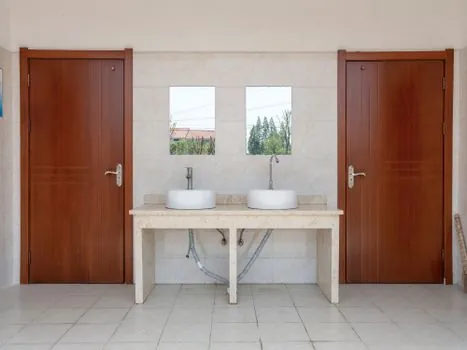
An opening with satin chrome levers and satin nickel hinges will look uncoordinated because the visual match is only as good as its least consistent component [S3]. A practical schedule covers the lever and lock case, cylinders, hinges, closer, pull, strike plates, and any auxiliary trim, with the selected finish and acceptable alternates stated field by field [S4].
BHMA finish code 605 or US3 denotes bright brass, 606 or US4 satin brass, 612 or US10 satin bronze, and 613 or US10B dark oxidized or oil-rubbed bronze [S4]. For black and white powder-coated selections, finish identification still has to be coordinated across locks, hinges, closers, and frames; flat black and white powder-coat options are used in closer specifications where the project requires a specific design color [S4].
Do not mix base metals simply because their visible colors appear similar. Code 652 specifies satin chromium on steel, while 626 specifies satin chromium on brass, and the base material can change corrosion behavior and product availability [S4]. Procurement teams should also compare the full assembly, not just the trim ring, because levers, latches, strikes, and closer covers may come from different manufacturing families and batches.
Choose the Finish for Cleaning and Corrosion Exposure
Public restroom finishes must tolerate repeated hand contact, moisture, and routine cleaning, and plated finishes on brass or steel are not the preferred selection for wet areas or environments using aggressive cleaning agents [S3]. Polished finishes also require regular maintenance to preserve their shine, and harsh cleaners can dull the surface [S1].
Brushed nickel and satin stainless steel are the stronger default choices where fingerprints and water spotting would be conspicuous [S3][S6]. Powder coating is useful when the design requires matte black or another project-specific color, provided the schedule acknowledges the potential for impact chipping [S3][S4]. Unlacquered brass should be reserved for projects that explicitly want an active patina because touch and air exposure cause the golden surface to darken over time rather than remain visually static [S5].
For exterior or coastal restroom doors, state the stainless grade as 304 or 316 and verify it against the exposure condition [S4]. For interior openings, 626 satin chromium on brass remains a practical option, while 630 satin stainless steel is a defensible choice where the project values a stable, low-glare appearance across exit devices, hinges, and hardware [S3][S4].
Use Finish Codes to Control Procurement Consistency
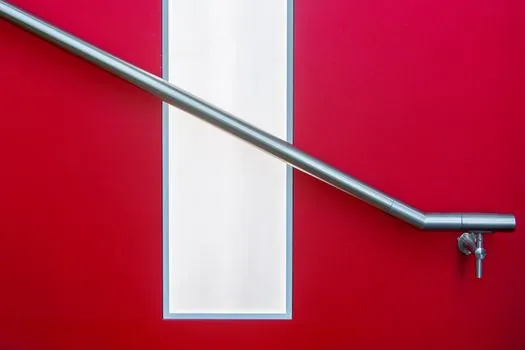
ANSI/BHMA A156.18 provides the finish-code system used to identify appearance and base material, with 626 and 630 among the most common commercial designations [S4]. Writing both the BHMA and US code removes one of the main causes of mismatched hardware, especially when a project mixes manufacturers or replaces a damaged component later [S4].
Bid packages should require samples from the actual production finish, not only finish chips, because color can vary with plating, brushing, coating thickness, and lighting. Satin and brushed surfaces soften reflections, but the underlying process still changes the final appearance [S1]. Powder coating also depends on pretreatment and thickness, so two products labelled black should not be treated as equivalent by description alone [S3].
Where the product line does not offer one exact finish across every component, identify the approved alternate in the schedule. This is preferable to leaving installers to match colors by eye, a practice that increases callbacks and produces visible differences between levers that age differently across a corridor [S3].
Separate Design Intent from Maintenance Reality
Unlacquered brass, bronze, brushed nickel, gunmetal, and polished chrome can all serve as architectural finishes, but they do not deliver equal maintenance performance in public restrooms [S5]. Unlacquered brass is intentionally variable, while brushed nickel and satin bronze use texture or a soft sheen to reduce the visual severity of fingerprints and ordinary wear [S1][S5].
Matte black remains a strong visual option, but the finish decision must distinguish solid black-coated hardware from a black surface treatment over a different base metal. Satin chrome, satin nickel, and satin stainless steel are operationally easier to coordinate when the objective is one restrained appearance across multiple entrance doors [S3].
For a commercial restroom package, set the design finish first, then test it against cleaning practice, touch level, moisture exposure, base material, and replacement lead time. That sequence prevents a visually attractive bronze, brass, or polished surface from becoming a maintenance liability on the busiest door in the facility.
The next procurement checkpoint is a finish matrix listing each opening component, BHMA code, US code, base metal, stainless grade where applicable, and approved alternate, followed by production-finish sample approval.