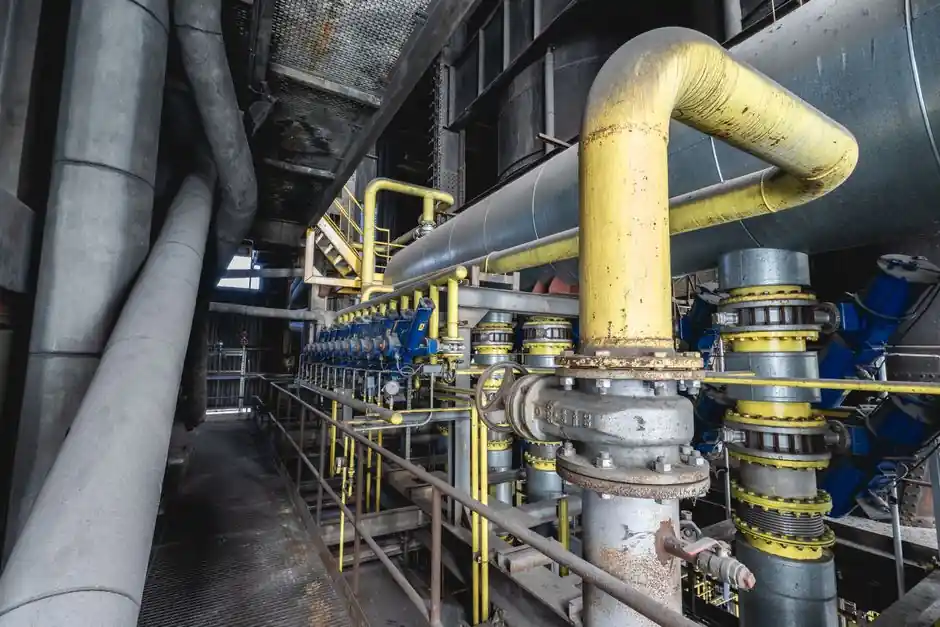
Semiconductor fab gas and chemical distribution lines need seamless 316L stainless tubing to ASTM A213/A269 with electropolished ID at Ra ≤0.4 µm, supplied with EN 10204 3.1 mill certificates [S5][S8].
General-purpose carbon seamless pipe per GB/T 8163, API 5L, or ASTM A106 dominates oil, power, and construction supply but does not meet fab purity or surface-finish gates [S5][S9].
Why 316L seamless dominates UHP gas and chemical lines
316L low-carbon stainless is the default alloy for fab bulk-gas and wet-chemical distribution because its 0.03% max carbon minimises carbide precipitation at orbital-weld heat-affected zones, a key durability factor for high-purity service [S5]. A typical fab spec calls for OD 6-50 mm, wall 0.7-3.0 mm, cold-drawn, solution-annealed, with each lot shipped with a 3.1 cert showing chemistry, mechanicals, and surface roughness [S5]. Compared with 304, the 2-3% Mo addition gives 316L measurable resistance to chloride attack from HCl and HF-based etch chemistries, which is why most fab EPCs default to 316L for downstream wet-bench and scrubber headers.
Standards map for fab-grade seamless tube
The reference standards are ASTM A213 (seamless ferritic/austenitic boiler, superheater, heat-exchanger tube), ASTM A269 (seamless and welded austenitic tubing for general service), ASTM A270 (sanitary tube for pharma/semiconductor), plus ASME B31.3 for process piping and SEMI E12 for UHP gas distribution [S5]. For structural carbon service the working list is API 5CT, API 5L, ASTM A106-2006, ASTM A210-1996, GB/T 8162-1999, GB/T 8163-1999, JIS G3454-2007 and JIS G3456-2004, with grade families 10#-45#, 16Mn, A53-A369 and ST35-ST52 covering OD 50-325 mm at 4-30 mm wall [S5]. A 316L seamless tube supplied to ASTM A213 typically yields 515-690 MPa tensile and 205-310 MPa yield depending on section, with elongation ≥35% in the solution-annealed condition.
Surface finish and cleanliness gates
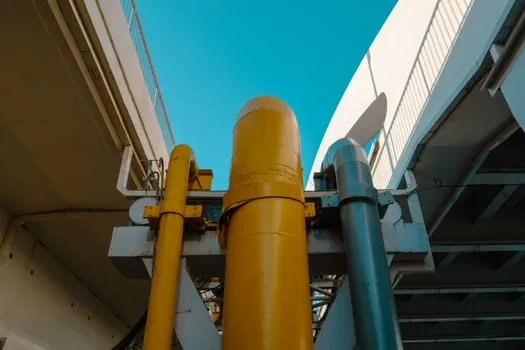
Particle-addition and moisture breakthrough events on a tool are the two failure modes that drive fab surface-finish specs [S8]. Industry common practice is inner-surface Ra ≤0.4 µm (mechanically polished) or Ra ≤0.25 µm (electropolished), with the tube capped, bagged in cleanroom-grade PE, and double-bagged for class 100 transfer. Stainless seamless lines must pass a helium-leak test ≤1×10⁻⁹ mbar·L/s at the orbital weld, and every wetted component is degreased and flushed with deionised water before shipment. Compare that with general fluid-transmission seamless pipe to GB/T 8163 grade 10/20, which is sold without any surface-finish cert at typical tensile 335-475 MPa [S9]: perfectly fit for plant compressed air, unfit for any process gas that touches a wafer.
Comparison: carbon vs 304 vs 316L seamless for fab service
On four fab decision gates, the options line up as follows. Corrosion to HCl/HF wet chemistry: 316L best, 304 acceptable on diluted chemistries, carbon not used. UHP gas compatibility: 316L best (low outgassing, low sulphur), 304 acceptable for non-corrosive gases, carbon not used. Surface finish capability (Ra ≤0.4 µm + electropolish): all three can be polished, but 316L holds the polish and passivation better; carbon needs a liner or coating. Cost and lead time: carbon seamless to GB/T 8163 is cheapest and shortest, 304 sits 30-60% above carbon, 316L sits roughly 50-100% above carbon depending on nickel-molybdenum surcharges [S5][S9]. Bottom line, 316L wins on every fab gate, and 304 wins on raw cost for non-corrosive bulk-gas only.
Supplier landscape and sourcing channels
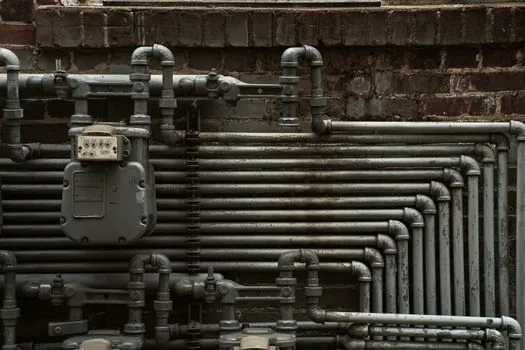
China-origin 316L seamless tube is widely available from specialised exporters (Nansteel Manufacturing, EZ Steel Industrial, Liaocheng Laixing Steel Pipe, Yantai Runkang) with monthly capacity 5,000-300,000 t and 20-50 t minimum orders depending on grade [S1][S5][S6][S10]. Generic carbon seamless pipe is a commodity with 2,119+ Alibaba-listed suppliers and top markets South America 25.0%, North America 20.0%, Mid East 15.0% [S3]. For fab work, the procurement filter is quality-system, not platform: ISO 9001:2008 or later, EN 10204 3.1 cert per heat, documented orbital-weld procedure qualification, and a cleanroom packaging protocol; without these the cheapest RFQ is not the best deal [S10]. A practical two-step path is RFQ on the seamless steel pipe category, then shortlist on 3.1 cert traceability, then run a 50 m trial lot through an orbital weld qualification before scaling.
Common selection errors and inspection points
Specifying the wrong standard is the single biggest cost-driver: ordering GB/T 8163 fluid-service pipe to a fab gas line saves 40-60% on unit price and fails qualification at first particle test. Other recurring errors include accepting tube without a 3.1 cert, accepting mill finish without specifying Ra, omitting post-weld passivation and slurry flush, and ignoring chloride limits on incoming DI rinse water. The reference steel pipe page lays out the difference between seamless, welded and ERW/LSAW geometries; for fab UHP gas the geometry is always seamless cold-drawn, never welded. Final fit-up requires matched pipe fittings certified to the same surface standard, including VCR face-seal and orbital-weld elbows with the same 3.1 traceability and electropolish. [S2]
Trackable next signals: the SEMI E12 working-group maintenance cycle and the next revision of ASTM A270 sanitary tube, both of which can move fab surface-finish defaults within the next 12 months.
For related coverage, see Flange vs Sight Glass: Mounting Interface, Pressure Class, Material Choices.