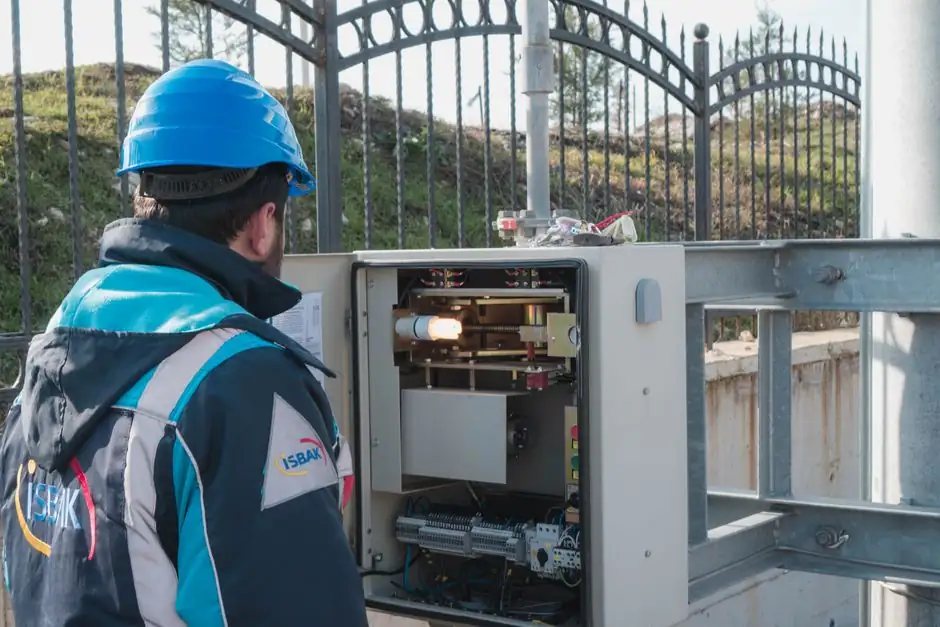
A temperature transmitter installed in an unheated enclosure must remain within its specified ambient range, while the internal air and electronics may reach +85°C in a representative pressure-transmitter design [S1].
The decision applies to both pressure and temperature instruments: verify model-specific limits, estimate self-heating, and compare measured cabinet temperatures with the certified operating envelope.
Separate ambient and internal enclosure temperatures
Ambient temperature is the air temperature surrounding an electrical enclosure, not the enclosure surface temperature [S4]. For an unheated enclosure, this distinction is critical because a sunlit surface can read higher than the surrounding air, while the instrument inside can still run warmer than that air.
For outdoor equipment, record the highest expected seasonal air temperature rather than substituting the enclosure surface temperature; solar gain and cooling by shade should be handled as separate heat loads [S4]. Indoors, take readings at least 20 feet from the enclosure, use the maximum reading from repeated measurements, and capture peak operation with surrounding equipment running [S4].
The applicable product limit remains the deciding value. The MBS 33 pressure transmitter specifies an operational range of -40°C to +85°C for its enclosure and sensor element, combining medium and ambient effects [S1]. Most Rosemount 3051 models are described as operating in an ambient temperature range from -40 °C to 85 °C [S7].
Account for heat from the instrument
An unheated enclosure does not guarantee a temperature equal to the outside ambient. Electronics dissipate heat, and heat transfer inside the cabinet depends on radiation, natural convection, forced cooling, and mounting orientation [S1].
The MBS 33 analysis identifies medium temperature, medium velocity, pipe dimensions, pipe layout, insulation, radiant heat, convective heat exchange, and environmental temperature as contributors to the transmitter's operational temperature [S1]. This means the enclosure air temperature should be measured close enough to represent the transmitter location, while the outdoor ambient should be measured without contamination from enclosure heat [S4].
One practical check is to jumper the transmitter input terminals and monitor the internal signal as an indication of enclosure temperature [S8]. The method identifies the temperature seen by the electronics, which is more relevant than an outdoor reading when the question is whether an unheated cabinet can safely house the instrument.
Compare the main thermal limit options
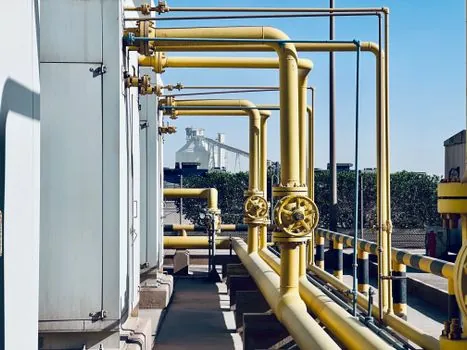
A pressure transmitter and a temperature transmitter may differ in architecture, but the installation check follows the same four criteria: rated ambient range, internal cabinet temperature, process temperature, and temperature-compensation range. [S5]
Pressure-transmitter options include a direct-mounted sensing element, a remote diaphragm seal, and an impulse-piping arrangement. A Rosemount 3051 with silicone fill fluid is rated for process media down to -40°C, while a remote seal using Syltherm XLT fill fluid can extend to -75°C [S5]. The lower limit therefore depends on configuration and installation, not only on the transmitter model name.
For temperature instruments, compare a general-purpose RTD with a thermocouple or other sensor family. A wire-wound platinum element can reach a 600°C operating limit, but the assembly must be selected for the required range rather than assuming the element alone determines transmitter survivability [S3]. The temperature sensor, temperature transmitter, wiring, and enclosure must all remain within their respective limits.
Use compensation limits to judge accuracy
Operating-temperature survival and measurement accuracy are separate specifications. Manufacturer data commonly provide a media operating range and a compensated temperature range, with the latter defining the interval over which temperature errors are verified [S2].
Frequent excursions impose stress on adhesives, brazed welds, glass-to-metal seals, and O-ring seals [S2]. Frequent temperature extremes place more stress on fabricated pressure-transducer components, including industrial adhesives, brazed welds, glass-to-metal seals, and O-ring seals [S2].
For an unheated enclosure, treat the rated ambient range as a survival limit and the compensated range as the accuracy limit. If the cabinet regularly operates outside compensation, adding the temperature recorder provides an audit trail but does not correct the transmitter's intrinsic temperature error.
Match the installation to the service
A transmitter is suitable for an unheated enclosure when the enclosure's measured temperature, including self-heating, remains inside the manufacturer's ambient rating and the process connection does not drive the sensing element beyond its rating [S1][S2]. This approach fits permanent field installations where adding heat may be undesirable.
Unheated placement is not suitable when the expected outdoor ambient exceeds the instrument rating, cabinet peak temperature rises above its upper limit, or frequent excursions threaten electronics and seals [S2]. A sunshade, ventilation, a remote mounting arrangement, or a higher-rated instrument may then be required.
Remote mounting can reduce heat transfer. For cryogenic pressure measurement, a transmitter mounted above the process piping with at least 0.5 meters of impulse piping can protect the instrument from the coldest fluid [S5]. For hot media, the MBS 33 data show that increasing the connecting branch from 2 cm to 10 cm reduced the transmitter temperature from 85°C to 70°C at a medium temperature of 120°C; at 100°C medium temperature, the same change reduced it from 75°C to 60°C [S1].
Validate the enclosure before installation
A transmitter cabinet should be checked at expected peak load, with calibrated thermometers, using the maximum observed value as the design input [S4]. Record at least the outdoor ambient, the enclosure air near the instrument, the transmitter housing temperature, and the process or connection temperature.
Then trace each measurement to a datasheet limit: enclosure or sensor element to -40°C to +85°C for the comparable MBS 33 design [S1], process media to the configuration-specific limit, and accuracy claims to the compensated range [S2]. The differential pressure transmitter page is useful for remote-seal and impulse-line configurations where the cold or hot medium is mechanically coupled to the transmitter.
The next verifiable signal is a full-load temperature log: if the highest internal transmitter temperature remains below the model-specific ambient limit and the hottest or coldest process condition remains inside its media and compensation ratings, the unheated-enclosure installation is defensible.