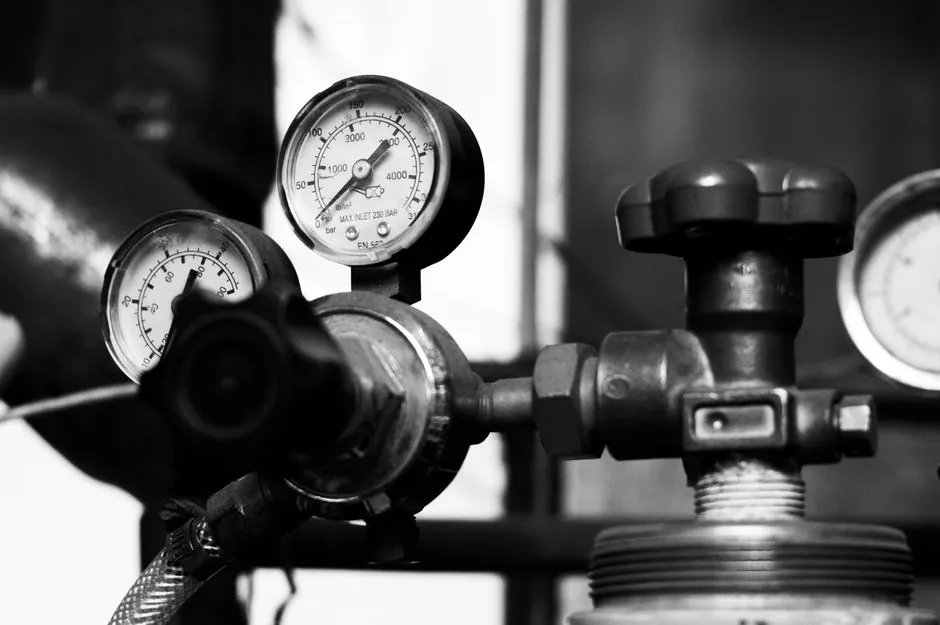
A dual-port digital manometer measures the pressure difference P1-P2 between two points, while a single-port instrument is faster for isolated pressure readings.
The decision rests on diagnostic task, hose handling, required pressure range, accuracy, data functions, and the cost of carrying two instruments rather than one.
Single-Port or Dual-Port: Direct Decision
Use a single-port digital manometer when the technician needs one pressure value at a time and does not routinely compare two locations. Its single hose reduces setup clutter and makes one-handed field use easier; an HVAC field discussion identifies single-port operation as advantageous for most one-pressure readings except static-pressure testing [S2].
Use a dual-port digital manometer when the test depends on a pressure difference, such as static pressure, filter pressure drop, duct leakage, or pressure-based airflow calculations [S5]. The Fieldpiece SDMN5 is a portable, rugged dual-port model intended for HVAC/R service and measures gas pressure, static pressure, and differential pressure [S1]. A dual-port meter is also the stronger choice when the technician wants to connect both sides of a system and read P1-P2 without repeatedly moving hoses.
A practical rule is to buy the dual-port instrument if it will serve the majority of diagnostic calls, and add a single-port meter only if the workload clearly separates simple point checks from comparative tests. Carrying both is defensible when the single-port unit provides faster routine checks while the dual-port unit handles full diagnostics, but two instruments add purchase cost, training, and carrying weight [S2].
Pressure Functions and Diagnostic Value
A dual-port gauge supports differential measurement by applying one pressure to each top port and calculating P1-P2. These are listing-level specifications, so verify the manufacturer manual and calibration status before assigning the values to a critical measurement chain.
The GOYERRNES dual-port manometer is advertised as a professional air-pressure meter with 12 selectable units. Unit flexibility reduces conversion mistakes, but the selected range must still cover the expected pressure. A broader range improves versatility, while a narrow range can provide finer display resolution for a tightly defined HVAC test.
Single-port meters are not restricted to one diagnostic use, but they normally require the hose to be moved when a comparison is needed. A forum participant said they had just acquired a new UEI single-port manometer and noted that, with only one hose to contend with, it is easier to handle than a dual-port manometer when only one pressure needs to be read at a time. For static-pressure or balancing work, this repeated relocation increases connection time and creates more opportunities for a reading to be associated with the wrong test point.
For sizing a meter around duct static pressure, use Manometer Range Sizing for HVAC Duct Static Pressure Tests as the next engineering reference before committing to a range.
Port Count, Hose Management, and Error Exposure
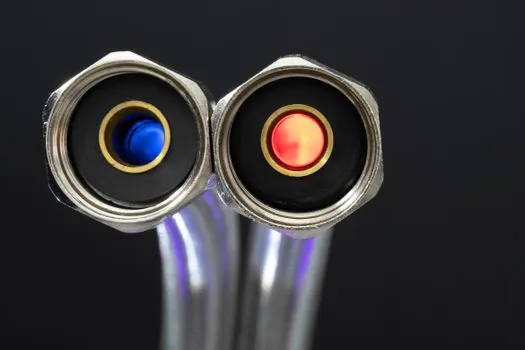
One hose is the clearest operational advantage of a single-port model. It reduces hose count, simplifies handling, and makes it harder to confuse the live reading with another connected line [S2]. That matters in confined mechanical rooms, at ceiling-mounted filters, and during repeated filter checks where speed and unambiguous port assignment matter more than simultaneous measurement.
Dual-port instruments accept two hoses and enable a direct differential calculation. The SDMN5 is designed to measure duct pressures for airflow balancing [S1], while a separate commercial dual-port listing includes two 25 cm silicone hoses and a 1/8-inch threaded barbed fitting [S3]. The latter specification identifies a concrete connection format, but it should not be treated as universal across dual-port products.
Two ports also create a setup dependency: both sides must be connected to the intended points, with each hose assigned consistently to P1 and P2. A single-port meter can be simpler, but it cannot continuously display both pressures while the technician moves one line. For balancing, fan verification, and static-pressure mapping, that continuous relationship is usually worth the extra connection work.
Accuracy, Resolution, and Measurement Functions
Accuracy should be compared as a percentage of reading or full-scale span, but the research does not establish which convention applies to every listed product. The GOYERRNES specification provides three separate metrics: ±0.3% accuracy, ±0.2% repeatability, and ±0.29% linearity/hysteresis [S3]. A responsible comparison requires all three figures and the exact test conditions from each manufacturer datasheet.
The SDMN5 product page identifies pressure measurement, gas-pressure measurement, static-pressure measurement, and differential-pressure measurement as core functions [S1]. Those functions increase value for trend review and repeatability, but they do not substitute for pressure-range suitability.
When comparing instruments, use the same test pressure, port arrangement, hose configuration, and display mode. For routine checks, a compact meter may be sufficient; for documented diagnostics, data logging, or airflow calculations, the extra functions of a dual-port model can reduce manual recording errors. A broader comparison of instrument categories is covered by Digital Manometers for HVAC.
Cost, Portability, and Tool-Chain Fit
At the research date, the Fieldpiece SDMN5 was listed at US$186.15 on sale against a US$219.00 MSRP, with 26 units shown in stock [S5]. The Fieldpiece JL3KM2 dual manometer kit was listed at US$226.95 on sale against a US$267.00 MSRP, with 64 units shown in stock [S5]. These are retail listings on one distributor site, not universal price points or permanent price bands.
The GOYERRNES dual-port listing showed US$39.13, 12 selectable units, a ±2.999 psi range, and a 12-month warranty [S3]. The large price difference between that listing and the Fieldpiece products is not a like-for-like quality comparison because the research does not provide equivalent certification, accessory, warranty, accuracy-test, or support terms for every model.
Single-port tools are commonly the more compact option, and technicians specifically identify easier hose handling as a reason to keep one in the toolbox [S2]. Dual-port models add diagnostic capability but generally require two hoses, two stable connection points, and more attention to port labeling. The Fieldpiece JL3KM2 listing also states that the dual-port manometers are untethered, reducing dependence on hose length for placement at exact measurement locations [S5].
Application Fit and Procurement Checklist
A single-port digital manometer fits technicians performing isolated gas-pressure checks, one-point filter checks, and other tasks that require only one active measurement line. A dual-port digital manometer fits commissioning, duct balancing, static-pressure testing, filter pressure-drop testing, duct-leakage work, and pressure-based airflow calculations [S5]. The GOYERRNES listing identifies gas pipelines, air conditioners, HVAC equipment, furnaces, and airflow balancing as application areas [S3].
Before procurement, verify the pressure range, accuracy convention, resolution, units, maximum hose length, port fitting size, minimum measurable differential pressure, battery life, ingress protection, operating-temperature limits, calibration procedure, warranty, and included accessories. The available research confirms a 1/8-inch barbed fitting, 25 cm hoses, 15-minute auto-shutdown, 100-record storage, and 12 selectable units for the GOYERRNES model [S3]; comparable data for the SDMN5 is not included in the supplied material.
For a technician handling mixed workloads, choose a dual-port model and accept the extra hose management in exchange for direct P1-P2 measurements. For a technician performing mostly one-point checks, choose the single-port configuration and reduce handling and setup. Record the first test pressure, units, port arrangement, and displayed mode on the job sheet, then verify the instrument against the manufacturer’s stated accuracy and calibration limits before relying on the result.
