A bituminous vapor control layer is installed within the roofing buildup below the insulation to restrict warm, moisture-laden air from entering the roof assembly [S1].
Its selection depends on roof climate, interior humidity, substrate, insulation placement, penetrations, and continuity of the sealed membrane layer [S3][S5].
Bituminous Vapor Control Layer Position and Scope
For conventional buildings, a vapor retarder is typically installed under the roof insulation, on the warm interior side of the roof assembly [S3]. This position intercepts moisture before it reaches insulation and the exterior waterproofing layers.
A bitumen vapor control layer is a bitumen-based membrane installed within a roofing buildup to prevent warm, moist air from inside a building from entering the roof construction [S1]. The layer is not a substitute for the roof waterproofing membrane. Its separate function is moisture control within the layered assembly [S1][S5].
The available material options include bitumen, polyethylene, and aluminum foil. Because of their very low permeability, many asphaltic membranes can function as vapor retarders. Asphaltic membranes can function as vapor retarders because of their very low permeability [S5].
Climate and Humidity Criteria for Installation
A vapor retarder should be considered when the outside mean temperature is below 40°F (4°C) and the expected winter interior relative humidity is 45% or greater [S5]. A retarder may also be required where occupancy, cooking, washing, swimming pools, or construction processes generate high interior humidity [S5].
Refrigerated warehouses, pools, showers, kitchens, laundry facilities, and buildings in cold climates deserve a separate hygrothermal assessment rather than a blanket rule based on one moisture source. The 40°F (4°C) and 45% screening values identify conditions for engineering review, not automatic approval of one membrane or assembly [S5].
The final requirement should be established by the architect or engineer using vapor-control theory, building-owner operating data, climate, roof design values, and air-leakage conditions [S5]. For structural concrete decks, GAF identifies moisture-control problems, several retarder options, and responsibility allocation as dedicated design considerations [S3].
Bituminous, Polyethylene, and Foil Compared

Bituminous membrane gives the specification a roofing-compatible waterproofing material with very low water-vapor permeability, while The comparison below organizes those differences by project use rather than treating them as interchangeable products.
For tapered fall design and adjacent roof build-ups, tapered XPS board for roof falls should be coordinated with the retarder because penetrations through tapered insulation can create additional sealing requirements.
Where the Layer Is Needed and Where It Is Not
The layer is most defensible below insulation in conventional low-slope roofs where interior vapor drive is significant, winter humidity is high, or a structural concrete deck introduces moisture risk [S3][S5]. It also protects insulation from moisture-related degradation and reduces the likelihood of mould, rot, adhesion deterioration, and component failure [S2][S5].
It is not a universal requirement for every insulated roof. GAF describes retarder use as a decision based on building use, location, climate, design values, air leakage, and water-vapor movement [S3]. A designer should also consider the roof membrane’s bonding method and whether the assembly contains a continuous air barrier.
Mechanically fastened single-ply roofing can allow vapor to contact the underside of the membrane because the membrane is not fully bonded to insulation or cover board. If that membrane falls below the dew point, condensation can form beneath it; a vapor retarder below the insulation can reduce this risk [S5]. Traditionally fully adhered asphaltic roofing does not normally present the same underside-condensation condition on an insulated assembly [S5].
Insulation, Air Leakage, and Dew-Point Control
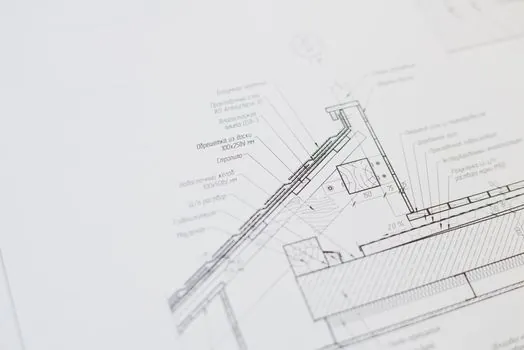
Moisture reaches roofs by vapor diffusion and air leakage, and these mechanisms require different design responses [S3]. A vapor retarder limits vapor movement but does not by itself seal air leakage paths through the roof perimeter, penetrations, service connections, or ceiling plane.
The retarder must also be distinguished from an air barrier. Its selection should be coordinated with the roof deck, cover board, insulation, membrane bonding method, and perimeter air-control strategy [S3]. This matters because a low-permeability membrane can perform poorly if joints or penetrations remain open, while an effective air barrier can reduce the amount of moisture delivered toward the cold roof plane.
Condensation control depends on keeping the assembly’s temperature gradient and dew-point location within an acceptable condition. A moisture-control layer is therefore not a substitute for calculating the roof design and verifying that the insulation remains dry under expected operating conditions [S3].
Detailing, Installation, and Failure Modes
Proper installation determines whether the vapor retarder forms a continuous barrier. It should be sealed around pipes, supports, roof penetrations, walls, and the insulation perimeter, following principles similar to those applied to the roofing membrane [S5].
GAF’s 31-page design guide includes details for roof edges, parapet wall bases, inside and outside corners, rooftop-unit curbs, pipe penetrations, and drains [S3]. These junctions are more likely to determine system continuity than the membrane field area, so the specification should require coordinated details rather than a generic instruction to lap and seal.
Typical failure modes include open seams, incomplete penetration seals, damaged foil or polyethylene surfaces, moisture trapped above the insulation, and use of an incompatible adhesive or attachment method [S2][S3][S5]. A membrane installed without continuous detailing can create the very condensation path it was intended to control.
Specification Data and Sourcing Checks
Specify the membrane by project-specific roof-system designation rather than as generic “bitumen felt.” The submittal should identify the material, thickness or mass, reinforcement where applicable, surfacing, approved attachment or adhesive method, minimum overlap, side-lap treatment, and compatible insulation and cover-board products [S1][S3].
For SBS-modified bitumen systems, the bitumen membrane functions as a vapor retarder by minimizing water-vapor passage and helping control moisture within the roof assembly [S6]. The product’s installation method, such as heat-welded, torch-applied, cold-aphesive, or hot-mopped construction, must match the selected roof system and substrate [S3].
When specifying polyurethane insulation, EPS board, or insulation board above the layer, require compatibility with the membrane’s attachment method and installation temperature. For the wider assembly context, a comparison of insulation board versus structural insulated panels separates product formats but does not replace roof-level moisture analysis.
At handover, track membrane product approvals, continuity of laps and penetrations, insulation compatibility, roof-edge and curb details, and photographs before the insulation conceals the layer. These records make the concealed bituminous vapor control layer auditable rather than treating it as an unverified line in the roof build-up.