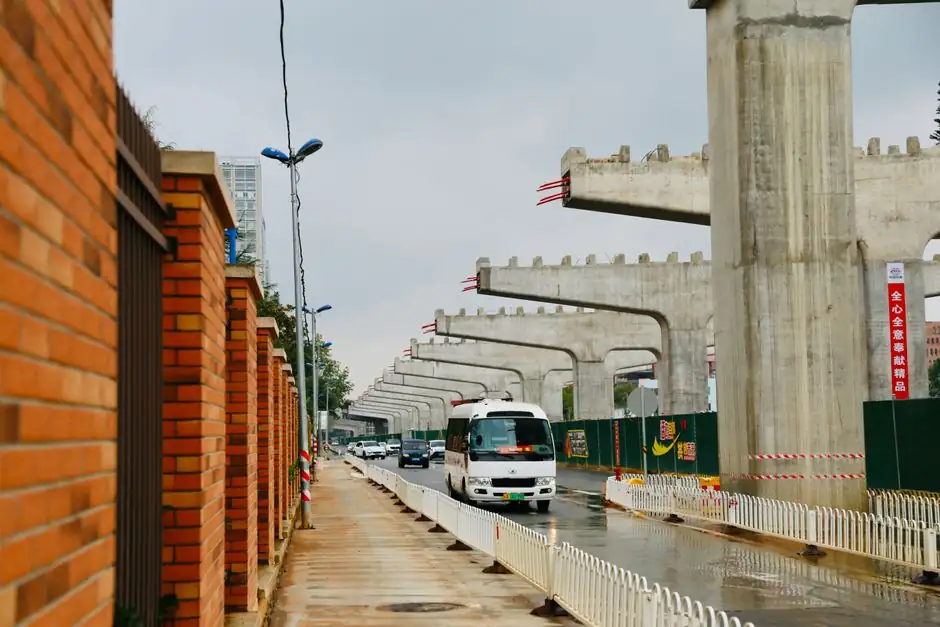
Bridge deck waterproofing membranes are required to have a bonding strength with concrete and asphalt of at least 0.14 MPa at 150 °C [S4].
Selection depends on membrane type, substrate condition, asphalt compatibility, seam detailing, and measured properties rather than a generic heat-resistance claim.
Why Hot Asphalt Exposure Governs Membrane Selection
Hot asphalt paving exposes the waterproofing layer to heat, load, and direct contact with a fresh wearing course. The membrane must therefore retain waterproofing integrity during placement rather than merely withstand normal service temperature after construction [S4].
Freeze-thaw cycling magnifies the consequences of defective waterproofing. Moisture penetration and standing water on a concrete deck can promote interface expansion and contraction, asphalt-overlay debonding, deicing-salt ingress, and reinforcement corrosion [S1].
The protective role extends beyond the pavement surface. A continuous membrane separates traffic-bearing asphalt from the concrete substrate, limiting water and chloride access to embedded steel. The full buildup normally includes substrate preparation, primer, waterproofing, bonding or protection layers, and the asphalt wearing course [S3].
Compare Bitumen, Sheet, Sprayed, and Cementitious Systems
Bitumen systems are available as torch-applied or self-adhesive products and are compatible with many asphalt overlays, but cold flexibility and extreme-heat softening require regional qualification. Torch-applied work also adds a controlled hot-work risk during installation [S3].
Sheet membranes provide a controlled manufacturing thickness and factory-embedded reinforcement. MEL-DEK is a 65-mil composite consisting of a polymeric waterproofing layer laminated to shrink-resistant polypropylene woven fabric, with 3/4-inch, 19.1 mm welded membrane-to-membrane seams [S2].
Hot-spray systems are described as fast-setting and suitable for horizontal and vertical deck areas, with adhesion and shear resistance for asphalt pavement [S3]. Cementitious options are available for deck applications, but a water-based cementitious coating should not be assumed to tolerate direct hot-asphalt placement without a product-specific compatibility demonstration [S3].
For waterproof membrane selection, compare the options on four criteria: verified resistance to paving temperature, elongation after cracking, seam continuity, and substrate or overlay compatibility. A sheet membrane has a measurable 65-mil thickness, while a liquid system requires a specified dry-film thickness and application record [S2].
Use Test Data to Screen Candidate Membranes
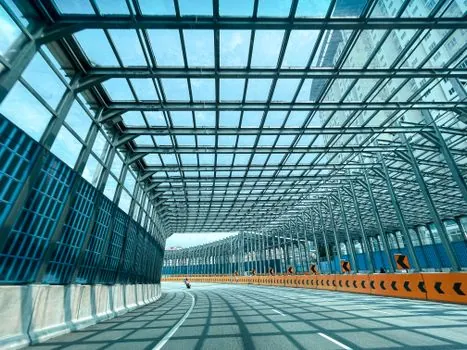
Heat resistance alone does not establish membrane suitability. The selection file should combine temperature limits with tensile strength, elongation, puncture resistance, permeability, low-temperature pliability, and asphalt adhesion [S2][S4].
MEL-DEK provides a useful published comparison point: 0.10 perm water-vapor permeance under ASTM E96, 1,616 psi machine-direction tensile strength under ASTM D882, 1,468% machine-direction elongation at break, and 243 lbf, 1,081 N, puncture resistance under ASTM E154 [S2]. It also reports no cracking under a 180-degree bend over a 1/4-inch, 6.4 mm mandrel at -15 °F, or -26.1 °C, under ASTM D146 [S2].
One bridge-specific technical requirement calls for a bonding strength with concrete and asphalt of at least 0.14 MPa at 150 °C [S4]. These values define a project screening criterion, not proof that every generic membrane qualifies.
For cold-region projects, puncture resistance and elongation deserve equal weight because deck debris, sharp aggregate, crack bridging, and freeze-thaw movement can damage a nominally heat-resistant membrane. The fired brick analogy is limited to thermal durability, since bridge membranes must also stretch without rupture and retain adhesion.
Verify Asphalt Compatibility Before Approval
Approval should require evidence that the membrane remains stable when exposed to the actual asphalt mixture, placement temperature, and compactive effort. A generic statement that a product withstands hot asphalt is not a substitute for a project-specific test or an approved installation procedure [S2][S4].
The candidate system must address compatibility with the asphalt binder, surface preparation, primer, bonding layer, protection course, and paving sequence. Bituminous products are generally described as compatible with different asphalt overlays, but temperature-sensitive flexibility and high-temperature softening still require suitable product selection [S3].
For spray-applied systems, the contractor should control surface profile, coating thickness, cure time, and uniformity. For sheet systems, substrate soundness and flatness, primer application, membrane thickness, weld width, and weld inspection directly affect continuity. These controls matter because defects at seams, penetrations, terminations, and transitions are common leakage paths [S2][S4].
Protect Continuity During Paving and Subsequent Work
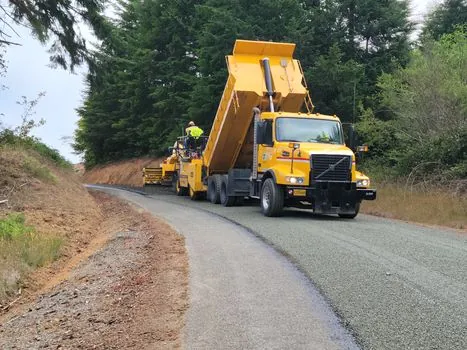
A membrane can meet material tests and still fail if construction damages it. Traffic, equipment, stored materials, and follow-on trades must be kept off the membrane until the specified condition is satisfied. Any puncture caused by deck equipment or anchor installation requires repair before the asphalt overlay is placed [S4].
Detailing must account for deck joints, drains, parapets, curbs, scuppers, and other penetrations. These are interfaces where continuity matters more than the membrane's general tensile performance. A bridge deck waterproofing system must remain continuous around the full protected area, including vertical interfaces and edge terminations [S3][S4].
Fast-setting is valuable when the project window is short, but speed does not remove curing requirements. The product's cure state, environmental limits, surface-moisture limits, and asphalt-placement delay should be written into the construction sequence. The same discipline applies to puncture-resistant membranes used on exposed pedestrian decks, although puncture-resistant membranes for pedestrian plaza decks address a different loading and exposure case.
Build a Submittal Package That Can Be Audited
Final selection should require product identity, membrane thickness, test methods, reported values, temperature limits, asphalt compatibility evidence, seam or continuity details, substrate preparation, primer compatibility, curing requirements, and repair procedures [S2][S4].
MEL-DEK is identified as ASTM D6153 Type III, with rolls measuring 60 feet by 38.5 inches and effective coverage of 180 square feet, 16.72 square metres [S2]. Other products require their own compliance documents rather than inheriting those declarations.
Inspection points should include substrate condition before primer, membrane thickness or application rate, seam welding or coating continuity, repaired penetrations, protection-layer placement, and release for paving. The project record should identify the membrane system, asphalt mixture and placement temperature, and any deviations from the approved submittal.
Trackable approval signals are measured paving temperature, verified bond or adhesion results, passed seam and holiday inspection, and documented membrane thickness at the system level. Any of these gaps should trigger a compatibility review before hot asphalt reaches the deck.