
In piping practice, a stainless steel pipe and a stainless steel expansion joint are two distinct items: the pipe is the pressure-containing conduit that carries the medium, while the expansion joint is a flexible element that absorbs thermal growth, vibration, and misalignment between pipe sections [S4][S6].
Specifying one without thinking about the other is a common RFQ error; the pipe sets the DN, PN, and material grade, and the joint must be matched to those three values plus the calculated axial, lateral, and angular movement, per current 2026 manufacturer guidance [S4][S6][S8].
What each item actually does in the line
A stainless steel pipe is a static pressure part; its job is to contain the process fluid at the design pressure and temperature with an acceptable corrosion allowance, and it is typically ordered to ASTM/EN pipe schedules with a specified outside diameter and wall thickness [S10]. Shengyang Stainless Steel, for example, lists seamless pipe, heat exchange tube, and bright precision tube as separate product lines under one factory in Zhejiang, all falling under the stainless steel family but cut to different dimensional and surface-finish windows [S10].
A stainless steel expansion joint, by contrast, is a deliberately flexible element. Standard corrugated stainless steel expansion joints cover DN15 to DN3000 nominal diameter, with maximum working pressure 4.0 MPa, vacuum rating 44.9 kPa (350 mmHg), and operating temperature -60 to 280 °C in the current 2026 supplier datasheet [S4]. The same source lists applicable media as sea water, drinking water, exhaust, and industrial sewage, which sets the chemical envelope a standard 304/316L corrugated joint is rated for [S4].
Material grades and pressure ratings seen in 2026 sourcing
304/321/316L stainless steel is the dominant grade triplet quoted for both corrugated metal bellows and pipe stock, with 316L preferred where chloride or process-side corrosion is a concern [S6][S8]. Jiangsu Aoguang Corrugated Pipe Co., Ltd. quotes 304/321/316L square and rectangular flanged metal bellows expansion joints at US$5.00 to 20.00 per piece with a 10-piece MOQ, certified to ISO 9001:2015, ISO 45001:2018, and ISO 14001, a triple-stack that has become the de facto factory credential baseline for 2026 export orders [S8].
For larger process sizes, 16MnR carbon-steel-bodied expansion joints are still offered in the DN219 to DN2000 range with 2 to 18 mm wall thickness, where stainless is not required by the service [S2]. This is a useful data point: an expansion joint does not have to be stainless to be specified, but the wetted corrugated section is the part most often upgraded to 304/321/316L when corrosion or cleanliness is a driver [S2][S6].
Joint geometry vs pipe geometry
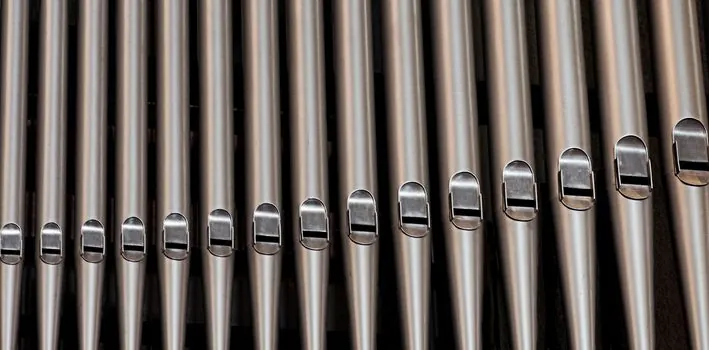
Pipe geometry is fixed by the line: outside diameter, schedule/wall, and length per piece, with flanges or fittings chosen at the termination [S10]. Joint geometry is chosen by movement: axial bellows for pipe-end thermal growth, lateral bellows for offset, angular bellows for angular misalignment, and universal or gimbal bellows where more than one mode of movement is present in the same location [S5].
Square and rectangular flanged metal bellows expansion joints, as quoted on Made-in-China in July 2026, are explicitly designed to fit non-circular duct or flue connections, not standard pipe runs, and are priced at US$5.00 to 20.00 per piece for 304/321/316L [S6][S8]. Round, single- and double-sphere rubber expansion joints cover the complementary rubber-elastomer option at PN6/PN10/PN16/PN25 and ANSI B16.5 Class 150 lb, using EPDM, NBR, NR, IIR, CR, ECO, CSM, Hypalon, FKM/Viton, VMQ, and silicone elastomers as the wetted material, with stainless flanges as the structural boundary [S6].
Comparison: pipe stock vs expansion joint on the four buying gates
Across the four gates that drive 2026 sourcing decisions, cost, pressure/temperature rating, movement capability, and lead time, the two items behave very differently. Stainless steel pipe is bought by the metre or kilogram and quoted in the low single-digit USD/kg range in wholesale channels, with rating limited by schedule and material, and no built-in movement; lead time is typically 2 to 6 weeks for stocked 304/316L sizes [S1][S10]. A stainless steel expansion joint is bought by the piece, costs US$5.00 to 20.00 for the common 304/321/316L bellows at 10-piece MOQ, is rated to 4.0 MPa and -60 to 280 °C, and absorbs axial, lateral, and angular movement that the pipe cannot [S4][S6][S8].
On integration, the pipe integrates by welding, threading, or flanging to the next spool; the stainless steel pipe joint category on B2B portals also covers rotary joints for high-pressure air, hydraulic oil, and water up to 360°, which is a different functional class from a bellows expansion joint and should not be confused in an RFQ [S1]. Shandong Focus Machinery, for instance, lists a 360-degree high-pressure rotary stainless steel pipe joint at US$9.90 to 59.90 per piece, an order of magnitude above a standard bellows unit [S1].
Standards, certifications, and supplier density in 2026
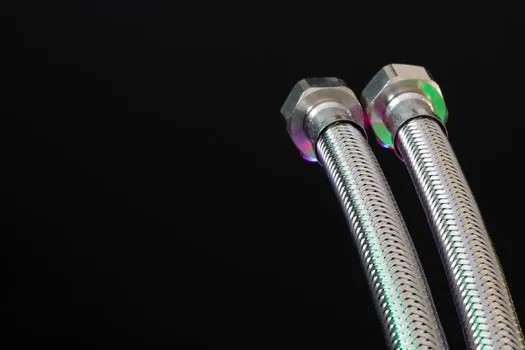
For pipe, ASTM A312/A213/A269 and the EN 10216/10217 families are the typical call-outs for seamless and welded stainless tube; the cited Shengyang offering is consistent with that scope, and Shengyang's 10-plus years of operation positions it as a mid-tier Chinese mill supplying seamless pipe, heat exchange tube, and bright precision tube [S10]. For expansion joints, EJMA (Expansion Joint Manufacturers Association) is the dominant engineering standard referenced by US-based bellows shops, with ISO 9001, AS9100, and ISO 13485 as the typical quality system stack, as published by Bellows Manufacturing and Research on its 2026 product page [S5].
Alibaba's July 2026 supplier index lists 407 stainless steel expansion joint suppliers, with the top three export markets for the leading factories at South America 40%, North America 30%, and Eastern Asia 30%, which is a useful signal for buyers routing RFQs to non-domestic sources [S9]. In the rotary-joint segment, ISO 9001:2015 is the typical audited-supplier credential, again consistent with a 2026 export-readiness floor rather than a differentiator [S1][S8].
Use cases and failure modes engineers should not ignore
Use stainless steel pipe wherever the line is a static pressure conduit and the thermal growth is small enough to be absorbed by the piping's own flexibility, or by a routed expansion loop [S4]. Use a stainless steel bellows expansion joint wherever pipe-end movement exceeds what the layout can absorb, where vibration from pumps or compressors must be isolated, or where misalignment between two fixed points cannot be reduced by re-routing [S4][S5]. For pipe runs that cross building expansion joints or seismic gaps, expansion anchor selection on the main run is a separate decision from joint selection at equipment nozzles, and the two are often conflated in early RFQs [S4].
Common failure modes are also different: pipe fails by corrosion, erosion, or over-pressure, with failure preceded by wall-thickness loss; the bellows joint fails by fatigue cycling, squirm, or corrosion of the convolutions, and is sensitive to multi-axis movement that was not specified at the order [S4][S5]. A 4.0 MPa-rated joint installed in a 1.6 MPa line but exposed to 50,000 high-cycle vibration events will fail before a properly rated pipe in the same run, which is why the cycle count and the movement spectrum belong in the joint RFQ, not just DN and PN [S4].
Sourcing signals worth tracking after August 2026

Two signals to watch in the next sourcing cycle: first, whether Chinese 304/321/316L bellows suppliers hold the US$5.00 to 20.00 price band or push it up as 316L nickel surcharges move, since that band defines the small-joint floor across the major Made-in-China and Alibaba listings [S6][S8][S9]. Second, whether EJMA-aligned US shops such as Bellows Manufacturing and Research expand their refractory-lined and in-line pressure-balanced joint lines, a category that has historically been the differentiator against low-cost Asian suppliers in refinery and aerospace bids [S5].
This topic is covered further in Disc coupling RFQ spec map for servo positioning axes.