
Thermocouple probes, not bare wire pairs, are the workhorse sensor at the bench, in the plastics plant, and in the lab, and they ship in standard families that map almost one-to-one to the application [S1][S4].
Catalog options from Advanced Energy and OMEGA cover thermocouple, RTD, and thermistor temperature probes in matched handle, cable, tip, and length options, with quick-disconnect and retractable-cable variants for repetitive spot checks [S1][S2].
Thermocouple Type and Temperature Class
Type K (chromel/alumel) is the default general-purpose probe, rated roughly 0 °C to 1260 °C with the most installed base, and shows up across utility-handle, surface, and immersion product lines [S2][S4]. Type J (iron/constantan) runs from 0 °C to 760 °C and is widely used in plastics and extruder service, including stainless-steel-tipped variants for plastic extruders rated to 900 °F (482 °C) [S3]. Type T (copper/constantan) spans -250 °C to +400 °C and is the lab/QA standard, used in food safety and process calibration per Fluke's contact-thermometer selection data [S5]. Type E, Type N, and the noble-metal R/S types (Pt/Pt-Rh) cover specific bands, and Fluke handhelds accept K, J, T, E as the standard thermocouple inputs across 1- and 2-channel models [S5].
Type codes map to insulation color (ANSI MC 96.1: K yellow, J black, T blue, E purple, N orange, R/S green) and tolerance per ASTM E230, and that should be cross-checked against the calibration certificate on incoming inspection [S4][S5].
Construction: Sheath, Lead Wire, and Junction
Probe construction is what sets a true probe apart from a wire pair. A sheath of 304/316 stainless steel, Inconel 600, or PFA coating, plus mineral-insulated (MgO) cable, determines both upper temperature and chemical compatibility [S1][S2][S4]. Transition joint designs (TSS series with molded PFA-insulated lead wire) shift the cold-junction from the harsh tip to a cooler handle area, allowing smaller lead wire to leave the hot zone [S4]. PFA-coated probes (Omega's PFA Coated Thermocouple line) extend corrosion resistance for chemical baths and acid washdowns where bare stainless would fail [S4].
Lead wire gauge, insulation, and shield also matter. Fine-gage, high-temperature, ready-made, coated, bare, and multi-pack flexible wire styles are all standard catalog options in OMEGA's flexible thermocouples line, and selection follows the bend radius and ambient temperature around the run [S4]. The 88000 Series surface probe, for example, uses a high-temperature sheath and small bead for moving or rotating surfaces, a different design constraint from a hypodermic needle probe used for meat or semi-solid penetration [S4].
Termination: Handle, Connector, Compression Fitting
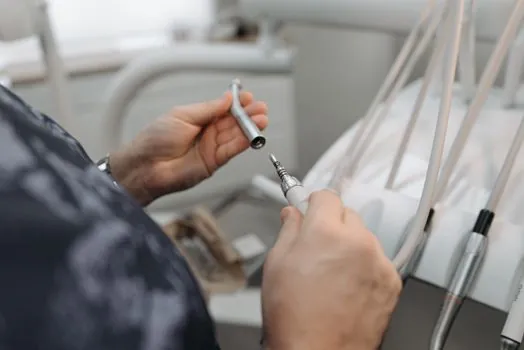
Termination is the second decision gate after type. Utility-handle probes (HIN, HSS, HPS, KHXL, NHXL, SDX, HDX series) are designed for repetitive manual spot checks, with quick-disconnect plugs, retractable cable, and either plastic or metal handle bodies [S2]. Quick-disconnect handle/probe sets in high-impact ABS or rugged aluminum are sold as matched pairs (SDX-SET, HDX-SET) so the operator can swap tips without tools [S2]. For permanent installations, RS PRO compression fittings (3817340 and the RS078/0816 series) accept both thermocouple and PRT probes, are RoHS compliant, and lock the probe into a thermowell or process pipe at a fixed insertion depth [S6][S7].
M12-connector handle adapters (M12-HANDLE-A) let a user convert an M12-cabled probe into a hand-held utility, bridging the fixed-asset and portable-asset worlds [S2]. For a thermocouple that needs to read a moving roller or a heated platen, the 88000 high-temperature surface probe and the leaf-surface 88L40K/88L75K (for flat-surface instant measurement) take different mechanical forms for the same job, and the catalog clearly separates them [S2][S4].
Selection by Application: Bench, Lab, Process, and Field
Lab and QA: Fluke's 1- and 2-channel contact thermometers accept K, J, T, and E inputs and span -250 °C to +400 °C on the T-type channel, which covers most reference-standard work and food-safety validation [S5]. A 2-channel unit lets a calibration tech read a reference probe and a unit-under-test at the same time. Plastics and extrusion: stainless-steel-tipped, type-J or type-K immersion probes with PFA- or fiberglass-insulated lead wire, rated 900 °F (482 °C) service, are the standard OMEGA offering for plastic-extruder service, with price breaks from $91.09 (1-9 units) down to $68.32 at 1000+ units [S3]. Surface measurement: a self-adhesive or leaf-surface probe is needed for flat or moving surfaces; bare-wire or fine-gage K-type with a small bead is the typical choice [S2][S4]. Industrial fixed-point: a compression-fitting probe in a thermowell gives a stable, replaceable sensor for pipework, and is the spec most refineries and chemical plants write [S6][S7].
Specialty jobs (cryogenics, vacuum, semiconductor, high-RF) move outside the standard catalog and into custom builds from AE TEGAM and OMEGA, but the type-plus-construction-plus-termination logic still applies [S1][S2]. For a full thermocouple type-to-application map, the OMEGA product finder, advanced energy's thermal-sensing line, and the Fluke selection guide are the three primary sources an engineer should consult [S1][S2][S5].
Decision Matrix: Type vs Temperature vs Environment
Four practical filters, applied in order, will land on the right probe nine times out of ten. Fluke product selection guidance lists a T-type thermocouple temperature range of −250 °C to +400 °C (−418 °F to +752 °F). (2) Environment: clean dry air favors bare stainless; acidic washdown or chemical bath favors PFA-coated or Inconel sheath; abrasive slurry needs a thermowell plus compression fitting [S2][S4][S6]. (3) Termination: portable/repetitive work takes a utility handle with quick disconnect and retractable cable; fixed pipework takes a compression fitting and a head-mount transmitter or direct lead wire [S2][S6][S7]. (4) Mechanical: penetration of soft material uses a hypodermic needle probe; flat-surface measurement uses a leaf-surface or self-adhesive probe; rotating-drum measurement uses a surface probe with spring-loaded tip or a fixed infrared transmitter [S2][S4].
Cost and lead time follow the matrix: a stock type-K utility-handle probe with quick disconnect is in stock at RS PRO today (260 units on hand plus 300 shipping from 2026-08-03) for HK$139.70, while a custom sheathed, PFA-coated, transition-jointed probe typically runs 2 to 4 weeks [S3][S6].
Where Standard Probes Fail and What to Specify Instead
Three failure modes dominate the field: thermal shunting (a too-heavy lead wire draws heat from the tip and reads low), ground loop (a grounded sheath in a system with multiple ground paths injects 50/60 Hz noise into a high-impedance meter), and sheath corrosion (type K exposed to a sulfur-bearing reducing atmosphere suffers "green rot" and rapid drift) [S2][S4]. The fixes are well known: use transition-joint construction to keep the lead thin and the tip in the hot zone, specify an ungrounded (isolated) junction in electrically noisy environments, and pick a sheath alloy matched to the atmosphere (Inconel 600 for sulfur-free high temp, 316L for mild corrosion, PFA for acids) [S4]. For most plastics plants, a stainless-steel-sheathed, grounded-junction, J-type probe with fiberglass lead is the safe default; for semiconductor or vacuum, an ungrounded, mineral-insulated, transition-jointed K-type with a protective tube is the correct call [S2][S3][S4].
Buyers should also confirm that the cold-junction compensation (CJC) is done at the instrument or transmitter, not at the probe, unless a built-in CJC chip is in the handle, and that the connector pins match the thermocouple alloy to avoid the "compensation wire" mistake that turns a type-K reading into a type-J error [S2][S4]. RS PRO's compression fittings, the OMEGA HPS Standard integral-handle line, and AE TEGAM's custom thermal-sensing catalog are the practical shortlist for a buyer walking through these gates in 2026 [S1][S2][S6][S7].
Standards, Calibration, and What to Check on Receipt

Thermocouple wire tolerance is set by ASTM E230, with special limits ("SLE") giving tighter initial accuracy than standard limits, and ANSI MC 96.1 defines the color code for insulation and connectors, with IEC 60584 providing the equivalent European color scheme [S4][S5]. A reference probe or a dry-block calibrator, used against a type-T or type-S reference, is the standard lab check; field checks use a known ice bath (0.00 °C) or a comparison read against a recently calibrated handheld [S5]. On receipt, an engineer should confirm the part number, sheath material, junction type (grounded vs ungrounded vs exposed), termination (miniature vs standard connector, M12, bare leads, compression fitting), and the calibration report, especially for type R/S or any probe that will be used above 1000 °C where drift and contamination dominate the error budget [S1][S2][S3][S4][S6].
Watch two trackable signals: the continued stocking of standard type-K and type-J utility-handle probes at RS PRO and OMEGA through 2026 (260 units plus 300 in transit for the compression fitting on 2026-08-03, plus 500 RS078/0816 fittings shipping 2026-07-20), and the trend toward M12 and quick-disconnect terminations that let a single handheld read probes from multiple fixed installations [S6][S7][S2].
Spec-level background on the components involved: proximity probe, and linear guide.
For related coverage, see Embedded Part Selection for Prefabricated Construction: 2026 Spec Map.