
TPO, EPDM, and PVC membranes split the North American low-slope commercial roof market, and the three materials are not interchangeable: EPDM holds the bottom of the price stack at approximately $0.80 per square foot installed, TPO and PVC feature heat-welded seams, and PVC roofing membrane often costs 5-10 percent more than TPO roofing membrane [S2][S4][S8].
Each membrane also belongs to a different polymer family. TPO is a thermoplastic polyolefin blend of polypropylene and ethylene-propylene rubber, EPDM is a synthetic thermoset rubber derived from ethylene and propylene feedstocks, and PVC is a thermoplastic produced by polymerization of ethylene with hydrochloric acid [S1]. Thermoplastic TPO and PVC soften under heat and are joined with hot-air welders; thermoset EPDM does not re-melt and is seamed with adhesive or tape, a difference that drives both installer skill requirements and field repairability [S4].
Cost and Material Economics Across the Three Membranes
EPDM consistently anchors the budget end of the spectrum, with installed pricing at approximately $0.80 per square foot and full-sheet widths that minimize seams and labor on large warehouses [S2]. TPO typically costs slightly more than EPDM on material but is often cheaper than fully adhered or mechanically attached EPDM systems once cover board and fastener counts are tallied, which is why spec sheets from 2025-2026 list TPO as the "balance" option between EPDM and PVC [S2][S4].
PVC is the cost ceiling. Reinforcement with polyester scrim and higher plasticizer loading pushes PVC roughly 5-10% above TPO on like-for-like assemblies, and that delta widens on projects requiring chemical-resistant or restaurant-grade grease exhaust assemblies [S1][S8]. The pricing gap is small in percentage terms but real on a 50,000 sq ft re-roof, where a 7% delta converts to tens of thousands of dollars before detailing extras are added.
Seam Technology, Weldability, and Installer Skill Load
Seam quality is the dominant failure mode on single-ply roofs, and the three materials behave differently under a hot-air welder. PVC has a long welding track record, with documented seam strengths that exceed the parent sheet and tolerate minor on-site variability in pre-heat temperature [S4]. TPO welds are also hot-air fusion, but TPO formulations are stiffer than PVC, which makes detail work at penetrations, curbs, and inside corners noticeably harder for the installer [S5].
EPDM has no weld window at all. Field seams rely on seam tape or contact adhesive, and the failure mode is adhesive creep under ponded water or thermal cycling rather than weld contamination. Properly executed EPDM seams rarely leak; improperly executed ones cannot be re-welded the way a thermoplastic seam can, so a failed seam usually means a patch rather than a re-weld [S2][S4].
Chemical, Fire, and UV Resistance by Material
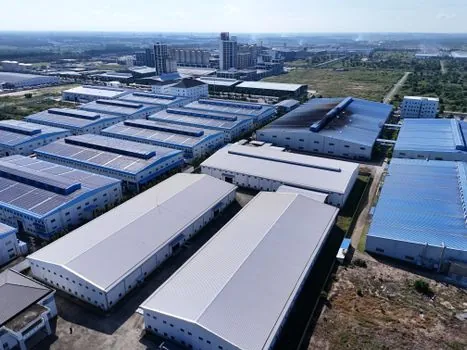
PVC is the chemistry-grade option. It carries well-documented resistance to grease, jet fuel, and a range of industrial chemicals, plus high fire-performance ratings, which is why it dominates restaurant roofs, manufacturing plants with oily exhaust, and airports with de-icing fluid exposure [S4][S5]. TPO resists many of the same chemical families but at a lower concentration threshold, and standard TPO formulations can be attacked by certain oils and hot asphalt runoff [S2].
EPDM is the chemical weak point of the three for petroleum products but holds its own against UV, ozone, and weathering; it has been in continuous service since the 1960s with formulations that have not been meaningfully changed in decades [S4]. Black EPDM absorbs solar gain, a benefit in cold-climate freeze-thaw zones where snow load and ice-dam management matter, and a liability in cooling-dominated Sun Belt projects [S3][S6].
Service Life, Warranties, and Hail Performance
Manufacturer and contractor sources converge on a 15-30 year service band for all three materials when properly installed. PVC is typically listed at 15-30 years, TPO at 20-30 years, and EPDM at 20-30+ years; the upper bound is conditional on routine inspection, seam and flashing maintenance, and the absence of prolonged chemical exposure [S4]. Material formulation drives a wider spread than category: some TPO formulations have been observed to fail short of the 10-year mark, while premium EPDM and PVC assemblies exceed 30 years in the field [S2].
Hail performance splits the field further. EPDM's elasticity absorbs impact well and tends to show cosmetic denting rather than fractures, while TPO and PVC can crack or split on large hail at the sheet surface even when seams survive, which is why hail-zone specifications often default to 60-mil or 80-mil EPDM or scrim-reinforced PVC [S7]. For more on how EPDM chemistry ties to petrochemical feedstocks and why that affects both price and aging, see the linked cost-tracking piece.
Climate, Building Use, and Selection Matrix
Use the criteria below as a one-page spec filter, not as a brand preference:
1. Cold climate with snow load and freeze-thaw cycling: black EPDM absorbs solar gain, tolerates thermal movement, and pairs with polyiso insulation for an energy-efficient assembly, but it is not the right pick where rooftop grease or chemical exhaust is present [S2][S6].
2. Hot, sunny climate on a cooling-dominated building: white TPO or white PVC reflects UV and lowers roof-surface temperature, with PVC adding a chemical-resistance margin that matters near restaurants or industrial vents [S3][S4].
3. Tight budget, large footprint, no chemical exposure: EPDM at roughly $0.80/sq ft and large sheet widths minimizes seams, labor, and waste on warehouses and big-box retail [S2].
4. Restaurant, airport, manufacturing, or any site with grease, fuel, or chemical exposure: PVC is the default; the 5-10% material premium pays back in avoided re-roofs and warranty compliance [S1][S8].
5. Hail-prone region: thicker 60-80 mil EPDM or scrim-reinforced PVC; thin TPO is the higher-risk option in hail corridors, per the field comparison at Roof Technologies [S7].
Detail Work, Penetration Flashing, and Real-World Failure Modes
Stiffness shows up at every pipe boot, curb, and inside corner. TPO's higher modulus forces installers to pre-form or hot-air shape details more aggressively than they would with PVC, and detail failures are the dominant TPO warranty claim category according to Sika Sarnafil's field experience with hot-air welding on stiff membranes [S5]. EPDM handles penetration flashing with pre-formed pipe boots and uncured flashing tape, which is forgiving in the field but produces a seam that is only as good as the adhesive prep that day.
PVC's long formulation history and wide detail-accessory catalog make it the easiest of the three to detail cleanly on complex roofs, and the heat-welded seam lets a contractor re-warm and adjust a poor weld before walking away, an option EPDM does not offer and TPO offers only with caution [S4][S5]. For broader waterproofing decisions across a building envelope, the modified bitumen membrane comparison covers the multi-ply alternative when single-ply is not the right call.
Installation Quality, Cover Boards, and Lifecycle Planning

Material choice is only one third of the reliability equation. Cover board selection, deck condition, attachment method (fully adhered, mechanically attached, or ballasted), and contractor experience each swing long-term performance more than the 5-10% PVC-vs-TPO cost gap [S3]. A well-installed EPDM with a high-density cover board will outlast a poorly welded TPO every time, regardless of material warranty language.
Plan for annual inspection, prompt repair of punctures and seam issues, and re-coating or restoration as the system approaches year 15-20, the band where most single-ply membranes begin to show age-related defects regardless of chemistry [S4]. For adjacent envelope decisions, the waterproof membrane encyclopedia entry covers below-grade and plaza-deck applications where the same three chemistries appear in different form factors.
Track the next spec revision cycle (ASTM D6878 for TPO, ASTM D4637 for EPDM, and ASTM D4434 for PVC) and any manufacturer warranty changes published in the first half of 2026, since single-ply membrane formulations and hail-rating language are updated on a roughly annual cadence. For data-center or industrial-plant readers weighing roofing against broader envelope specs, the PVC-U pipe guide shows how the same PVC chemistry is specified and rated in pressure-pipe form, useful for cross-material procurement.