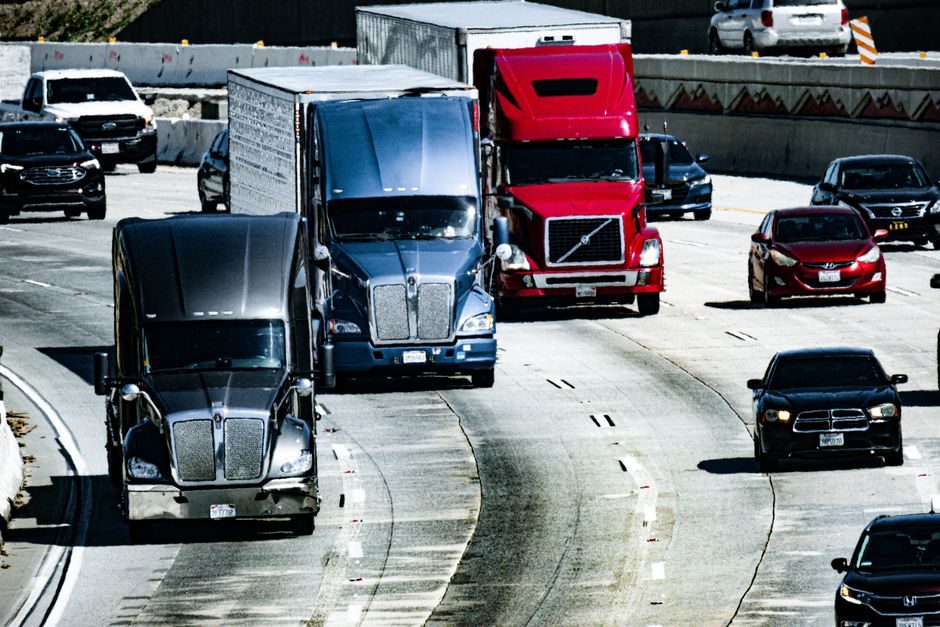
A truck scale is engineered for a 20-year-plus service life, and on that horizon the purchase price typically accounts for only a fraction of the real spend — METTLER TOLEDO frames the asset as "an investment that should last you 20 years or more" and pushes buyers to evaluate total cost of ownership across the full horizon [S3]. The same guidance calls out four procurement pivots — reliability, accuracy, warranty, and TCO — when an existing weighbridge is being upgraded rather than replaced [S6].
For a process engineer writing a capital request, that means a truck scale line item is really a 240-month cost stack, not a one-time PO. The drivers that swing the number most are foundation type, load-cell count and technology, instrument/service contract scope, and the throughput loss when the scale is offline for recalibration or repair.
Cost driver stack: where the money actually goes
A truck scale TCO model breaks cleanly into five buckets: acquisition, foundation and civils, installation and commissioning, operation (energy + labor + calibration), and end-of-life decommissioning [S3][S4]. Acquisition is the most visible but rarely dominant over 20 years; foundation work, often a separately contracted civils package, frequently runs 30-60% of acquisition depending on ground conditions and whether a deep-pile or raft design is required.
Operation is the bucket that quietly grows. Annual recalibration, load-cell replacement at end of service life, lightning-protection inspection, and the W&M verification audit every few years compound into a six-figure line over two decades on a heavy-duty pit or above-ground install [S5]. The US Postal Service's published TCO reference defines the same four-axis framework — purchase, use, maintenance/support, and disposal — for capital assets, which maps directly onto a weighbridge line item [S4].
Pit vs above-ground vs portable: three layouts, three TCO profiles
Pit-mount concrete decks dominate permanent high-throughput sites because the deck sits flush with grade, removing the approach-ramp concrete pour and shortening the truck cycle. Above-ground (rampless) installs need a longer concrete apron and structural ramps but make load-cell and deck-service access faster — a direct labor-saving on the maintenance line. Portable axle scales are the cheapest acquisition but the most expensive per weighing, with frequent re-leveling and shorter recalibration intervals. [S3]
For buyers choosing between layouts, the TCO crossover depends on annual truck count and site footprint. Below roughly 10,000 weighings per year the portable or axle-scale option can win on acquisition-plus-foundation, but above that throughput the pit mount recoups its higher civils cost in labor and cycle-time savings within 5-7 years. The same five-to-seven-year spend-stack shape shows up on adjacent industrial assets, e.g. the slewing ring bearing TCO breakdown and the vacuum packaging machine TCO stack, where the second-half spend flips from acquisition to uptime-driven service.
Load-cell technology: the single biggest TCO lever

Load cells are the consumable that decides whether a 20-year plan holds or blows up. Entry-level analog compression cells on a multi-cell deck deliver the lowest acquisition cost, but expose the operator to individual-cell failure diagnostics and truck-side re-calibration after every swap. Networked digital load cells — METTLER TOLEDO's POWERCELL PDX being a documented example in the upgrade guide [S6] — push that diagnostic and predictive-maintenance burden into the instrument and trim the average cell-swap labor cost by eliminating truck-side cornering adjustments.
On a 50-tonne, 8-cell pit scale, swapping analog for a digital cell network is typically a 1.5-2.5x multiplier on the load-cell bill, but the labor delta per swap can offset that premium inside 2-3 cell-replacement cycles. The buyer's guide explicitly lists load cells as one of six core planning items, alongside dimensions, regulations, site prep, and service/warranty terms [S5]. A reach truck fleet manager evaluating total fleet cost would recognize the same pattern: the technology choice on the duty-cycle component decides whether maintenance is a planned Saturday or a Sunday-night callout.
Calibration, certification, and the hidden compliance tax
Every commercial truck scale trading in legal-for-trade weights sits under a national metrology regime that mandates periodic reverification — in the US, NIST Handbook 44 is the governing document family, with state weights-and-measures officers auditing the site. That audit cycle is the single most predictable recurring line on the TCO sheet: a contracted annual or semi-annual calibration visit, plus unscheduled reverification after any structural event. [S3]
Buyers routinely underestimate the cumulative compliance cost. A 20-year horizon typically absorbs 20-40 reverification visits, each carrying a service-call fee plus the cost of any test weights trucked to site. Skipping a planned calibration to save a quarter's budget is a false economy: a failed audit means the scale is non-trade until cleared, and the throughput loss on a high-volume site can exceed the saved service fee within hours. A dump truck operation running aggregate tickets all day cannot afford a 48-hour scale outage in peak season.
Downtime and throughput loss: the line item nobody models
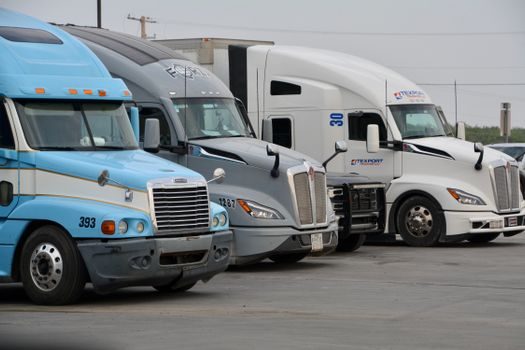
Downtime is the cost category most often omitted from a TCO sheet, and the one that most often decides whether a "cheap" scale was actually cheap. The right framing is: every hour the scale is offline, the site either runs a backup weighbridge, runs tickets manually, or stops loading. For a quarry, transfer station, or grain elevator running 200+ trucks per day, a single 24-hour outage easily costs more than a full year of planned service. [S1]
The mitigation is built into the TCO, not bolted on: spare load cells on the shelf, a defined mean-time-to-repair target in the service contract, and remote diagnostics on the instrument so the technician arrives with the right part. The trade-off map of truck scale capacity, accuracy, foundation, and throughput walks through how those four spec axes drive cycle time, and a slow scale is a hidden TCO penalty in itself.
Selection criteria: who a TCO model is FOR (and isn't)
A formal 20-year TCO model is for the buyer writing a capital request who needs to defend the spend against procurement — quarry operators, port terminals, large waste transfer stations, grain cooperatives, and major logistics hubs all fit. It is overkill for a single-axle farm scale or a short-term construction site where the asset life is under five years and acquisition dominates. [S1]
For spec-driven buyers, the four criteria to lock before pricing are: (1) annual truck count and peak hourly throughput, which sets the required deck length and number of load cells; (2) foundation type and ground-condition assumptions, which set the civils cost band; (3) legal-for-trade jurisdiction and the audit cycle that follows; and (4) service-contract scope, including guaranteed response time and remote-diagnostic capability. The weighing-technology OEM's free weighbridge project guide lays out those exact questions as the front end of a buy decision [S5].
Decision framework: a four-line TCO comparison
Lining the three main options against the four decision criteria that move TCO most: (a) acquisition + foundation cost, lowest on portable/axle scales and highest on pit-mount concrete decks; (b) annual operating cost, dominated by calibration and load-cell service, lowest on digital-cell networks and highest on analog multi-cell analog designs; (c) downtime exposure, lowest on pit-mount with remote diagnostics and highest on portable redeployments; (d) 20-year compliance cost, roughly comparable across layouts if reverification cycles are equal, but elevated on any install with a history of structural settlement. A buyer scoring those four axes against the site-specific truck count and audit regime will land on the right layout without needing a single market-share number. [S3]
Trackable signals and next node
Two signals worth watching on the 2026-07-24 horizon: (1) digital load-cell network pricing as a percentage of analog cell pricing — if the digital premium drops below 1.5x, the TCO case for retrofit on existing analog decks strengthens; (2) foundation-cost inflation on commercial civils, which has been moving faster than headline equipment indices in 2025-2026 and is the single largest variable on a pit-mount install. The next decision node for any spec-driven buyer is the site-survey output: confirmed ground-bearing pressure, frost-depth or pile-design requirement, and a measured approach geometry that locks the deck length. [S1]