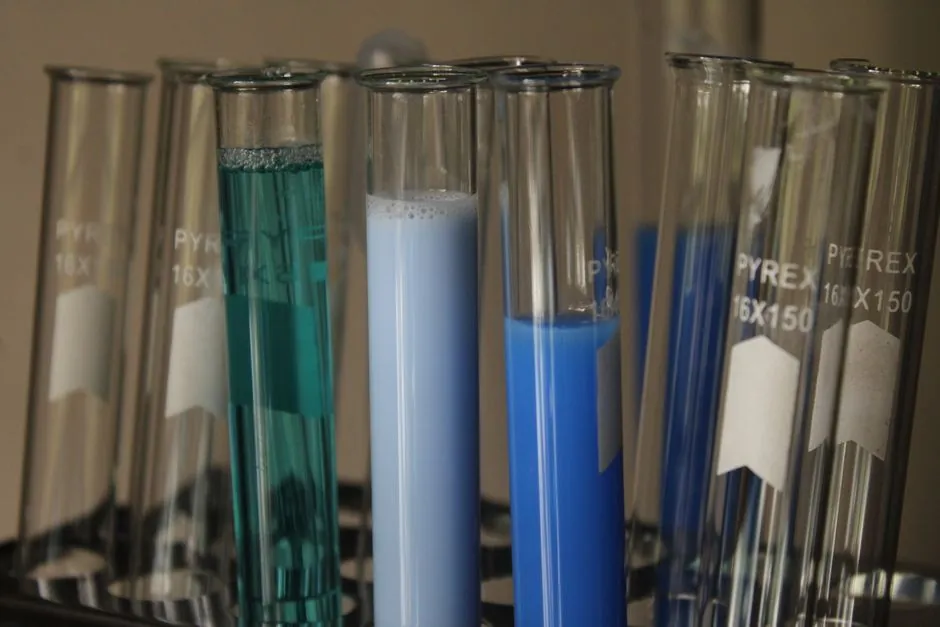
A chemical reagent is a raw material input because it is procured to drive or facilitate a reaction, then consumed, removed, or transformed, while a finished product is the packaged, specification-meeting article sold to the end user [S2].
Under ICH Q7 and 21 CFR 210/211, reagents sit inside the raw-material envelope alongside APIs, excipients, solvents, intermediates, and starting materials when they can affect identity, strength, quality, or purity of the drug substance or drug product [S2].
The definition split: input to a process vs article sold to a buyer
Raw materials are the unprocessed or partially processed inputs a manufacturer converts into a sellable article, sitting as the first of three inventory classes and the most exposed to commodity price swings [S6]. A finished product, by contrast, has cleared final specifications, carries a Certificate of Analysis, and is ready for shipment to the next customer [S3].
The same chemical can flip categories along the chain. Paracetamol manufactured as an API is the output of drug-substance production, but becomes a critical raw material the moment it enters a tabletting line, where it is combined with excipients to produce the final dosage form [S2]. This bidirectional movement is the clearest evidence that "raw material" is a role defined by position in a process, not by the intrinsic nature of the molecule.
Why reagents are folded into raw materials, not finished goods
Reagents drive or facilitate a chemical reaction but are not intended to remain in the final API structure, which is the test regulators apply to decide whether something is a raw material versus a product [S2]. ICH Q7 treats API starting materials as raw materials with defined chemical properties and structure, used as a regulated entry point into the synthesis [S1].
FDA, EMA, and WHO all extend the same logic to reagents and solvents, even when those materials are designed to be removed later: any substance that can impact product quality is considered a raw material, including solvents, reagents, and processing aids [S2]. Under EU GMP Annex 11/15-style controls and WHO TRS 986, 957, and 1010, such inputs must be approved, tested, and released before use, with proper labeling, storage, and status identification [S2].
Purity grade determines whether a reagent is fit as a raw material
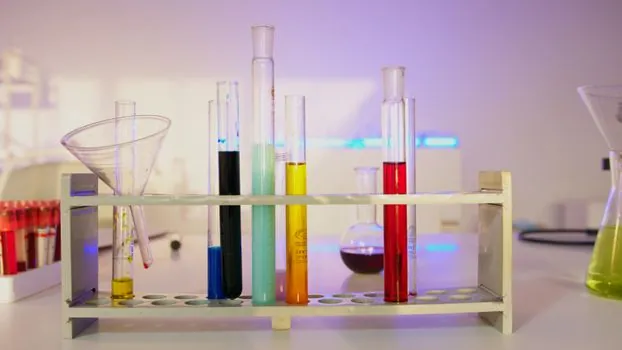
Seven commercial grades dominate the reagent market, and the choice of grade decides whether a substance is acceptable as a pharmaceutical or food raw material. ACS grade meets or exceeds American Chemical Society purity standards and suits food, drug, and medicinal uses at purities above 95% [S4]. USP grade meets United States Pharmacopeia standards for purity, strength, and quality, and is the grade typically required when the reagent is consumed in a drug product [S4].
Reagent grade offers equivalent purity to ACS at higher cost, NF grade aligns with the USP-NF formulary, technical grade targets industrial use below laboratory purity, and laboratory, purified, and "no formal definition" grades sit below 95% in many cases, with laboratory grade generally at least 90% pure and varying widely by supplier [S4]. Standard reagent grade chemicals often provide sufficient purity at lower cost than fully certified ACS materials, which is why procurement teams select by grade rather than by CAS number alone [S7].
Cost, inventory, and accounting treatment reinforce the classification
Direct raw materials are the inputs that are directly reflected in the final product and whose costs flow into cost of goods sold without allocation; this accounting treatment is reserved for substances that physically enter the bill of materials [S8]. Reagents and solvents that are fully removed still count as direct raw materials under pharma rules because they affect quality, even though their cost may be processed through a different overhead line in practice [S2].
Cell and gene therapy manufacturers face the same logic, with a control strategy that covers starting materials, intermediates, the bulk active substance, and the final drug product, because release testing only confirms quality, it cannot alter it [S5]. The same regulatory frame extends to chemical reagents in any sector where a downstream specification depends on upstream purity.
Selection criteria: when a reagent is the right raw material to specify

Specify a reagent as a raw material when it will be consumed, transformed, or removed in a process that produces a sellable output, and when its impurities can propagate into that output. ACS or Reagent grade is the typical baseline for analytical and synthesis work; USP or NF grade is required when the reagent touches a pharmaceutical, dietary supplement, cosmetic, or food line [S4].
Reagent grade is generally more expensive than other grades but offers the same purities as ACS, which matters when a method requires high purity but the application does not need the full ACS attestation package [S4]. For broader context on how purity grade choice interacts with material strategy in adjacent process industries, the raw material selection review for advanced therapies and the commodity-exposed input discussion frame similar trade-offs in non-pharma sectors. For process-grade chemicals that sit below reagent purity, technical grade material handling shows how impurity budgets are set when a reagent is upstream of a specification-driven output.
Standards and sourcing references that anchor the classification
The four pillars that lock the reagent-as-raw-material classification in place are 21 CFR 210 and 211 plus ICH Q7 in the US, EudraLex Volume 4 and ICH Q7/Q11 in the EU, WHO GMP and WHO TRS 986, 957, 1010 globally, and the United States Pharmacopeia plus the American Chemical Society for purity grades [S2][S4]. ICH Q7 specifically governs API manufacturing and treats starting materials as raw materials with defined chemical properties and structure, used as the regulatory entry point into the synthesis [S1].
A reagent is therefore never a finished product by definition: it lacks the final-specification release, the customer-facing Certificate of Analysis, and the ship-to-end-user status. Trackable signals to watch are any FDA or EMA revision to ICH Q7/Q11 wording on reagent scope, and any USP-NF change that reclassifies a reagent monograph away from pharmaceutical compatibility.
The underlying component specifications are covered under chemical reagent, chemical material, and chemical anchor.