Silicone rubber is a synthetic elastomer built on a silicon-oxygen (siloxane) backbone rather than the carbon-carbon backbone of organic rubbers. That inorganic chain gives it a usable service window of roughly -55 to +200 degrees Celsius, outstanding resistance to ozone, UV, oxygen, and weathering, physiological inertness, and stable electrical insulation. Engineers reach for it where organic elastomers such as NBR or EPDM run out of temperature headroom or fail in sunlight.
It is sold in three process forms (HTV gum, liquid silicone rubber, and room-temperature-vulcanizing compounds) and several polymer grades (VMQ, PVMQ, FVMQ) coded by ASTM D1418. This guide decodes those designations, the cure chemistry behind them, the spec-sheet numbers that drive selection, and how to write a procurement callout that a manufacturer can quote without guessing.
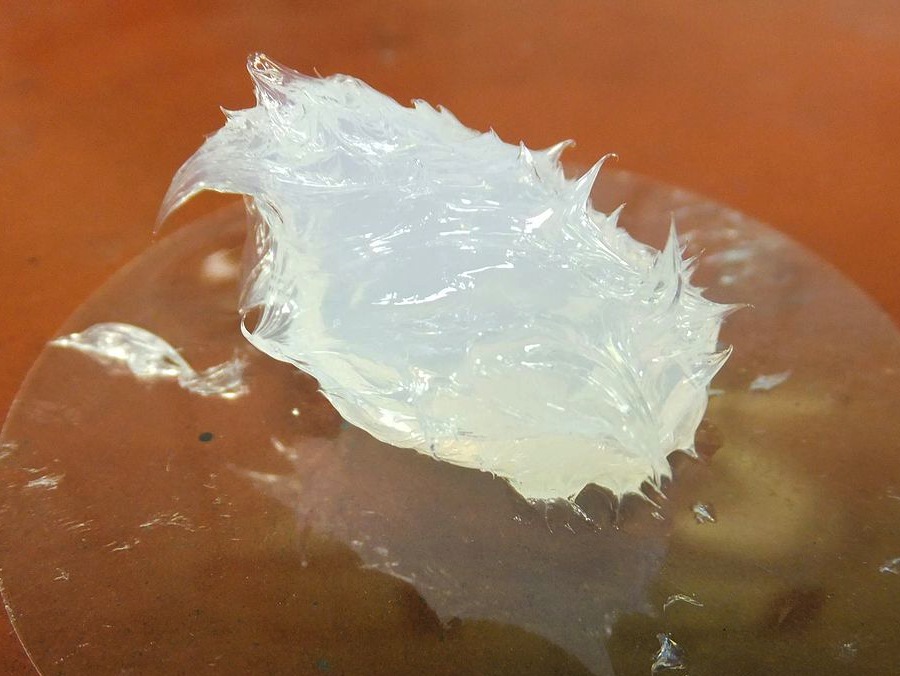
Photo: Gmhofmann, CC BY-SA 3.0, via Wikimedia Commons
This guide is written for industrial purchasing engineers and design engineers. It runs from material definition and chemistry through polymer grades, process forms, key media and standards, spec-sheet decoding, and a selection decision sequence, with 7 FAQs and a manufacturer comparison. Parameters reference the public standards ASTM D1418 (rubber nomenclature), ASTM D2000 / SAE J200 (material classification), ASTM D395 (compression set), ISO 3302 (dimensional tolerances), UL 94 (flammability), FDA 21 CFR 177.2600, USP Class VI, and the ISO 10993 biocompatibility series.
Chapter 1 / 06
What Silicone Rubber Is
Silicone rubber is a family of elastomers whose polymer chain is built from alternating silicon and oxygen atoms, the siloxane backbone, with organic groups (most commonly methyl) attached to each silicon. The base polymer is polydimethylsiloxane (PDMS). Because the silicon-oxygen bond is both stronger and more flexible than the carbon-carbon bond of organic rubbers, silicone keeps its elasticity across an unusually wide temperature range and resists the oxidative, ozone, and UV attack that embrittles natural rubber, nitrile, and similar materials. This inorganic backbone is the single fact that explains most of silicone's behavior, both its strengths and its weak spots.
Three properties define the engineering case for silicone. First, temperature: standard grades serve continuously from about -55 to +200 degrees Celsius (-67 to +392 degrees Fahrenheit), with specialty grades reaching short peaks near +250 degrees Celsius and phenyl-modified grades staying flexible down to about -100 degrees Celsius. Second, environmental durability: silicone is essentially inert to ozone, UV, corona discharge, and long-term outdoor weathering, which is why it dominates outdoor seals and high-voltage insulators. Third, inertness: it is odorless, tasteless, and physiologically neutral, which opens food, medical, and pharmaceutical use.
The trade-offs are equally important to state plainly. Pure silicone has modest mechanical strength compared with organic rubbers: unreinforced PDMS is almost a liquid, so all useful silicone rubber is heavily loaded with reinforcing fumed silica to reach service-grade tensile and tear strength. Even reinforced, its tensile strength (commonly 4 to 10 MPa) and abrasion resistance trail those of polyurethane or nitrile. Silicone also swells severely in fuels, oils, and non-polar solvents, and it can revert (depolymerize and soften) when exposed to superheated steam or to confined hot air with no ventilation. Selection is therefore a matter of matching silicone's wide temperature and weathering envelope against its limited mechanical and chemical-swell resistance.
Industrially, silicone chemistry dates to the 1940s. Dow Corning was formed in 1943 as a joint venture between Corning Glass Works and Dow Chemical; General Electric opened silicone production in 1947, the same period in which Wacker Chemie began European production; and Shin-Etsu Chemical of Japan started mass production in 1953. These four lineages, today Dow, Momentive (the former GE silicones business), Wacker, and Shin-Etsu, still anchor the premium tier of the global silicone elastomer market, alongside a large base of Chinese and regional compounders.
In application terms silicone rubber spans seals and gaskets, O-rings, electrical insulation and cable accessories, keypads and membranes, medical tubing and implants, baby and kitchen products, automotive turbo and coolant hoses, LED optics and encapsulants, and thermal interface materials for EV battery packs and 5G electronics. The same base chemistry serves all of these because additives, grade, and process form, not a different polymer, are what tune it to each duty.
Two mechanisms underlie the practical limits worth understanding at the outset. The first is reinforcement: neat polydimethylsiloxane gum has almost no useful strength, so a service-grade compound is loaded with a large fraction of reinforcing fumed silica (precipitated or pyrogenic), which is what raises tensile and tear strength to usable levels. The silica fraction, the polymer molecular weight, and the cure system together set the final mechanical and processing behavior, which is why two compounds with the same VMQ label can perform very differently. The second is reversion: under superheated steam or in sealed, oxygen-starved heat, the siloxane backbone can hydrolyze or depolymerize, softening the part and causing it to lose strength or become tacky. Reversion is why a silicone seal rated to +200 degrees Celsius in open air should be derated, sometimes sharply, for confined or steam service, and it is a failure mode unique enough that it must be checked rather than assumed away.
Chapter 2 / 06
Polymer Grades and Classification
Silicone grades are named under ASTM D1418, which builds a short code from the polymer side groups. Every silicone code ends in Q, which denotes the silicon-oxygen siloxane backbone that makes a polymer a silicone. The letters before Q name the organic substituents: M for methyl, V for vinyl (the reactive site for cross-linking), P for phenyl (which improves low-temperature flexibility and radiation resistance), and F for fluoro (trifluoropropyl groups that add fuel and oil resistance). Reading the code therefore tells you the polymer's character before you open the datasheet.
ASTM D1418 code
Polymer name
Service temperature
Distinguishing trait
MQ
Dimethyl silicone
-50 to +180 °C
Original base polymer, now rarely sold alone
VMQ
Vinyl-methyl silicone
-55 to +200 °C
General-purpose workhorse grade
PVMQ
Phenyl-vinyl-methyl silicone
-100 to +200 °C
Extreme cold flexibility, radiation resistance
FVMQ
Fluoro-vinyl-methyl silicone
-60 to +200 °C
Fuel, oil, and solvent resistance (fluorosilicone)
VMQ is the grade that "silicone rubber" usually refers to in a purchase order. The added vinyl groups give controlled cross-link density and better compression set than the original methyl-only polymer. It covers the great majority of seals, gaskets, keypads, tubing, and electrical parts, serving roughly -55 to +200 degrees Celsius. Hardness is formulated anywhere from about 20 to 80 Shore A, and color is unrestricted because silicone is naturally translucent and easily pigmented.
PVMQ replaces a fraction of the methyl groups with phenyl groups. Phenyl rings disrupt the regular packing of the chain and suppress low-temperature crystallization, pushing the brittle point down to roughly -100 degrees Celsius. PVMQ is the grade specified for aerospace, satellite, Arctic, and cryogenic-adjacent seals, and it also offers improved resistance to ionizing radiation, which matters in nuclear and space hardware. It costs more than VMQ and is used only where the cold limit or radiation duty demands it.
FVMQ, commonly called fluorosilicone, was developed by Dow Corning in the 1950s. It substitutes trifluoropropyl groups for some methyl groups, which dramatically reduces swelling in gasoline, jet fuel, aromatic solvents, and mineral oils while keeping a wide temperature range (about -60 to +200 degrees Celsius). Its mechanical properties (tensile, elongation, tear) are broadly comparable to VMQ, but it is markedly more expensive and is reserved for fuel-system seals, aerospace fluid handling, and similar duties where standard silicone would swell and fail. Where chemical resistance must be combined with the very widest temperature window, FVMQ is the answer rather than VMQ.
One classification trap deserves a flag: ASTM D1418 describes the polymer, while ASTM D2000 / SAE J200 (covered in Chapter 4) describes the cured compound's performance. A datasheet may name the polymer VMQ yet carry an ASTM D2000 callout in the GE or FE class. They are complementary, not interchangeable, and a complete specification references both.
Chapter 3 / 06
Process Forms and Cure Chemistry
The same silicone polymer reaches the factory floor in three distinct process forms, distinguished by viscosity, cure system, and molding route rather than by service performance. Choosing the right form is largely a manufacturing and volume decision: part geometry, tolerance, and production rate decide between HTV, LSR, and RTV. The table compares the three.
HTV (high-temperature vulcanizing), also called HCR or high-consistency rubber, is a putty-like gum compounded with fumed silica. It is shaped by compression, transfer, or extrusion molding and cured under heat. Extruded HTV makes the silicone profiles, cords, and tubing that dominate oven gaskets, door seals, and high-temperature cable insulation; molded HTV makes O-rings and custom seals. Extrusion dimensional tolerances follow ISO 3302 (and the older BS 3734), which define tolerance classes from tight to wide depending on profile size and cross-section.
LSR (liquid silicone rubber) is supplied as a two-part, low-viscosity, platinum-cure system. The two components are metered, mixed, and injection-molded at high speed with fast cure cycles, giving consistent, flash-light, high-volume parts in complex geometries. LSR is the form of choice for medical components, infant products, keypads, valves, and optical and thermal parts, and self-adhesive LSR grades bond directly to thermoplastics for two-shot overmolding. Wacker's ELASTOSIL LR family and Momentive's Silopren LSR are representative product lines; specialty thermally conductive LSR grades from Shin-Etsu and Dow target EV battery thermal interfaces.
The cure chemistry behind these forms takes three routes. Peroxide cure drives free-radical coupling between vinyl and methyl groups when an organic peroxide decomposes under heat. It is robust and inexpensive and is the traditional HTV system, but it leaves acidic decomposition residues (for example acetophenone) that usually require a post-cure bake before the part is food- or skin-safe. Platinum addition cure reacts hydride-functional and vinyl-functional siloxanes across a platinum catalyst to form an ethyl bridge with no byproducts; it is fast, clean, and the basis of all LSR and of medical-grade silicone, but it is poisoned by tin, sulfur, and amine contamination, so tooling and gloves must be controlled. Condensation cure is the room-temperature RTV route, where moisture triggers cross-linking and releases a small molecule (acetic acid in the familiar vinegar-smelling acetoxy sealants, or alcohol in neutral-cure grades).
RTV systems split into one-part (RTV-1), which cures from the surface inward as atmospheric humidity diffuses in, and two-part (RTV-2), which cures throughout the bulk after the catalyst is mixed in. RTV-1 is the sealant and caulk in a tube; RTV-2 is the mold-making, potting, and encapsulation material that protects electronics. Choosing between condensation and addition RTV-2 matters: addition (platinum) RTV-2 has near-zero cure shrinkage and no byproduct, suited to precision molds and electronics, while condensation RTV-2 tolerates contamination better but shrinks slightly and can corrode sensitive metals through its acid or alcohol byproduct.
Chapter 4 / 06
Media Resistance and Standards
Media compatibility is where silicone wins and loses sharply, so it must be checked before any seal is specified. Silicone is excellent against the things that destroy organic rubber (ozone, UV, oxygen, weathering, hot and cold water, weak acids and bases) and poor against the things organic rubbers shrug off (fuels, oils, non-polar solvents, concentrated acids, and superheated steam). The mismatch is exactly why fluorosilicone exists. The table is a first-pass compatibility lookup; always confirm against the maker's chemical resistance chart at the specific concentration, temperature, and exposure time.
Medium
VMQ silicone
FVMQ fluorosilicone
Hot air, ozone, UV, weather
Excellent
Excellent
Water, steam (to ~120 °C)
Good
Good
Superheated steam (>150 °C)
Poor (reversion)
Poor
Gasoline, diesel, jet fuel
Poor (swells)
Good
Mineral and synthetic oils
Fair to poor
Good
Aromatic solvents
Poor
Fair
Dilute acids and bases
Good
Good
Concentrated acids
Poor
Fair
On the regulatory side, several standard families govern silicone and should be named explicitly in any callout. ASTM D1418 sets the polymer nomenclature covered in Chapter 2. ASTM D2000, mirrored by SAE J200, classifies the cured compound by a coded line: a Type letter for heat-aging resistance and a Class letter for oil-swell resistance, followed by durometer, tensile strength, and supplemental suffix tests. Silicones land in Type F (tested to 200 degrees Celsius) and Type G (225 degrees Celsius), with heat-stabilized grades reaching Type H (250 degrees Celsius), and in Class E (no oil resistance) for VMQ or Class K for fluorosilicone, so a typical silicone callout reads in the GE, FE, FK, or GK families (for example M5GE for a 50-durometer silicone).
Supplemental performance tests are referenced from the D2000 suffix codes. ASTM D395 measures compression set, the permanent deformation left after a held compression (commonly 22 hours at 100, 150, or 175 degrees Celsius); silicone's low compression set, often 10 to 30 percent under typical conditions, is one of its best sealing attributes. ISO 3302 sets dimensional and extrusion tolerance classes for molded and extruded rubber. UL 94 rates flammability, with V-0 the target for flame-retardant silicone in electrical enclosures and rail or transit interiors, and UL 746 covering long-term polymeric material performance for electrical use.
For contact and biocompatibility, FDA 21 CFR 177.2600 qualifies rubber articles for repeated food contact, the German BfR recommendations cover European food contact, USP Class VI is the pharmaceutical and medical biocompatibility screen, and the ISO 10993 series is the formal biological evaluation framework (cytotoxicity, sensitization, irritation, implantation) for medical devices. Platinum-cure LSR is generally chosen for these duties because its byproduct-free chemistry needs little or no post-cure to pass, whereas peroxide-cured HTV must be post-cure baked to remove acidic residues before it qualifies. Calling out the specific certification, not just "food grade" or "medical grade", is what lets a maker pick a pre-qualified compound.
Chapter 5 / 06
Key Specification Parameters
A silicone datasheet may list dozens of lines, but a manageable set of parameters drives almost every selection decision. The table gives representative ranges for general-purpose VMQ; specialty grades push beyond these in one or two dimensions at the expense of others. Treat these as orientation values and confirm against the specific compound datasheet.
Parameter
Typical VMQ range
Test reference
Hardness
20 to 80 Shore A
ASTM D2240
Tensile strength
4 to 10 MPa
ASTM D412
Elongation at break
100 to 800 %
ASTM D412
Tear strength
up to ~30 to 40 kN/m
ASTM D624
Specific gravity
1.1 to 1.5 g/cm³
ASTM D792
Compression set
10 to 30 %
ASTM D395
Service temperature
-55 to +200 °C
ASTM D2000 Type F/G
Dielectric strength
18 to 25 kV/mm
ASTM D149
Volume resistivity
1e14 to 1e15 Ω·cm
ASTM D257
Hardness (durometer) is measured in Shore A and is the most quoted single number. Silicone is formulated across roughly 20 to 80 Shore A; sponge and gel grades sit even softer. Hardness trades off against sealing conformability (softer seals on rough or low-load surfaces) and against extrusion resistance and abrasion (harder for high-pressure or high-wear duty). Typical tolerance is plus or minus 5 Shore A, and that tolerance should be stated, because a nominal-60 part delivered at 55 or 65 behaves differently in a tight gland.
Tensile strength and elongation describe the rubber's pull strength and stretch before rupture. Silicone's tensile strength (4 to 10 MPa for most grades, with high-strength LSR reaching higher) is modest next to nitrile or polyurethane, a direct consequence of the soft siloxane backbone even after silica reinforcement. Elongation is generous, commonly 100 to 800 percent. Tear strength (ASTM D624) is often the more limiting property in thin-wall or dynamic parts, and standard silicone tears more easily than organic rubber, so tear-resistant grades and generous radii matter for demanding geometries.
Compression set (ASTM D395) is the percentage of compression a seal fails to recover after a sustained squeeze at temperature, and it is arguably the single most important number for a static seal. Low compression set means the seal keeps pushing back over years and over temperature cycles. Silicone's compression set is excellent, frequently 10 to 30 percent under common 22-hour high-temperature tests, which is a major reason it is chosen for high-temperature gaskets despite its lower tensile strength.
Electrical properties make silicone a default high-voltage insulator. Volume resistivity around 1e14 to 1e15 ohm-centimeter and dielectric breakdown strength commonly in the 18 to 25 kV/mm range hold up across the full temperature span and through ozone and weathering, with dedicated insulating compounds guaranteeing at least 7 to 8 kV/mm in finished parts. Service temperature is the headline advantage: the same VMQ compound that seals at -55 degrees Celsius also seals at +200 degrees Celsius, a span no common organic elastomer matches. Where flammability matters, flame rating to UL 94 V-0 is available, and silicone's combustion residue is a non-conductive silica ash with low smoke toxicity, an advantage in rail, transit, and electrical enclosures.
Chapter 6 / 06
Selection Decision Factors
Translating the preceding chapters into a specific compound and a clean quote follows a fixed sequence. Most selection errors come not from a single wrong number but from deciding the wrong thing first, for example fixing on a durometer before confirming media compatibility. Work the steps in order; they double as an RFQ template.
Confirm media and chemistry first: If the part touches fuel, oil, or non-polar solvent, standard VMQ is disqualified by swelling, and you move to FVMQ fluorosilicone or a different elastomer entirely. Do this before anything else, because it can change the whole material family.
Set the temperature extremes: Record the coldest and hottest the part actually sees. VMQ covers -55 to +200 degrees Celsius; if the cold limit goes below about -55 degrees Celsius, specify PVMQ. Derate near the high end for sealed, unventilated, or steam environments where reversion can occur.
Choose the process form: HTV or extruded profile for seals, cords, sheet, and tubing; LSR for high-volume complex molded parts and medical or overmolded components; RTV for field sealing, potting, and mold making. Volume, geometry, and tolerance drive this choice.
Fix hardness and mechanical needs: Pick durometer in Shore A with a tolerance (commonly plus or minus 5), then sanity-check tensile, elongation, tear, and compression set against the duty. For dynamic or thin-wall parts, weigh tear strength heavily and consider a tear-resistant grade.
Specify certifications: Food contact (FDA 21 CFR 177.2600, BfR), medical and pharma (USP Class VI, ISO 10993), flammability (UL 94 V-0, UL 746), and any industry-specific approvals. Name the exact standard, not a generic phrase, and note that medical and food duties usually push you to platinum-cure LSR.
Define dimensions and tolerances: State the ISO 3302 tolerance class for molded or extruded parts, plus surface finish and any flash limits. Tight tolerance classes add cost and should be reserved for parts that need them.
Write the ASTM callout: Combine the ASTM D1418 polymer code (VMQ, PVMQ, FVMQ) with the ASTM D2000 / SAE J200 line callout (Type F or G, Class E or K, durometer, tensile, suffix tests). This single line communicates performance unambiguously to any qualified maker.
Weigh total cost and supply: Compare compound cost against tooling, post-cure, certification, and qualification lead time. FVMQ and PVMQ carry large price premiums, so confirm they are genuinely required rather than specified out of caution.
A final, often-overlooked dimension is manufacturer serviceability and qualification depth: whether a compound is already certified for your target standard, whether the maker holds the post-cure and traceability documentation auditors will request, and whether replacement compound will remain available over a multi-year program. The premium silicone houses (Dow with SILASTIC, Wacker with ELASTOSIL and SILPURAN, Shin-Etsu with the KE series, and Momentive with Silopren and the former GE silicones lines) maintain broad certified portfolios and consistent global supply, while regional compounders can offer lower cost for non-critical, uncertified duty. Match the supplier tier to how much the part's failure would cost.
FAQ
What is the difference between VMQ, PVMQ and FVMQ silicone rubber?
These are ASTM D1418 designations that read off the polymer side groups. VMQ is standard vinyl-methyl silicone, the general-purpose grade serving roughly -55 to +200 degrees Celsius. PVMQ (phenyl-vinyl-methyl silicone) adds phenyl groups that suppress crystallization, extending low-temperature flexibility to about -100 degrees Celsius for aerospace and Arctic duty. FVMQ (fluoro-vinyl-methyl silicone, often called fluorosilicone) replaces some methyl groups with trifluoropropyl groups, adding resistance to fuels, oils, and solvents while keeping silicone's wide temperature window. In all three the M means methyl backbone and the Q means the silicon-oxygen siloxane chain that defines a silicone.
What is the difference between HTV, LSR and RTV silicone rubber?
They are the three process forms of the same chemistry. HTV (high-temperature vulcanizing, also called HCR or high-consistency rubber) is a stiff gum compounded with fumed silica, cured with peroxides or platinum under heat by compression, transfer, or extrusion molding. LSR (liquid silicone rubber) is a low-viscosity two-part platinum-cure system pumped and injection-molded at high speed for complex, high-volume parts. RTV (room-temperature vulcanizing) is a one- or two-part system that cures at ambient temperature by condensation or addition, used for sealing, potting, molds, and encapsulation. HTV and LSR differ mainly in viscosity and processing route, not in service performance.
What temperature range can silicone rubber withstand?
Standard VMQ silicone serves continuously from about -55 to +200 degrees Celsius (-67 to +392 degrees Fahrenheit), with short peaks to +250 degrees Celsius for specialty heat-stabilized grades. PVMQ extends the cold limit to about -100 degrees Celsius. This 200-plus-degree usable window is far wider than common organic elastomers such as NBR or EPDM, and is silicone's defining advantage. Note that silicone is weak against superheated steam and against confined hot air with poor ventilation, where it can revert (depolymerize) and soften, so service limits should be derated for sealed high-temperature environments.
Why is silicone rubber not used for fuel, oil and solvent seals?
Standard VMQ silicone swells badly in non-polar hydrocarbons: gasoline, diesel, aromatic solvents, and many mineral and synthetic oils. Volume swell can exceed 50 percent, destroying seal geometry and tear strength. Silicone is excellent against water, weak acids and bases, ozone, UV, and oxygen, but poor against concentrated acids, superheated steam, and most fuels. When a fuel-resistant or oil-resistant elastomer with a wide temperature window is needed, the answer is FVMQ fluorosilicone, which adds trifluoropropyl groups that resist hydrocarbon swelling while retaining silicone's temperature range.
How do I read an ASTM D2000 line callout for silicone?
ASTM D2000 (mirrored by SAE J200) classifies a vulcanized rubber by a coded line. After the grade number comes a Type letter set by heat-aging resistance: silicones fall in Type F (200 degrees Celsius) and Type G (225 degrees Celsius), with heat-stabilized grades reaching Type H (250 degrees Celsius). The Class letter sets oil-swell resistance: standard silicone is Class E (no oil resistance), so VMQ is typically FE or GE, while fluorosilicone reaches FK or GK because it resists oil. In the durometer-tensile block the first digit is hardness (for example 7 means 70 Shore A) and the following digits are minimum tensile strength in MPa. Suffix codes such as B36 or EO34 then specify supplemental tests like compression set per ASTM D395 and fluid immersion.
Which standards govern medical and food-grade silicone rubber?
For food contact, the reference is US FDA 21 CFR 177.2600 (rubber articles intended for repeated food contact) and the German BfR recommendations. For medical and pharmaceutical use, USP Class VI biocompatibility testing and the ISO 10993 biological evaluation series are the gatekeepers, covering cytotoxicity, sensitization, and implantation. Platinum-cure LSR is preferred for these duties because it cures with no byproducts and needs little or no post-cure, whereas peroxide-cured HTV usually requires a post-cure bake to drive off acidic decomposition residues before it is food or skin safe.
How does silicone rubber perform as an electrical insulator?
Silicone is a high-performance electrical insulator. Typical volume resistivity sits around 1e14 to 1e15 ohm-centimeter and dielectric breakdown strength is commonly 18 to 25 kV/mm on test specimens, while specialty insulating compounds are formulated to guarantee at least 7 to 8 kV/mm in service. Silicone keeps these properties over its full temperature range and resists ozone, UV, corona, and weathering, which is why it dominates high-voltage cable accessories, bushings, and outdoor insulators. Flame-retardant grades certified to UL 94 V-0 are available where ignition resistance and low smoke toxicity are required.