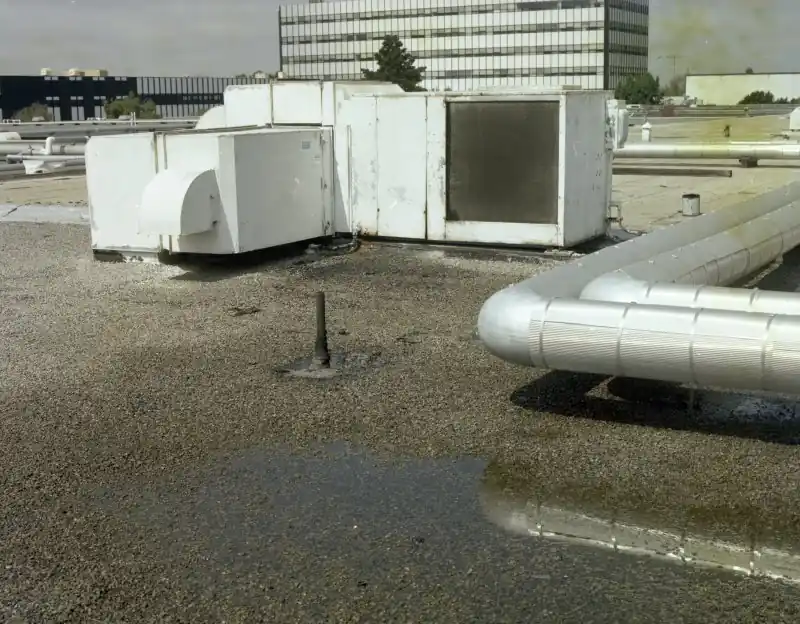
Ventilation equipment applies mechanical movement and control of air to support indoor environmental conditions, process exhaust, smoke extraction, or confined-space work. The category includes residential and commercial products, industrial equipment, decentralized and centralized air-handling units, air-distribution components, and specialized systems for shelters and smoke extraction.
A complete installation is more than a fan. Selection may depend on airflow and pressure behavior, acoustic output, environmental exposure, energy use, controls, fire provisions, duct compatibility, maintenance access, and the operating conditions of the occupied or process space. The supplied sources describe broad product portfolios and testing practices, but they do not provide a universal category-wide performance range.
Ventilation equipment comprises the fans, air-handling units, ductwork, terminals, and controls used to move and condition air. Its appropriate configuration depends on the airflow duty, space served, environmental conditions, and applicable regulatory requirements.
Chapter 1 / 06
Fundamentals and Working Principle
Ventilation systems move air between an enclosed space and an outside environment, or between spaces at different air conditions. The source portfolios distinguish domestic ventilation, commercial and industrial ventilation, decentralized ventilation units, centralized air-handling units, smoke extraction, air distribution, and ventilation of shelters. This classification reflects both equipment construction and intended operating function. Domestic products include residential axial and centrifugal fans, ceiling exhaust fans, air inlets, and accessories. Commercial and industrial products include inline fans, roof exhaust fans, kitchen exhaust fans, axial fans, chimney fans, radial fans, supply ventilation units, and air heating systems.
The basic operating principle of a fan is to impart energy to air and create a pressure difference that drives flow through the system. Axial fans move air along the axis of the rotor, while centrifugal or radial fans discharge air radially. The Vents Global product listing includes both axial and radial or centrifugal equipment for commercial, industrial, domestic, and smoke-extraction applications. Inline fans are intended for installation within ductwork, while roof exhaust fans and ceiling exhaust fans are associated with building exhaust arrangements. A portable blower or a fixed circulation fan can provide temporary or localized air movement rather than forming part of a complete building ventilation network.
Centralized air-handling units combine airflow equipment with broader air-treatment functions. Vents Global lists counterflow, rotary, and crossflow residential and commercial air-handling units, as well as bespoke units. Decentralized heat-recovery units are listed for residential buildings, for residential and commercial buildings, and for schools and public buildings. The distinction concerns system architecture: centralized units serve larger grouped air-handling functions, while decentralized units provide unit-level ventilation for individual spaces. Supply ventilation units, air-heating systems, and electrical accessories extend the available configuration range.
Air-distribution components convey conditioned or exhausted air through the building. The listed materials and components include radial ductwork, plastic ductwork, metal ductwork, flexible ducts, grilles, hoods, diffusers and valves, access doors, fittings, and HVAC grilles. A fan therefore operates as part of a coordinated system whose performance depends on the connected ducts, transitions, terminals, openings, and control provisions. Fan selection alone cannot establish the airflow or pressure capability of the completed installation.
Specialized ventilation equipment serves safety-related and unusual environments. The smoke-extraction range includes axial smoke-extraction fans, centrifugal smoke-extraction fans, jet fans, fire dampers, fire accessories, and electric accessories. Shelter ventilation includes systems for shelters and electrically or manually driven fans. Schaefer additionally lists confined-space ventilators, circulation fans, inlets and shutters, and equipment for agricultural, industrial, construction, and commercial environments.
Air-treatment equipment: counterflow, rotary, and crossflow air-handling units, plus decentralized heat-recovery units.
Distribution equipment: radial, plastic, metal, and flexible ducts, together with grilles, diffusers, valves, access doors, and fittings.
Special-purpose systems: smoke extraction, shelter ventilation, and associated fire or electrical accessories.
Chapter 2 / 06
Specifications and Key Parameters
A ventilation-equipment specification should identify the equipment duty and the performance evidence required for that duty. Relevant parameters normally include airflow, static pressure, fan type, drive arrangement, motor characteristics, sound output, dimensions, orientation, and installation method. For air-handling units, the specification may also need to identify the airflow configuration, heat-recovery arrangement, applicable unit class, controls, and accessory requirements. The supplied sources identify these as relevant product families and parameters, but they do not state universal numerical limits for the category.
Diameter is used by at least one distributor to group exhaust-fan products. Schaefer divides small exhaust fans into the 9-inch to 24-inch group and large exhaust fans into the 30-inch to 57-inch group. The supplied Graybar page lists category counts and manufacturer filter counts, but those values represent the retailer page shown rather than market-wide capacity, efficiency, or performance ranges. They should not be used as engineering specifications.
Noise must be treated as an acceptance parameter rather than assumed from the fan category. Vents Global states that every device with a motor and moving parts produces noise and that an exhaust fan operates with a sound level specified in the device user manual and sometimes on the packaging. The source article also discusses sound-level measurement and interpretation. A procurement specification should therefore identify the required measurement basis, operating condition, and reporting format, while the final numeric sound level must come from the selected manufacturer's documentation.
Schaefer states that its products are designed to resist high temperatures, moisture, corrosive air or gases, and be spark resistant. These statements identify application and durability considerations, but the supplied source does not provide temperature limits, corrosion classes, ignition-protection ratings, or test values. Accordingly, a project must require documentary evidence for the specific exposure. A source table should not be populated with guessed operating limits or certifications.
The following table records only values stated in the supplied sources. Where a value is absent, the entry is marked as varying by model rather than inferred from category names or industry practice. The table is a source-specific reference, not a complete specification for a ventilation-equipment purchase.
Require the selected model and manufacturer to state all performance values on the submittal.
Define the airflow duty, operating point, sound basis, and applicable installation conditions before comparing products.
Do not treat retailer counts, family names, or product groupings as engineering performance data.
Parameter
Source-stated value
Source and scope
Small exhaust fan size group
9 in to 24 in
Schaefer Ventilation product grouping
Large exhaust fan size group
30 in to 57 in
Schaefer Ventilation product grouping
Ventilation fan products listed
161
Graybar category count shown on the supplied page
Exhaust fan products listed
58
Graybar category count shown on the supplied page
Range hood products listed
22
Graybar category count shown on the supplied page
Portable blower products listed
9
Graybar category count shown on the supplied page
Attic ventilation products listed
7
Graybar category count shown on the supplied page
Broan-NuTone manufacturer filter count
100
Graybar manufacturer filter shown on the supplied page
Air King manufacturer filter count
81
Graybar manufacturer filter shown on the supplied page
Delta Electronics manufacturer filter count
34
Graybar manufacturer filter shown on the supplied page
Panasonic manufacturer filter count
16
Graybar manufacturer filter shown on the supplied page
Schaefer industry experience
Over 70 years
Schaefer Ventilation
Fan airflow
Varies by model
No category-wide value stated in the supplied sources
Fan static pressure
Varies by model
No category-wide value stated in the supplied sources
Fan sound level
Varies by model
Vents Global states that the sound level is specified in the user manual and sometimes on the packaging
Motor power
Varies by model
No category-wide value stated in the supplied sources
Air-handling unit airflow
Varies by model
No category-wide value stated in the supplied sources
Heat-recovery efficiency
Varies by model
No category-wide value stated in the supplied sources
Operating temperature range
Varies by model
No category-wide value stated in the supplied sources
Motor protection or enclosure rating
Varies by model
No category-wide value stated in the supplied sources
Chapter 3 / 06
Types and Configurations
Axial and centrifugal or radial fans are the principal fan arrangements identified in the sources. Axial fans act along the rotor axis and are included in residential, commercial, industrial, and smoke-extraction portfolios. Centrifugal and radial fans move air radially and are likewise used for commercial and industrial ventilation, domestic ventilation, and smoke extraction. A fan may also be classified by installation and service function. Inline fans are installed in a duct run, roof exhaust fans are mounted for roof extraction, ceiling exhaust fans serve a room through a ceiling location, and chimney fans promote draft through a chimney arrangement.
Distribution and air-quality equipment expands the configuration beyond the fan. Portable blowers provide temporary movement of air, while panel fans, portable circulation fans, and fixed-mount circulation fans address local air circulation. Schaefer groups its inlets and shutters separately from exhaust and circulation products, and Graybar lists range hoods and attic ventilation as separate product categories. These arrangements may be standalone products or components in a larger system, depending on the intended application.
Centralized air-handling units are offered in counterflow, rotary, and crossflow configurations for both residential and commercial applications. Counterflow units are named for their flow arrangement, rotary units employ a rotating exchanger arrangement, and crossflow units use a cross-flow configuration. Vents Global also lists bespoke units, ventilation-system accessories, and electrical accessories. The source does not provide numerical airflow, effectiveness, pressure, or efficiency values for these families, so a system specification must identify the selected model and its approved documentation.
Decentralized units provide an alternative arrangement for buildings where individual room or zone ventilation is required. The source identifies decentralized heat-recovery units for residential buildings, for residential and commercial buildings, and for schools and public buildings, along with electrical and general accessories. The presence of separate unit categories indicates that building type and intended application are part of the supplier's market structure. It does not establish that every decentralized product is suitable for every building type or occupancy.
Smoke-extraction systems comprise axial and centrifugal smoke-extraction fans, jet fans, fire dampers, fire accessories, and electrical accessories. In a complete arrangement, a jet fan promotes smoke movement in an enclosure, while extraction fans discharge smoke and dampers or other listed components form part of the fire-related equipment set. The supplied material does not describe control sequences, temperature ratings, actuator behavior, or test methods for these products.
Shelter ventilation is treated as a separate equipment family, including systems for shelters and electrically and manually driven fans. The electrical and manual alternatives affect the availability and mode of operation, but the supplied source does not state durations, redundancy rules, or performance requirements. For this and every other specialized configuration, the manufacturer data and project requirements must establish suitability rather than family labels alone.
Axial and centrifugal or radial fan families for building, process, and smoke-extraction duties.
Counterflow, rotary, crossflow, and bespoke centralized air-handling units.
Decentralized heat-recovery units for residential, mixed-use, school, and public-building applications.
Smoke-extraction, shelter-ventilation, air-distribution, inlet, shutter, and accessory systems.
Chapter 4 / 06
Selection Criteria for Procurement
Begin procurement with the ventilation duty rather than with a preferred fan type. Define the space, process, or safety function to be served, the air to be supplied or removed, the required quantity of outdoor air, the contamination or heat load, and the operating schedule. The selected arrangement must then connect the appropriate fan or air-handling unit to compatible ducts, inlets, grilles, diffusers, valves, and controls. This system-level approach is necessary because equipment performance cannot be separated from the connected resistance and leakage of the installation.
For industrial and agricultural applications, environment is a decisive selection factor. Schaefer states that its fans are designed to resist high temperatures, moisture, corrosive air or gases, and be spark resistant. The source also identifies agricultural, industrial, construction, rental, commercial, horticultural, and other channels as served markets. Buyers should document the actual temperature, humidity, chemical exposure, dust, and ignition-control conditions and require evidence that the proposed model is rated for them. Where the source contains no numerical limit, the request for quotation should use the phrase varies by model and require manufacturer confirmation.
Acoustic requirements require a defined method of comparison. Vents Global notes that fan noise arises from motors and moving parts and that sound levels are stated in user manuals and sometimes on packaging. A sound specification should identify the measurement location, distance, operating point, and whether tonal or broadband information is required, as applicable to the project. It should also avoid accepting an undated packaging value when a controlled product document is available. The completed system may differ from the isolated fan because ductwork and installation conditions affect noise.
Mechanical integration requires attention to orientation, available space, connection geometry, service access, and controls. Inline fans must fit the intended duct run, roof and ceiling products must suit their respective installations, and air-handling units require suitable connection and maintenance provisions. The listed accessories, electrical accessories, controls, fittings, access doors, and ventilation-system accessories indicate that these interfaces are recognized procurement items. A bill of materials should therefore coordinate equipment, ductwork, openings, and control scope instead of treating the fan as a standalone product.
Commercial availability is another purchasing consideration. Graybar's ventilation-equipment page provides a product finder, stock and branch filters, part-number search, manufacturer filters, and location-based shipping or pickup options. It lists multiple manufacturers and product categories. These features can support distribution purchasing, but the counts displayed on the supplied page describe that retailer's visible category data and should not be interpreted as total market availability. Users should confirm model-level stock, lead time, substitutions, and regional support at the time of order.
The final commercial evaluation should compare total installed suitability rather than purchase price alone. Relevant evidence includes the selected model's airflow and pressure data, sound information, motor and enclosure details, environmental suitability, accessories, controls, testing, certification documents, dimensional data, warranty information, and service provisions. The supplied sources mention catalogs, certificates, BIM and CAD models, downloads, references, support, controls, parts, and accessories as available resources, but they do not establish uniform documentation packages across all vendors.
Define the airflow, pressure, environmental, acoustic, and operating requirements before selecting equipment.
Coordinate the fan or air-handling unit with ducts, terminals, inlets, shutters, controls, and accessories.
Request model-specific evidence for temperature, moisture, corrosion, and spark-resistance claims.
Confirm model-level stock, lead time, documentation, service support, and approved substitutions before purchase.
Chapter 5 / 06
Standards, Compliance, and Testing
The supplied sources identify testing and certification resources but do not provide a complete code framework for ventilation equipment. Vents Global includes downloads, certificates, catalogs, and BIM or CAD models in its resource structure. Its product families also include fire dampers, fire accessories, and electrical accessories for smoke extraction. These offerings indicate that supporting documentation can form part of a compliant selection process, but the source does not specify the governing fire-code requirements or the clauses that apply to each product.
Schaefer provides the clearest stated testing practice. It says that the company tests all of its fans in-house using certified and calibrated test equipment. It also states that it tests its most in-demand products at the AMCA-certified BESS Lab at the University of Illinois. These statements support a documented manufacturer testing program, but the supplied source does not reproduce the test procedure, acceptance tolerance, laboratory report format, or complete list of tested models. Buyers should request the applicable report for the proposed product and confirm the operating point to which it applies.
Procurement verification should distinguish product evidence from general certification claims. Useful submittal records may include model identification, airflow and pressure results, sound information, motor data, material and corrosion information, dimensional drawings, wiring information, accessories, installation instructions, certificates, and relevant laboratory reports. For smoke-extraction equipment, the package should also document the listed fire accessories, dampers, and electrical items as applicable to the selected assembly. The sources do not establish which documents a jurisdiction will accept.
Installation compliance cannot be inferred solely from the equipment manufacturer. The system must satisfy the applicable requirements for its location, occupancy, and purpose, including ventilation provisions, fire protection, electrical work, structural support, and safe operation. The supplied pages do not identify the applicable national or local codes, nor do they provide installation clearances, prescriptive outdoor-air rates, or smoke-control sequences. Those subjects must be established from the project jurisdiction and the authoritative requirements applicable to the installation.
Acceptance testing should be planned as an objective process tied to the approved submittal. The buyer can identify the required test points, selected model, installed configuration, measurement locations, and required reporting. For fan performance, this supports comparison with the manufacturer's stated data. For sound, the Vents Global reference to manual and packaging sound levels reinforces the need to identify the source and test basis. The supplied source does not define commissioning tolerances, so those values must be specified by the project or applicable authority rather than guessed.
Record keeping should connect the final installed equipment to its supporting evidence. The project file can include the approved product, serial or model identification, test reports, certificates, installation and operating documents, maintenance information, and as-built distribution drawings. Vendor portals can help by publishing downloads, catalogs, certificates, and BIM or CAD models, while distributor systems can support part-number and order identification. The records should still be checked for the selected model and revision.
Schaefer Ventilation states that all of its fans are tested in-house using certified and calibrated test equipment.
Schaefer states that its most in-demand products are tested at the AMCA-certified BESS Lab at the University of Illinois.
Vents Global provides downloads, certificates, catalogs, and BIM or CAD models as information resources.
The supplied sources do not state universal acceptance tolerances or a complete list of governing installation codes.
Chapter 6 / 06
Market Landscape and Buying Process
The supplied market evidence shows a broad category with different routes to market. Vents Global presents a manufacturer portfolio organized around domestic ventilation, commercial and industrial ventilation, decentralized and centralized ventilation units, smoke extraction, air distribution, and shelter ventilation. Schaefer presents equipment for agricultural, industrial, commercial, and other environmental uses, with circulation, cooling, exhaust, heating, inlet and shutter, confined-space, parts, and control categories. Graybar operates as a distributor-facing sales organization with a product finder, manufacturer filters, branch stock information, shipping options, and parts support.
The category is therefore not represented by one uniform product form. Residential purchasers may select among domestic axial and centrifugal fans, ceiling exhaust fans, and air inlets. Building and industrial buyers may address centralized air handling, rooftop extraction, kitchen extraction, circulation, or process ventilation through different manufacturers and distributors. Smoke extraction, shelters, agricultural environments, and confined spaces represent further procurement contexts with specialized documentation and installation needs.
A structured buying process starts with a requirement and design basis. The project team should define the space or process, airflow objective, operating conditions, environmental exposure, acoustic criterion, system arrangement, controls, and applicable approval requirements. The team can then develop a product type and establish a technically neutral request for quotation. The request should require the supplier to identify any performance values that vary by model and to provide supporting data for the actual proposed product.
Shortlisting should compare configurations as complete systems, not isolated product-family names. For a building ventilation package, this may include an inline or rooftop fan, ductwork, grilles, diffusers, valves, access doors, and controls. For a building air-treatment package, it may include a counterflow, rotary, or crossflow unit, distribution components, electrical accessories, and commissioning documents. For smoke extraction, it may include axial or centrifugal extraction fans, jet fans, fire dampers, fire accessories, and electrical accessories. The required combination depends on the stated duty.
Commercial due diligence should verify the supplier channel and order route. Direct manufacturer inquiry can provide product selection and technical resources, while distribution may offer product search, local branch availability, shipping, and order history. Graybar's location-based stock and ship filters and manufacturer selections illustrate functions available through a distributor, but they do not prove that every listed model is available in every region. Final purchase should confirm the current manufacturer, exact model, included accessories, and whether any substitution is proposed.
After award, document control and inspection should close the gap between selection and installation. Confirm that submittals correspond to the ordered model, review shop or installation information, inspect interfaces and accessories, and establish maintenance access. Vents Global lists support, contacts, certificates, catalogs, downloads, and BIM or CAD models. Schaefer lists parts, accessories, and controls. These support resources can be incorporated into handover and maintenance planning, subject to the chosen supplier and product.
Direct manufacturer channels: Vents Global and Schaefer Ventilation.
Distribution channel: Graybar, with product search, manufacturer filters, stock information, shipping, and branch pickup options.
Project packages may combine fans or air-handling units with ductwork, terminals, dampers, controls, and electrical accessories.
Confirm the final manufacturer, exact model, accessories, documentation, availability, and substitution status before purchase.
FAQ
What is ventilation equipment?
Ventilation equipment is the collection of products used to move, distribute, and, in some configurations, treat air. It includes axial and centrifugal fans, air-handling units, ductwork, grilles, diffusers, inlets, shutters, controls, smoke-extraction equipment, and related accessories.
How do axial and centrifugal ventilation fans differ?
Axial fans move air along the axis of the rotor, while centrifugal or radial fans discharge air radially. Both arrangements appear in domestic, commercial, industrial, and smoke-extraction portfolios, but the appropriate choice depends on the required system duty and installation.
What is the difference between centralized and decentralized ventilation units?
Centralized air-handling units include counterflow, rotary, crossflow, and bespoke configurations. Decentralized heat-recovery units are supplied for residential, mixed residential and commercial, school, and public-building applications, providing an alternative system architecture.
How should fan noise be specified during procurement?
The requirement should identify the operating condition, measurement basis, and required reporting method, while the proposed manufacturer must state the sound level for the selected model. Vents Global notes that fan sound is included in the user manual and sometimes on the packaging, but an undated packaging value may not be the preferred submittal record.
What evidence can be requested to verify ventilation fan performance?
The buyer can request model-specific airflow and pressure data, test reports, acoustic information, motor data, drawings, certificates, and installation documents. Schaefer states that all of its fans are tested in-house with certified and calibrated equipment and that selected in-demand products are tested at the AMCA-certified BESS Lab at the University of Illinois.
What environmental conditions should be considered for industrial ventilation fans?
The selection should address temperature, moisture, corrosive air or gases, and ignition-related exposure as applicable to the installation. Schaefer states that its fans are built to resist high temperatures, moisture, corrosive air or gases, and be spark resistant, but numerical limits vary by model and must be confirmed in the selected product documentation.
What should a buyer confirm before ordering ventilation equipment?
The buyer should confirm the exact model, airflow duty, operating conditions, accessories, controls, documentation, service provisions, current availability, and any proposed substitution. Product-family names and retailer category counts do not establish model performance, and the supplied sources do not provide a universal specification for the complete category.