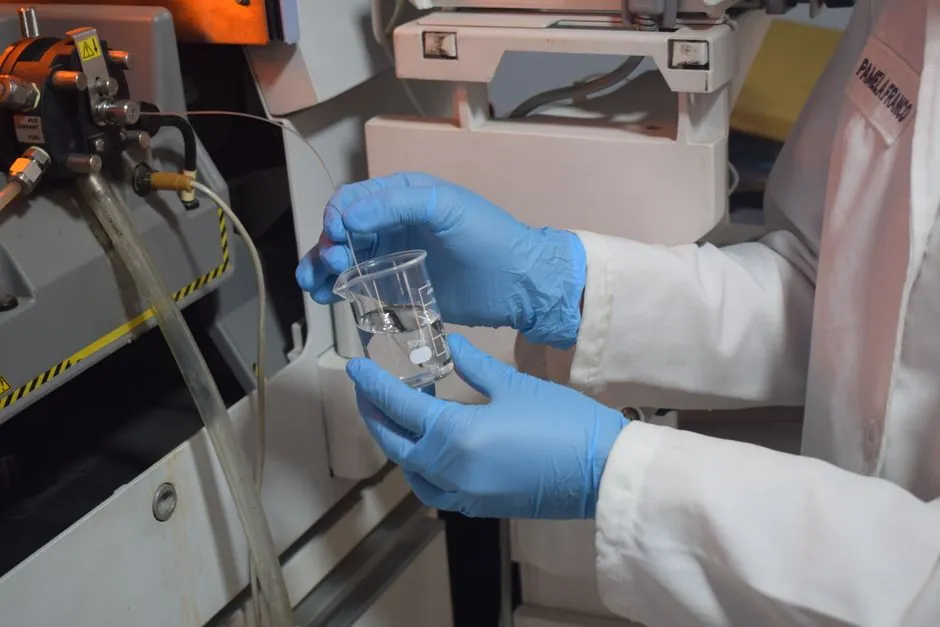
A 1413 µS/cm conductivity standard is used to verify conductivity cells and meters against a prepared potassium chloride reference, with the Milwaukee M10031B supplied as a 25-sachet pack and the Hach product supplied in a 250 mL bottle [S1][S2].
The standard is intended for instrument calibration and verification in laboratory, water-treatment, environmental, aquaculture, and related testing workflows, where a stable and traceable reference is more useful than an unverified solution [S2].
What the 1413 µS/cm Standard Is For
The 1413 µS/cm value represents a low-level aqueous conductivity reference prepared from potassium chloride, and it is intended to check conductivity-cell performance across a range below the conductivity of many process waters and concentrated electrolyte solutions [S1][S2].
Milwaukee identifies the M10031B as a 1413 µS/cm conductivity calibration solution supplied in sachets [S2]. The product is supplied as a pack of 25 sachets [S2].
This standard is appropriate for bench meters, portable meters, laboratory conductivity cells, and routine checks where the probe and meter need to be verified before a sample measurement. It is not a substitute for a high-conductivity calibration solution when the instrument is intended to operate in a substantially different range, and it is not a universal reference for every measurement temperature or matrix [S1][S2].
Selection Criteria for Standard Packaging
Hach lists a 250 mL bottle, while Milwaukee supplies a 25-sachet pack [S1][S2].
Single-use sachets reduce the number of times a bulk solution is exposed to air, but the actual benefit depends on whether the sachet is opened immediately before use and discarded afterward. A larger 250 mL bottle may be more economical for frequent calibration, provided that opening, contamination, evaporation, and storage controls are managed [S1][S2].
For a laboratory, the decision comes down to consumption rate and handling discipline. A high-throughput laboratory may prefer a bottle if the manufacturer permits repeated use within the stated post-opening period, while a low-volume site or field technician may prefer sachets to limit unused solution and repeated handling [S1][S2].
Buyer checks should include the nominal value of 1413 µS/cm, the solution basis, traceability documentation, container size, storage range, post-opening life, and whether the product is intended for single use or repeated use [S1][S2].
Stability: Temperature, Storage, and Open Time
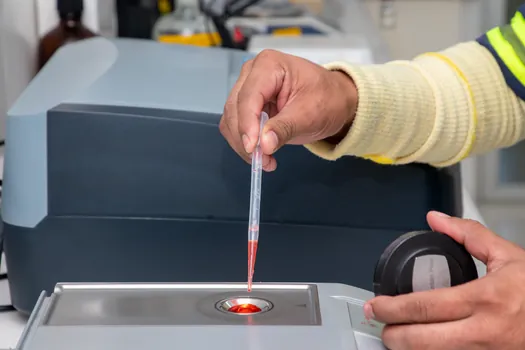
Hach lists a 250 mL bottle, while Milwaukee supplies a 25-sachet pack [S1][S2]. The applicable manufacturer’s storage and expiry instructions should therefore be retained with the calibration record [S1][S3].
Conductivity measurements are temperature-sensitive, so a solution that is thermally stable is not automatically a solution measured at the correct reference temperature. Calibration should be performed under the conditions specified by the meter and the standard, with temperature compensation set consistently and documented [S2][S3].
To avoid contaminating a fresh standard, rinse the cell with the standard before taking the reading, remove bubbles from the sensing area, and avoid returning dispensed solution to the original container. These handling controls are especially important when a bulk bottle is used for repeated calibrations because contamination can change the cell response even when the nominal standard has not visibly changed [S1][S2].
How to Compare 1413 µS/cm Standard Options
At the decision level, 1413 µS/cm standards are compared by traceability, package format, stated stability, storage requirements, and intended application rather than by the nominal conductivity value alone [S1][S2][S3].
Milwaukee supplies the M10031B in a 25-sachet pack, and Hach lists a 250 mL bottle [S1][S2]. No option should be selected solely from the 1413 µS/cm label.
Real Calibration Workflow

A usable workflow has four measurable stages: verify the standard identity, bring the cell and solution to the intended measurement condition, perform the calibration or check, and record the result and traceability information [S1][S2].
First, confirm that the container is labelled 1413 µS/cm and that its storage history complies with the manufacturer’s instructions.
Second, use enough solution to immerse the sensing elements without contaminating the measurement with the rinse vessel or previous sample. Third, check the measured value against the meter’s displayed conductivity and tolerance, then verify the reading with a second measurement before treating the cell as calibrated. Fourth, record the standard value, temperature, instrument identity, cell constant, calibration result, date, and any deviation from the manufacturer’s handling instructions [S1][S2].
For process-water or environmental work, use the 1413 µS/cm standard for instrument verification, then use a separate matrix-appropriate check if the sample chemistry, ionic strength, or temperature falls outside the verification range. A standard that confirms the meter’s basic response does not automatically validate every field measurement in a complex sample [S2].
Limits, Failure Modes, and Quality Control
The main failure modes are traceability mismatch, temperature error, evaporation or concentration drift, contamination, cross-contamination, and use outside the stated open or storage period. These risks explain why a single conductivity value cannot serve as a complete quality-control plan [S1][S2][S3].
Evaporation is particularly relevant to aqueous KCl standards because the water component can change while the dissolved salt remains, shifting the concentration. Opening the container repeatedly also increases exposure to contamination. Hach’s 3-month post-opening observation and Hamilton’s ±1% lifecycle statement are therefore product-specific controls, not interchangeable universal shelf-life values [S1][S3].
Cell cleanliness, air bubbles, immersion depth, temperature compensation, and a stable cell constant directly affect the result. A standard solution cannot compensate for a fouled or damaged cell, an incorrectly entered cell constant, or an instrument configured with the wrong temperature-compensation mode. Calibration records should preserve the instrument and cell identifiers so later checks can identify drift rather than treating repeated values as interchangeable [S2].
Low-level standards require even tighter quality control than high-conductivity references. Technical work on stable low-level conductivity standards describes the difficulty of maintaining reliable aqueous standards at 5 µS/cm and 1.3 µS/cm, which is why a 1413 µS/cm KCl reference is a practical midpoint for routine cell checks rather than a universal solution for every low-level measurement [S4].
Standard Sourcing and Traceability

Traceability is established through the reference standard used to prepare the solution: Milwaukee states that M10031B is prepared against a NIST-traceable potassium chloride solution [S2]. A buyer should request the applicable certificate or traceability documentation for the specific lot or package, rather than relying on a catalog description alone [S1][S2].
The 1413 µS/cm designation is the nominal reference value, while the accompanying specifications determine whether that value remains useful under the laboratory’s conditions: 250 mL or 20 mL packaging, 10–25 °C storage for the Hach product, 3 months after opening under specified conditions, and ±1% over an up-to-18-month lifecycle for the Hamilton Calpack product [S1][S2][S3].
No single universal expiry can be assigned to all 1413 µS/cm products. The defensible practice is to compare the nominal value, traceability, container, storage instruction, post-opening limit, and measurement conditions for the exact product in the laboratory’s inventory, then discard or quarantine material whose history or condition cannot be verified [S1][S2][S3].
The next control point is the calibration log: record each 1413 µS/cm standard’s lot, opening date, storage condition, calibration temperature, measured result, and acceptance limit. Review the log for repeated drift, expired post-opening use, or differences between bottle and sachet workflows before replacing the next standard order [S1][S2][S3].