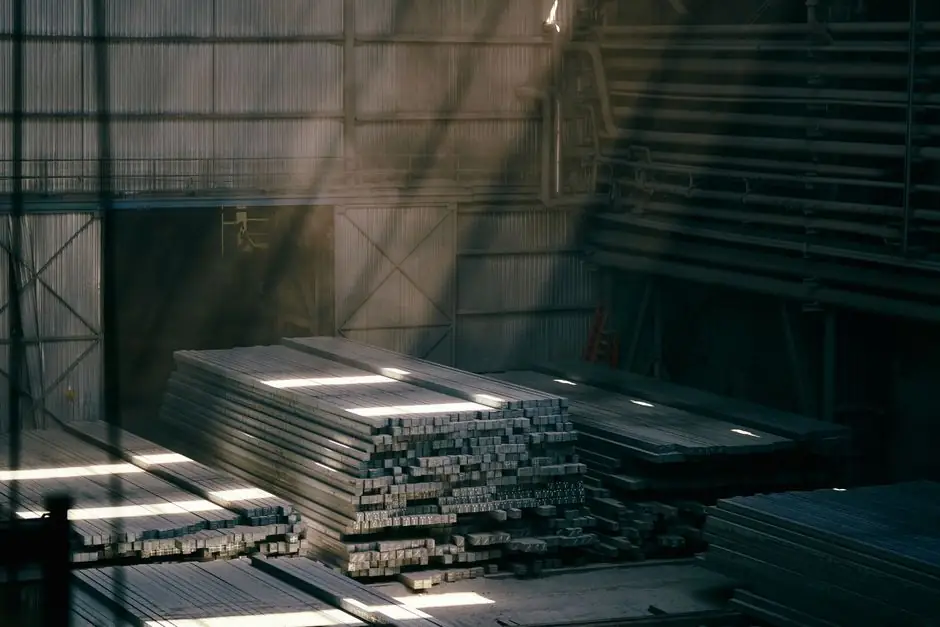
CRGO electrical steel is listed in thicknesses of 0.23, 0.27, 0.30 and 0.35 mm, while cold-rolled silicon steel is produced by cold rolling a hot-rolled coil and hot-rolled silicon steel is produced by hot rolling a slab.
The practical selection is driven by core-loss limits, flux direction, thickness, forming method and total cost: specify CRGO for high-efficiency power and distribution transformers, and evaluate hot-rolled silicon steel only where duty cycle, geometry and loss tolerance permit it [S1][S3][S5].
Material Definition and Performance Gap
Electrical steel is an iron alloy with silicon as the main additive element, and practical commercial alloys usually contain up to 3.2% silicon. This alloying raises electrical resistivity and reduces eddy-current loss, while the controlled rolling direction produces a preferred magnetic path [S1][S3].
Silicon increases the electrical resistivity of iron by a factor of about five, which decreases induced eddy currents. The same silicon addition increases electrical resistivity by a factor of about five, narrows the hysteresis loop and improves magnetic performance [S2].
Cold-rolled silicon steel is produced by cold rolling a hot-rolled coil of steel, while hot-rolled silicon steel is produced by hot rolling a slab of steel. Those processing steps explain the higher material cost and make CRGO a deliberate performance specification rather than a general-purpose steel substitute [S5].
Decision Criteria by Core Requirement
On magnetic performance, CRGO wins where flux follows the rolling direction: it has higher permeability and lower core loss than hot-rolled silicon steel because of its preferred crystallographic orientation and fine grain structure [S5]. CRGO is used in static applications such as transformer cores and static reactors where magnetic flux flows in one direction.
On cost and processing, hot-rolled silicon steel avoids the additional cold rolling, annealing and skin-pass operations required for CRGO, so its material cost is lower [S5].
Listed CRGO thicknesses include 0.23, 0.27, 0.30 and 0.35 mm. Listed CRGO thicknesses include 0.23, 0.27, 0.30 and 0.35 mm, and listed widths include 750, 900 and 1000 mm.
On handling and fabrication, CRGO is comparatively difficult to form because silicon hardens and embrittles the alloy, especially during rolling; commercial silicon content is therefore normally limited to about 3.2% because higher concentrations impair cold-roll workability [S2]. A design that requires severe bending, stamping or frequent weld repair is a warning against substituting CRGO without process validation [S2].
Grade, Thickness and Interchangeability
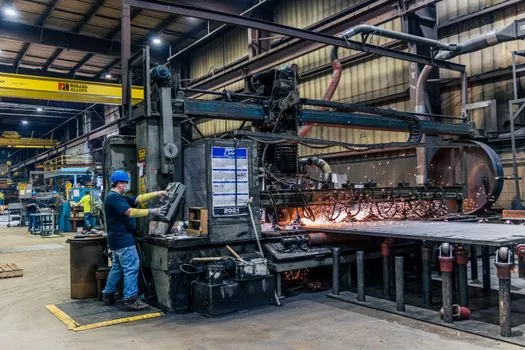
CRGO should be ordered by an identified grade, not only by the label “silicon steel.”
Common listed CRGO thicknesses include 0.23, 0.27, 0.30 and 0.35 mm.
CRNO should not be treated as an interchangeable label for hot-rolled steel. CRGO means cold-rolled grain-oriented steel. The rolling route and the magnetic path distinguish these products, not merely the words “cold rolled” and “silicon steel.”
Core Loss Versus Purchase and Operating Cost
CRGO carries a higher purchase price but targets lower iron loss, lower operating temperature and improved transformer efficiency [S3][S5]. The correct economic comparison is not price per tonne; it is total core and operating cost over the required duty cycle, including losses at the specified flux density and frequency [S3].
The material’s electrical behavior supports this comparison. Silicon raises resistivity, reduces eddy-current losses and narrows the hysteresis loop, while CRGO grain alignment lowers the reluctance of the intended flux path [S1][S2][S3].
Hot-rolled silicon steel remains defensible where the component does not need a laminated, highly efficient magnetic core or where replacement frequency and loading are limited [S5].
Application Fit and Failure Modes
CRGO is the stronger choice for power transformers, distribution transformers, reactors, special transformers and high-performance electrical machines in which flux has a controlled direction [S1][S3][S4]. Hot-rolled silicon steel is the more credible option for magnetic shielding, clutches and bearings, provided its lower directional magnetic performance is acceptable [S5].
CRGO is not the right selection merely because a transformer is present. A laminated motor core with rotating or less-predictable flux may suit non-oriented electrical steel better, while a static transformer core with a defined magnetic path favors grain-oriented material [S2][S4]. High-performance machine designs require the magnetic circuit, not the product name, to drive the grade decision [S3].
Material contamination is a practical failure mode. Carbides, sulfides, oxides and nitrides as small as approximately 1 μm can increase hysteresis loss and reduce permeability; carbon is particularly detrimental and is normally held at 0.005% or below [S2]. Precise cutting, punching, handling and coating control therefore matter as much as the nominal silicon percentage.
Flux direction is another failure mode. CRGO is optimized along the rolling direction, so laminations must be assembled so the intended magnetic path follows that direction [S1][S4]. Incorrect orientation can forfeit the principal advantage of the grade and increase core loss [S3][S4].
Standards, Inspection and Purchase Specification
Common CRGO specifications include ASTM A876, ASTM A677, JIS C2553, EN 10107 and GB/T 2521.2, while IEC 60404-8-7 covers cold-rolled, grain-oriented, reduced-coercivity electrical steel [S1][S2]. Specify the governing grade, thickness, width, coating, core-loss and permeability requirements rather than relying on a broad commercial description [S1].
For a 3% silicon alloy, typical reference physical properties include density of 7,650 kg/m³, melting point near 1,500°C, tensile strength of 300–450 MPa and elongation of 2–4% [S2]. These values describe the general electrical-steel family, not the complete acceptance envelope of every CRGO grade; grade-specific loss and permeability curves remain the controlling procurement data.
Require surface insulation as part of the lamination system because the coating reduces inter-laminar eddy-current losses and provides dielectric separation [S1][S4]. Also verify slit width, edge condition, burr level, flatness, coil yield and surface coating compatibility at the receiving stage, because these variables affect lamination quality and repeatability [S1][S5].
Do not approve a switch from CRGO to hot-rolled silicon steel based on silicon content alone. Require the transformer designer to recalculate core loss, excitation current, no-load loss, temperature rise and thermal design using the proposed material at the actual frequency and flux density [S3][S5].
For motor laminations where grade, thickness and loss trade-offs govern the decision, compare 0.27 mm and 0.35 mm non-oriented steel in 0.27 mm vs 0.35 mm NGO Steel.
The next procurement checkpoint is the material data sheet: confirm the exact grade, thickness, width, silicon range, coating, governing standard, core-loss value at the specified frequency and flux density, and permeability or coercivity requirement before approving CRGO or hot-rolled silicon steel.