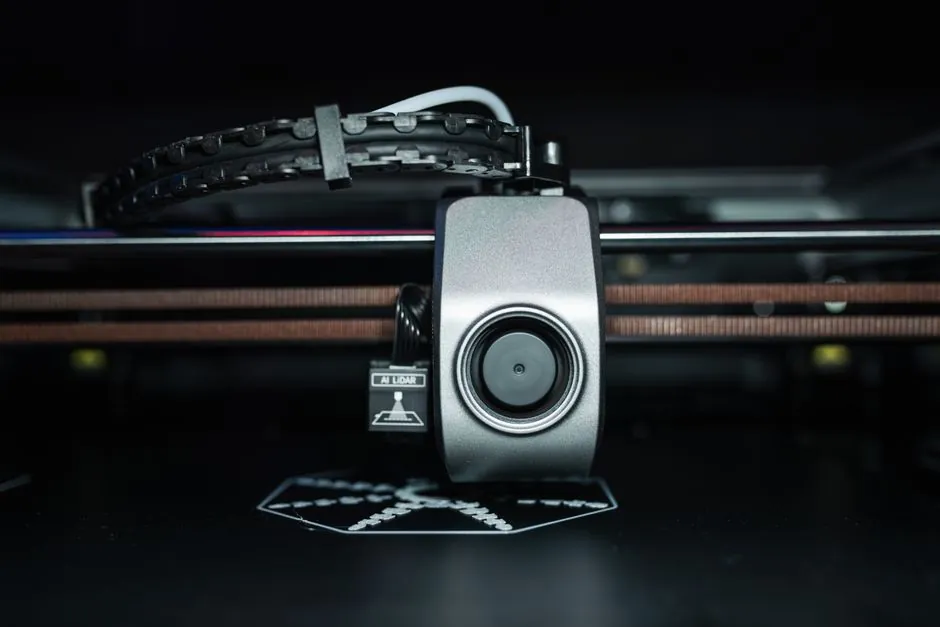
Handheld structured-light 3D scanners start near 500 EUR, while metrology-grade laser-triangulation units list at 4,000-25,000+ EUR depending on accuracy and software bundle [S3][S4][S5].
The 2026 buy decision is driven by five variables: sensing technology (structured light vs laser triangulation vs laser pulse), target accuracy (0.05-0.3 mm), acquisition speed, software licensing model, and whether the unit is sold as a closed dental/medical appliance or an open industrial tool [S4][S5].
Where the 2026 Price Bands Sit
Entry-tier consumer/creator 3D scanners using fixed-pattern structured light typically list between 500 and 2,500 EUR, with mid-range handheld units from Chinese vendors clustering around 3,000-6,000 EUR [S3][S4]. The discontinued Shining 3D EinScan-Pro+ carried a starting price of 4,999 USD (4,598 EUR) when last listed, with 0.24 mm max resolution, 0.05 mm accuracy, and a 550,000 points/s acquisition rate, illustrating the mid-range engineering class [S4].
Metrology-grade handheld scanners such as the Shining 3D EinScan Libre (laser triangulation, 0.05 mm resolution, 0.04 mm accuracy, 4,500,000 points/s) are sold "upon request" rather than at fixed list price, a procurement pattern typical of units above 8,000-10,000 EUR where vendor configuration and calibration certificate scope move the quote [S5]. At the top of the 2026 retail ladder, dedicated dental intraoral scanners like the Shining 3D Aoralscan Elite list at 21,598.80 EUR incl. tax on European channels, reflecting closed-ecosystem software, AI scan processing, and bundled CAD/CAM licences [S3].
Sensing Technology vs. Cost: How the Stack Builds
Structured-light scanners project a fixed LED pattern and reconstruct geometry from camera triangulation; they are cheaper per unit of resolution because the projector is a commodity component, but accuracy degrades on shiny or dark surfaces without spray [S4]. Laser triangulation units shoot a line or dot laser and reconstruct from the angle offset, which delivers tighter accuracy (0.04-0.05 mm class) and better behaviour on metal, but the laser module, galvanometer, and calibration drive unit cost 2-4x higher than a comparable structured-light SKU [S5].
The core cost drivers, in order of weight on a 2026 quote, are: (1) the optical engine (laser module vs LED projector), (2) on-board processing and firmware IP, (3) volumetric accuracy spec (e.g. 0.04 mm + 0.06 mm/m for the EinScan Libre), (4) software licence model (perpetual vs subscription vs pay-per-scan), and (5) calibration certificate and traceability paperwork [S4][S5]. Acquisition speed is a useful proxy for sensor class: 550,000 points/s indicates mid-range structured light, while 4,500,000 points/s flags laser-triangulation metrology hardware [S4][S5].
Tier Comparison: What Each Price Band Buys You
Under 1,000 EUR buys a fixed-pattern structured-light handheld, typically 0.1-0.3 mm accuracy, plastic body, USB-C tether, basic mesh export, no metrology certificate; it suits reverse engineering, 3D printing prep, and education. The 2,500-6,000 EUR band is the engineering sweet spot: handheld structured light or entry laser triangulation, 0.05-0.1 mm accuracy, 0.5-1 M points/s, Windows software with alignment and mesh tools, optional turntable and colour texture [S3][S4].
Above 8,000-10,000 EUR you cross into metrology territory: laser triangulation, sub-0.05 mm accuracy, volumetric accuracy specified over distance (e.g. 0.04 mm + 0.06 mm/m), 2-6 M points/s, full-colour texture, wireless option, robotic-arm or automated-turntable interface, and a calibration certificate traceable to length standards [S5]. The 15,000-25,000+ EUR band is dominated by dental and medical closed ecosystems where the scanner ships with AI scan stitching, CAD/CAM output, patient-management software, and regulatory clearances bundled into the SKU, as seen on the Aoralscan Elite at 21,598.80 EUR [S3].
Selection Criteria by Use Case
For reverse engineering of plastic parts and 3D-printing prep, a 500-2,500 EUR structured-light unit is normally sufficient; the 3D scanner technology stack is dominated here by fixed-pattern projection because the workflow tolerates 0.1-0.2 mm deviation. For quality control on machined metal components, buyers should target laser triangulation with stated volumetric accuracy (the 0.04 mm + 0.06 mm/m class) and a vendor-supplied calibration protocol [S5].
For dental clinics the decision is closer to a closed appliance than an open metrology tool: the Shining 3D Aoralscan Elite at 21,598.80 EUR ships as a chair-side system with AI processing, while competing intraoral scanners from 3Shape, Medit, and iTero sit in a similar 15,000-30,000 EUR band, with annual software subscriptions adding 1,000-3,000 EUR/year on top [S3]. For body scanning, art, and full-colour capture, structured-light units with colour texture and a larger working volume tend to win on cost-per-scan even at the 3,000-6,000 EUR price point [S4].
Total Cost of Ownership Beyond the Sticker

List price is roughly 60-75% of the five-year TCO for a 3D scanner, with the remainder sitting in calibration, training, software subscriptions, and accessory replacement. Annual calibration of a metrology-grade unit runs 500-1,500 EUR depending on the vendor and whether on-site or return-to-depot service is required, and most laser-triangulation handhelds need a turntable (300-2,000 EUR), calibration plates, and reference artefacts that are rarely included in the headline price [S4][S5].
Buyers comparing a 4,999 USD structured-light unit against a "upon request" laser-triangulation metrology tool should request the vendor's full configuration sheet including software edition, calibration certificate scope, and accessory kit, then normalise against a 5-year horizon, a discipline similar to CMM buying guide 2026: bridge, gantry, handheld, and vision variants compared.
Limitations, Failure Modes, and What the Data Doesn't Tell You
Structured-light scanners fail on transparent, dark, or highly specular surfaces and require anti-reflective spray or target dots, a hidden workflow cost of 50-200 EUR per project not reflected in list pricing [S4]. Laser-triangulation units are more tolerant but still need controlled ambient light; the EinScan Libre's enclosed-marker workflow trades some field flexibility for repeatable 0.04 mm + 0.06 mm/m volumetric accuracy [S5]. The published "starting price" on most 2026 retail channels is the bare-scanner SKU; add 10-25% for shipping, import duty (outside EU channels), and a basic accessory pack before comparing quotes [S3][S4].
Watch for two pieces of information that are commonly missing from public spec sheets: volumetric accuracy over the full working volume (not just point accuracy at the centre), and whether the stated accuracy is achievable with the supplied calibration artefact or only under ideal lab conditions. Procurement teams should request a vendor demo on a part representative of production geometry before signing a quote above 8,000 EUR, and should compare their shortlisted units against the Vision measuring machine price 2026: cost drivers, tier comparison, and TCO reference for adjacent non-contact metrology benchmarks.
Sourcing Channels and Verification Steps

European resellers (Machines-3D, All3DP-partner shops) list Shining 3D, Revopoint, and Creality scanners with VAT-inclusive pricing and stated dispatch times (typically 5 working days for stocked SKUs), which is a useful sanity check against direct-from-China quotes that exclude VAT and import duty [S3]. Aniwaa and SourceForge aggregators carry public list prices and historical pricing for discontinued units like the EinScan-Pro+ at 4,999 USD, useful as a benchmark for what the previous generation of mid-range hardware actually cost [S1][S4].
Two trackable signals to monitor over the next two quarters: (1) whether the Shining 3D EinScan Libre moves from "upon request" to a public list price, which would normalise the metrology-tier comparison, and (2) whether dental intraoral scanner list prices (currently 21,598.80 EUR on the Aoralscan Elite) drop as AI processing moves on-device, a pattern that historically pulled the 15,000-25,000 EUR band toward 10,000-15,000 EUR within 18-24 months of new silicon releases [S3][S5]. Buyers specifying today should lock a written quote including software edition, calibration certificate, accessories, and warranty terms, then re-quote against the 3D scanner technology stack reference when any of those signals change.
The underlying component specifications are covered under lighting equipment and electric lamps, and linear guide.