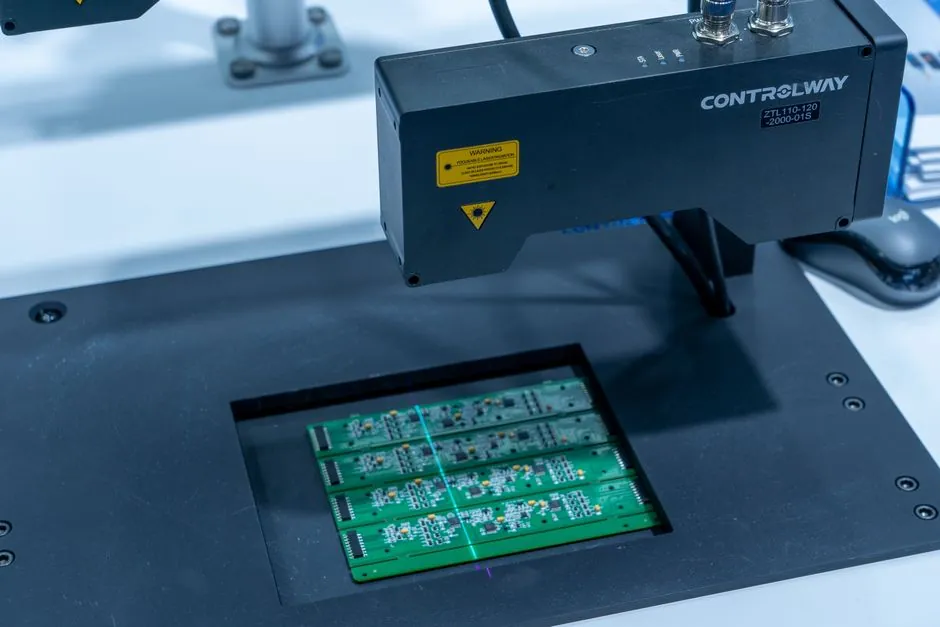
Manual 2D benchtop vision measuring machine units list from US$2,000-2,600 per piece on China B2B platforms as of 2026-07, while CNC 2.5D floor systems with 1600x1200x200 mm travel run US$56,000-61,000 per set and composite 3D optical systems with aerospace-grade accuracy reach US$20,000-80,000 per piece [S4].
The pricing spread is roughly 40x across the same product category, and that spread maps almost one-to-one onto four engineering knobs: number of motorised axes, stage travel, sensor stack (single camera vs. multi-sensor), and metrology software capability. A specifier who locks those four first can predict final landed cost within roughly 15 percent before talking to a vendor [S4][S1].
Four product tiers and where the money actually goes
Entry-tier manual 2D video systems with Quickmeasuring software carry an ISO 9001 / CE stamp and 1-year warranty, ship in wooden cases, and price at US$2,000-2,600 per piece with no minimum order beyond 1 piece [S4]. These machines use a fixed lens, manual X/Y stage, and are aimed at small-parts inspection where measurement repeatability of 5-10 micrometres is acceptable; Sinowon's iVicky V2.0 sits in this band with a 12-month warranty and 15-30 day delivery [S5].
Mid-tier automatic 2D CNC systems (e.g. Gdv-Dl432dcc) with online after-sales and 1-year warranty list at US$30,000-50,000 per set [S4]. High-tier composite CNC 2.5D systems such as the JTD-MV-1612CNC with 1600x1200x200 mm X/Y/Z travel and 1790x1390 mm working stage push to US$56,000-61,000 per set with 18-month after-sales support [S4]. Top-tier 3D optical systems with stated accuracy of (1.2+L/200) micrometres (L in mm) for aerospace component inspection, offered by Suzhou Yichi Technology, list at US$20,000-80,000 per piece with CNC operation and a 1-year warranty [S4].
MITUTOYO's QV series, a 3D CNC compact vision measuring machine, sits at the premium Japanese-brand reference point; it ships with programmable LED stage, coaxial, and 4-quadrant ring light, a high-resolution CMOS colour camera, 7-step zoom optics, and QVPAK software, with a touch-probe option [S1]. DirectIndustry lists indicative pre-tax pricing only, excluding delivery, customs, and installation, so the published price should be read as a configuration anchor rather than a final invoice [S1].
Spec-to-price comparison: what you actually pay for
The cleanest way to read VMM quotes is to line up four decision axes: (1) number of motorised axes, (2) stage travel, (3) measurement accuracy class, and (4) sensor count. A manual 2D unit with under 200x200 mm travel and a fixed lens lands at the US$2,000-2,600 floor; a CNC 2D unit with similar travel but motorised X/Y/Z jumps to US$30,000-50,000 because the servo drives, linear encoders, and CNC controller enter the bill of materials [S4][S5].
Travel size is the second lever: pushing from 400x300 mm to 1600x1200 mm adds granite mass, longer linear guides, and a heavier Z column; the JTD-MV-1612CNC with 1600x1200x200 mm travel carries a US$56,000-61,000 price tag versus roughly US$35,000-45,000 for typical 600x800 mm CNC 2.5D machines on the same platform [S4]. Accuracy class is the third lever: a (1.2+L/200) micrometres spec (i.e. 1.2 micrometres plus L/200) needs a temperature-compensated structure, higher-grade linear encoders, and a more rigid bridge, and commands the US$20,000-80,000 composite-system band [S4].
Sensor count is the fourth and fastest-moving cost line. An instant vision system with a 5-megapixel camera, 0.088X double telecentric lens, 120 mm working distance, 80 mm wide field, 8 micrometres measurement accuracy, and 4 micrometres repeatability (model from Sinowon Innovation Metrology) is sold as a separate order-entry line, not bundled with the stage [S4]. Multi-sensor CNC platforms such as the INSIGHT500 from Guangdong Micro Accuracy add a 200 mm Z-axis focus travel, 50 kg load rating, and 18-month warranty, and are quoted per piece with 1-piece minimum order [S4].
Hidden cost drivers beyond the sticker price

Lighting is the first silent cost line. MITUTOYO's QV bundles programmable LED stage light, programmable coaxial light, and a programmable 4-quadrant LED ring light into the base configuration because repeatable illumination drives the camera's ability to hit its accuracy spec; cheaper units often ship with a single fixed-angle ring, and the buyer pays later in calibration drift [S1]. For facilities that already run older metrology rigs, retrofitting lighting equipment and electric lamps to a consistent LED pattern is often a prerequisite for getting the published accuracy out of a new machine.
Software is the second. QVPAK (MITUTOYO) and Quickmeasuring (entry-tier Chinese suppliers) are not equivalent; QVPAK handles CAD-imported programs, automated focus maps, and touch-probe handoff, while Quickmeasuring covers point-and-click edge detection. Upgrading from one to the other typically re-prices the system by 20-30 percent even on identical hardware [S1][S4].
Stage rigidity and granite mass form the third driver. A 1600x1200 mm working stage on the JTD-MV-1612CNC weighs several hundred kilograms, drives up wooden-case crating, and pushes freight to roughly 8-12 percent of unit price on FOB-Shenzhen terms; installation and operator training are commonly bundled into the 18-month after-sales window on premium machines, while entry-tier units leave training out of scope [S4]. Warranty length itself varies from 1 year (Suzhou Yichi, Sinowon) to 18 months (Dongguan Jaten, Guangdong Micro Accuracy) and is a useful proxy for the vendor's confidence in the machine's mean time between calibration [S4][S5].
Who should buy which tier
For job shops running small electronics or machined small parts under 100 mm, a manual 2D unit at US$2,000-2,600 pays back inside a year on inspection labour alone, and the Sinowon iVicky V2.0 is a representative SKU with 12-month warranty and 15-30 day delivery from a 11-year veteran Chinese OEM [S5][S6]. For tier-1 automotive or mould shops needing 400-800 mm travel with CNC programming, the US$30,000-50,000 mid-tier band is the sweet spot, balancing travel, accuracy, and software capability [S4].
For large-format sheet-metal, PCB panel, or composite layup inspection, the 1600x1200 mm CNC 2.5D class at US$56,000-61,000 is the minimum viable platform; going below that tier forces manual stitching and loses the throughput benefit of CNC [S4]. For aerospace and medical-implant shops, the 3D optical composite band at US$20,000-80,000 with sub-(1.2+L/200) micrometres accuracy is the regulatory floor; the right peer benchmark is the MITUTOYO QV series, where a touch-probe option and QVPAK software are non-negotiable for AS9100 / ISO 13485 audit trails [S1][S4].
VMMs are not the right tool for high-volume 100 percent in-line dimensional checking on a moving line; that is where machine vision ID and dedicated machine vision systems win on cycle time. VMMs are also a poor fit when the workpiece is taller than the Z travel (200 mm on the JTD-MV-1612CNC) or when the feature of interest is occluded from a top-down camera view, in which case a coordinate measuring machine (CMM) bridge, a contour measuring machine, or a portable arm is the better specifier's call. For context on how a CMM stack compares against a VMM on similar dimensional work, the CMM vs Vision Measuring Machine spec-first selection guide lines up both platforms on the same decision criteria.
Total cost of ownership across a 7-year lifecycle
Purchase price is roughly 55-65 percent of 7-year TCO on a CNC VMM; the remainder sits in installation, calibration, software updates, and operator training. A US$50,000 mid-tier CNC 2D system typically carries US$8,000-12,000 in installation and site acceptance, US$4,000-6,000 per year in software maintenance and probe/calibration artefact replacement, and US$3,000-5,000 per year in operator time and re-validation, summing to roughly US$110,000-135,000 over 7 years [S4].
An entry-tier US$2,500 manual unit carries almost no installation cost, but absorbs more operator minutes per part, which flips the labour math at higher volumes; the breakeven sits at roughly 8-12 inspected parts per shift [S5]. A premium US$70,000 3D optical system adds US$2,000-4,000 per year in climate-control energy (temperature stability to roughly +/-1 degree Celsius is required to keep the (1.2+L/200) micrometres accuracy class), and a service contract running 10-12 percent of list price per year is standard on the QV-class machines [S1][S4].
Lead time is the wild card in 2026: Sinowon quotes 15-30 days on entry-tier manual units, while CNC 2.5D and 3D optical systems from Dongguan and Suzhou suppliers sit at 30-60 days ex-works, with wooden-case crating standard and L/C payment terms available on the US$15,000-plus tier [S3][S4][S5]. Buyers who can accept a 1600x1200 mm JTD-MV-1612CNC build slot rather than a custom travel size shave roughly 10-15 percent off list and pull delivery forward by 2-3 weeks [S4].
What to verify before signing a PO
Three items separate a defensible VMM purchase from a budget surprise. First, ask for the accuracy statement in the ISO 10360-7 / ISO 463 equivalent form: an EQM (equipped-measurement) value plus an MPE (maximum permissible error) formula such as MPE_E = A + L/K, with A and K stated; vague "high accuracy" claims should be rejected [S4]. Second, ask which linear guide class drives the X/Y axis; a C3-grade rolled ball linear guide on a US$30,000-class machine is acceptable for general work, but a US$60,000-plus aerospace machine should carry a higher-grade guide with pre-load specification in writing [S4].
Third, ask for the calibration artefact set and traceability chain; a Granite square, ball bar, and ring gauge should be quoted separately or bundled with NIST or NPL traceability certificates, and a sample Cpk / SPC report from the vendor's demo lab is the cheapest due-diligence step in the cycle. Sinowon's instant vision system spec (0.088X telecentric lens, 120 mm WD, 80 mm FOV, 8 micrometres accuracy, 4 micrometres repeatability, 5 MP camera) is a published example of a vendor willing to put numbers on the data sheet rather than adjectives [S4].
Trackable signals to watch over the next two quarters: any revision of the China B2B platform price band for the US$2,000-2,600 entry tier (it has been stable across 2026-06 and 2026-07 listings), and the next MITUTOYO QV-series catalogue update which would reset the premium reference for 3D CNC compact machines.