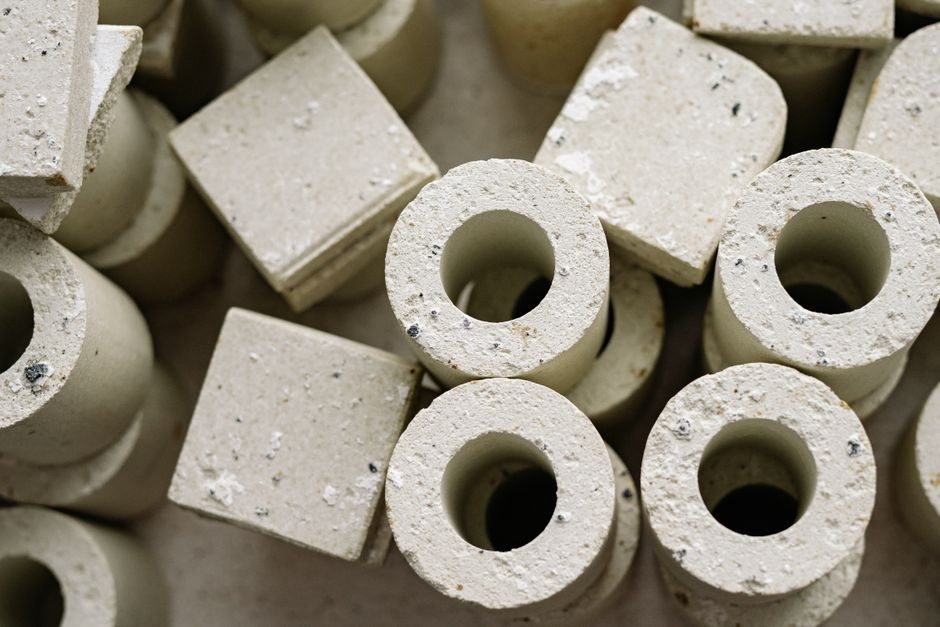
Active anode material — battery-grade graphite with a minimum 90% carbon purity, supplied as powder, dry, liquid or block — is the binding constraint on lithium-ion cell output through 2026, with China controlling roughly 90% of global anode production and 98% of graphitization capacity [S2][S4].
Purification, spheronisation and carbon-coating steps are still required to take raw natural graphite (~95% C) to anode-grade 99.95% C with iron below 50 ppm, and almost all of that processing remains in China; spherical graphite costs three to four times more than the equivalent flake concentrate before a single cell is made [S2].
Where the shortage actually lives: processing, not raw tonnes
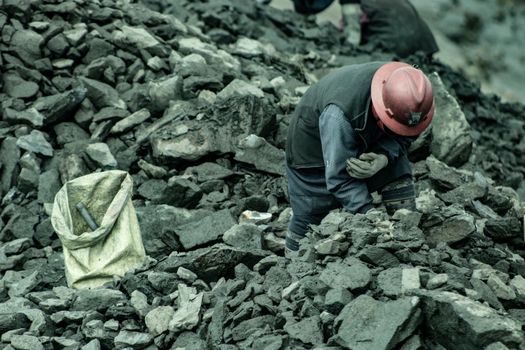
Raw graphite reserves are not the bottleneck. China accounts for roughly 78% of global mine output at about 1.27 million metric tonnes in 2024, with Mozambique projected to grow nearly seven-fold to 247,500 tonnes in 2025 following the restart of Syrah Resources' Balama project [S2].
The real pinch point is converting that concentrate into battery-grade active material: hydrometallurgical or thermal purification to ≥99.95% carbon, iron content below 50 ppm for consistent electrochemistry, then spheronisation and a thin carbon coating for first-cycle efficiency [S2]. Synthetic graphite graphitisation runs above 2,500 °C, ties cost to petroleum-coke and needle-coke feedstocks, and the February 2026 Hormuz disruption pushing oil above $100/bbl has already changed feedstock economics for non-Gulf synthetic producers [S2].
Qualification drag locks buyers into incumbents
New anode materials must pass charge-discharge, thermal and cell-chemistry qualification before they ship into automotive programmes, and in early 2026 Syrah Resources was required to extend its qualification deadline with Tesla for its Louisiana anode facility — a concrete instance of how slow the gating is even with an established offtake customer [S2].
Cell-side context lines up with that: the cell-level battery industry is reorganising around chemistries and exports that depend on which anode grades actually clear qualification on time, as covered in Cell-level battery industry trends mid-2026: exports, chemistries and spec map. Hard-carbon anode synthesis faces a similar constraint at the 10,000-ton commercial scale, where batch-to-batch consistency — not cell design — is the immediate bottleneck accelerating early supplier lock-in.
Next-gen chemistries: silicon, hard carbon and the diversification bet
Next-generation anode materials — silicon–silicon-oxide blends, lithium titanium oxide, silicon–carbon composites, silicon–graphene — are tracked in a separate 2021-2026 forecast at ~17% CAGR, with demand drivers in EV silicon content and high-energy-density Li-ion systems [S3]. A hard-carbon anode sub-market is sized at USD 7.5 billion in 2026, projected to USD 44.5 billion by 2036 at 19.5% CAGR, again gated by 10,000-ton commercial synthesis consistency.
These chemistries are the hedge against the graphite choke-point, but they do not displace it in 2026: anode-grade graphite is what is actually shipping into lithium-ion cells, and the magnetic material and additive manufacturing material supply pages track adjacent critical-material classes under similar concentration dynamics.
Tariff and trade exposure layered on top
Active anode material is in scope for U.S. trade actions on energy-storage inputs: the merchandise definition covers synthetic, natural and blended anode-grade graphite at ≥90% carbon by weight, with or without coating, in powder, dry, liquid or block form, irrespective of entry form [S4].
That means a project that qualifies a non-Chinese source still has to clear the trade-policy layer before it can ship, and the IEA's 2026 Energy Technology Perspectives flags cobalt, graphite and lithium as the three capacity-versus-demand ratios that determine whether midstream and downstream battery manufacturing can actually run at nameplate [S5].
Options matrix for buyers in 2026
Three options dominate the supply picture, and the trade-offs are concrete: (1) incumbent Chinese anode — lowest 2026 cost and shortest lead time, but the highest exposure to the 98% graphitisation concentration and to active-anode tariff action; (2) ex-China natural graphite + ex-China purification (e.g. Syrah/Louisiana) — diversified and tariff-friendlier, but qualification is gating and the extended Tesla deadline shows the real calendar [S2][S4]; (3) synthetic graphite ex-Gulf — tighter spec consistency for cell makers, but feedstock cost is now coupled to oil above $100/bbl since February 2026 and to graphitisation furnace energy [S2]. Hard carbon and silicon-blend chemistries sit alongside as a hedge, not a 2026 replacement, and a buyer picking option (2) should also weigh copper material availability, since copper is independently flagged as a multi-million-tonne deficit driver across electrification.
Limits, failure modes and what to watch
The constraint is not "running out of graphite" — it is (a) processing capacity outside China, (b) qualification throughput per cell programme, and (c) the 90%-carbon active-anode tariff perimeter widening or tightening [S2][S4]. Xeneta's 2026 risk ranking places critical material dependencies in the top systemic risk band, alongside the copper and rare-earth deficits that the same electrification wave is pulling on.
Watch the next two nodes: any further extension of ex-China anode qualification deadlines with named offtake customers, and the published price-discovery benchmarks — graphite has no transparent global price index, so substitution is being decided on opaque quotes rather than on a verifiable curve [S2].