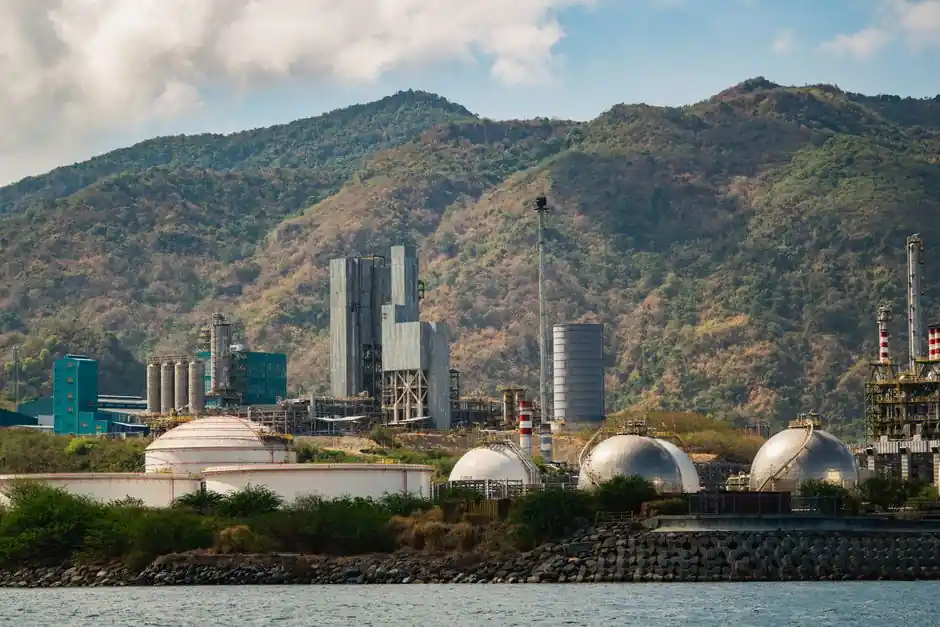
API Class G and Class H are the two basic, sulfate-resistant oil well cements manufactured under API Spec 10A, with the practical difference being grind (surface area) rather than chemistry; Class H is coarser and is generally used at higher slurry densities and greater depths than Class G [S1][S5][S6].
Both classes share a similar chemical composition but Class H is ground coarser, a property that gives Class H better retarding behavior and makes it the preferred basic cement for cementing deep wells where the temperature can exceed 150 degrees Celsius and the pressure can exceed 100 MPa [S5][S7].
Spec 10A framework: how Classes G and H are defined
API Specification 10A, "Specification for Cements and Materials for Well Cementing," designates eight classes of oil-well cement (A through H) for specific ranges of well depth, temperature, and pressure, and pairs every class with three sulfate-resistance grades: Grade O (Ordinary), Grade MSR (Moderate Sulfate Resistance), and Grade HSR (High Sulfate Resistance) [S1].
For the basic classes G and H the published thickening-time window is 90 to 120 minutes at the relevant downhole schedule, a deliberate band that gives field engineers enough pump time before the slurry begins to set in the annulus [S2]. Class G and Class H are explicitly defined as basic well cements, designed to work with additives rather than as finished, ready-to-pump products, which means retarders, accelerators, fluid-loss additives, and dispersants are added at the bulk plant or wellsite to tailor each slurry to the well [S6].
Class G vs Class H: a criterion-by-criterion comparison
The composition of Class G and H cement is similar; the difference is the surface area, with Class H coarser than Class G [S5]. Because surface area drives hydration rate, the coarser grind of Class H gives it better retarding properties for cementing deep wells, while the finer Class G reacts slightly faster and is typically run at lower slurry densities and intermediate depths [S5][S7]. Class H, by contrast, performs well in the demanding conditions of deep and horizontal wells and under extreme temperature and pressure, and is generally used at higher slurry densities and greater depths [S3][S6].
For decision-making the practical comparison is:
- Depth and BHST window: Class G covers medium to deep wells; Class H is the default for deep and high-BHST wells where retarder demand is high [S3][S5][S6].
- Slurry density: Class H tolerates high-density slurry designs (heavy weight, narrow margins against fracture pressure) better because the coarser grind reduces water demand per sack; Class G is more commonly used at standard densities [S6].
- Sulfate resistance: Both classes are available in O, MSR, and HSR grades, with HSR specified for formations with high sulfate exposure [S1][S8].
- Additive regime: Both are basic cements that require retarders for deep-well service; Grade D, by contrast, is now commonly replaced by Grade G or Grade H with a retarder because Grade D entails higher production costs [S4].
Why the coarser grind of Class H matters at depth
Downhole temperature increases with depth, roughly 0.8 degrees Celsius for every 30 m of well depth in Gulf Coast wells, and can reach 150 degrees Celsius or higher on a 5000 m producer, with bottom-hole pressure in the 100 MPa range [S5]. At those conditions OWC slurries undergo strength retrogression with time, a loss of compressive strength in the hardened sheath that the basic Class G and Class H formulations are not designed to resist on their own.
The coarser surface area of Class H slows the early hydration rate, which extends the thickening time and improves the cement's response to retarders, exactly the behavior needed when a slurry has to be pumped several thousand meters down and around casing before it can safely set [S5][S7]. In modern practice this is also why Grade D, the older deep-well class, is largely substituted by Class G or Class H with the addition of a retarder: the retarder-plus-coarse-grind combination reproduces the deep-well behavior the field used to get from Grade D, at lower production cost [S4].
Additives, sulfate resistance, and HTHP service
For deep wells and high-temperature, high-pressure service, Class G and Class H are not used neat; their behavior is dominated by the additive package. Anti-strength-retrogression additives (silica flour or silica fume) are the primary fix for the strength loss Class G and Class H exhibit above roughly 110 degrees Celsius, and they are commonly paired with retarders, dispersants, fluid-loss additives, and antifoam to give a stable, pumpable slurry at downhole conditions [S5].
Sulfate resistance is specified independently of class, by selecting Grade MSR or Grade HSR under API 10A; Class G HSR is a common specification for deep wells in aggressive environments, and Class H HSR serves the same function where the higher-density or deeper-well conditions justify the coarser grind [S1][S8]. The choice of O, MSR, or HSR is therefore a separate decision from the choice between G and H, and the two decisions should be made independently rather than rolled into a single "deep well cement" spec.
Selection rule of thumb for deep wells
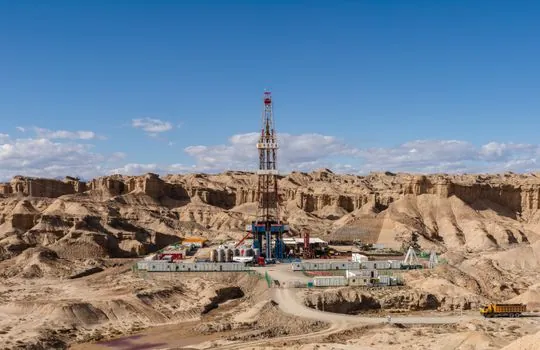
For medium-depth wells with standard-density slurries and BHST below about 120 degrees Celsius, API Class G (typically HSR) is the workhorse basic cement and is the lower-cost option [S6][S8].
For deep wells, horizontal laterals, high-density slurries, or any schedule with high retarder demand, API Class H (typically HSR) is the default, on the strength of its coarser grind, its better retarding response, and its established performance in demanding conditions [S3][S5][S6]. A practical purchasing spec is therefore: "API Spec 10A Class G HSR" for medium-depth service and "API Spec 10A Class H HSR" for deep, high-density, or horizontal service, with the additive package (retarder, silica, dispersant, fluid-loss additive) specified separately for the actual bottom-hole conditions.
Sourcing and standards traceability
Every Class G and Class H shipment should be traceable to API Spec 10A, with the class (G or H) and grade (O, MSR, or HSR) clearly marked, and a mill certificate showing conformance to the chemical and physical requirements, including the 90-120 minute thickening-time window for both basic classes [S1][S2]. For deep-well jobs, request mill data on surface area (Blaine), and confirm the retarder compatibility test, because the same retarder can perform very differently against the coarser Class H than against the finer Class G [S5][S7].
For related B2B specs on casing programs, line pipe, and downhole materials used alongside oil well cement, see this side-by-side on API 5L line pipe grades.