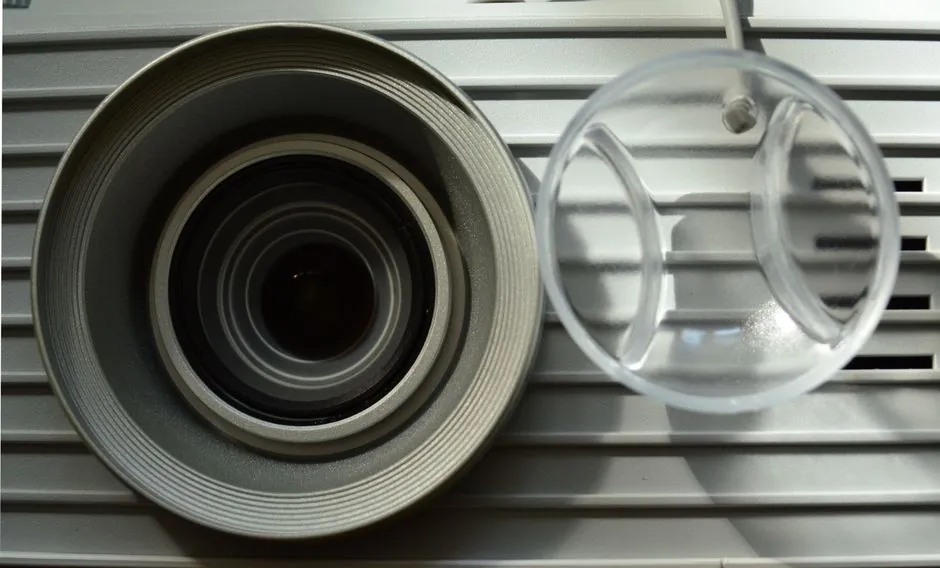
An uncoated spectacle lens reflects about 8-10% of incident light at each air-glass interface, while a multi-layer anti-reflective coating drops that residual reflection to under 1% and pushes broadband light transmission above 98% [S2][S5]. For a process engineer used to reading loss budgets, that is the difference between a 92% pass-through and a 99%+ pass-through, and the user's eye sits at the end of that optical budget.
AR coatings are engineered as stacks of ultra-thin films, each tuned to a fraction of a wavelength of visible light, so that reflections from the top of the stack destructively interfere with reflections from the underlying film boundaries [S1][S2]. Vacuum deposition in a sealed chamber is the standard application route, and the resulting films serve a role conceptually similar to broadband anti-reflection treatments on precision instrument optics, including the objective lens of an automatic level used in surveying.
How AR Coatings Work: Destructive Interference, Not "Magic"
An AR coating is a thin film with a refractive index lower than the lens substrate, engineered so light reflected from the coating's outer surface is roughly half a wavelength out of phase with light reflected from the coating-substrate interface, causing the two reflected wavefronts to cancel [S2]. A single-layer coating only achieves this cancellation efficiently at one design wavelength, which is why entry-level AR often looks strongly tinted and performs best in a narrow band.
Multi-layer AR stacks alternate high-index and low-index metal oxide layers, each layer measured in nanometres, to suppress reflection across the full visible spectrum and push transmittance above 98% [S2][S4]. Because no stack perfectly cancels every wavelength, a faint residual green, blue, or purple tint is the visible signature of the band the coating was optimised for, not a defect [S2]. Modern ion-assisted deposition pushes film density higher than basic evaporation, producing harder, more durable AR films that hold up to cleaning and skin contact [S4].
What the User Actually Gains: Numbers Behind the Marketing
Uncoated lenses reflect 8-10% of incoming light at each surface, and that reflected share shows up as ghost images, halos around point light sources, and a measurable drop in contrast at the retina [S5]. With AR applied, residual reflection falls below 1% and transmittance rises above 98%, so contrast-sensitive tasks (night driving, chart reading, screen work) recover the signal that would otherwise be lost to surface glare [S2][S5].
For night driving specifically, the practical benefit is a marked reduction in halos and starbursts around oncoming headlights and overhead streetlights, because the scattered-light component coming off the lens back surface is what the eye reads as glare [S1][S2][S3]. Independent ECP guidance published 14 November 2025 frames this in operational terms: AR-coated lenses deliver sharper vision, improved contrast, and fewer visual distractions across reading, driving, and screen use [S3].
Coating Stack Architecture: Standard, Hydrophobic, and Ion-Assisted
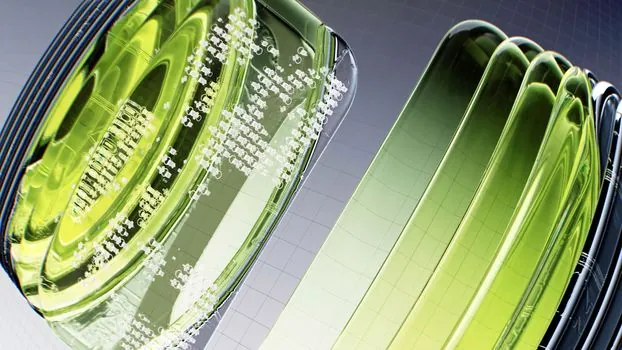
Standard AR coatings alternate high- and low-refractive-index layers and deliver the headline glare reduction at the lowest cost, but offer limited surface protection on their own [S4]. Hydrophobic/oleophobic AR adds a topcoat that sheds water, resists fingerprint oils, and reduces smudging, which is the variant most labs now ship as default for everyday wear [S4].
Ion-assisted deposition (IAD) AR is the premium tier: ion bombardment during growth compacts the film, producing a denser, harder stack with better optical performance and longer service life in harsh environments, at a higher unit cost [S4]. On high-index substrates (1.60, 1.67, 1.74) and on polycarbonate, AR is not a cosmetic option but a functional requirement, because those materials reflect more light per surface than CR-39 and benefit disproportionately from the coating [S3][S4].
Comparison of AR Coating Tiers Across Decision Criteria
Three AR variants dominate lab menus, and they trade off across cost, durability, optical performance, and cleanability in ways that map directly to wearer use case [S4].
Standard AR: lowest cost, moderate glare reduction, no topcoat, shortest service life under daily cleaning. Hydrophobic/oleophobic AR: mid cost, full-spectrum glare reduction matching premium stacks, water- and oil-repellent topcoat, noticeably easier cleaning, suitable for most daily wear. Ion-assisted AR: highest cost, densest film with best optical performance, longest durability, preferred for high-index, polycarbonate, and high-contaminant environments such as surgical or industrial settings [S4].
Across all three tiers, modern stacks bundle scratch-resistant, anti-static, and smudge-resistant sub-layers on top of the AR stack itself, so "AR coating" in 2026 is really a multi-function surface system rather than a single film [S3].
Who Benefits, Who Does Not, and Failure Modes
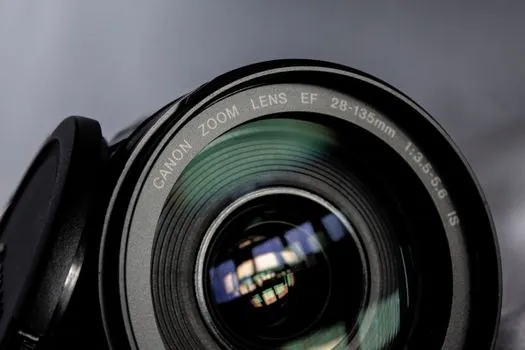
AR coatings deliver the most value for users with high-index lenses, high prescription power, significant night driving, prolonged screen exposure, or occupational need for clean optical transmission (pilots, surgeons, lab technicians) [S1][S3][S4]. Patients with mild prescriptions in CR-39 who rarely drive at night see less absolute gain, though the cosmetic improvement (more visible eyes, less lens "shine" in photos and on video calls) is the leading reason lower-prescription wearers still choose AR [S2][S3].
AR-coated surfaces do not treat underlying eye disease; persistent glare, halos, or photophobia without glasses still warrants a clinical workup for dry eye, cataract, or corneal pathology [S1]. The main in-service failure modes are coating delamination from under-cured or over-cured hard-coat layers, surface stress cracking from thermal mismatch with the substrate, and abrasion damage because AR stacks are softer than glass and sit on top of the lens rather than within it [S4]. Routine cleaning with microfibre, avoiding household solvents, and matching the hard-coat cure to the substrate index are the standard mitigations labs and ECPs walk patients through.
Standards, Sourcing, and What to Verify on a Lab Spec Sheet
Application method matters: vacuum-deposited multi-layer stacks are the production norm, and ion-assisted deposition is the higher-tier variant within that family [S2][S4]. For a related decision frame on how multi-layer optical stacks are evaluated in a different instrument context, the cost-driver analysis behind Automatic Level Cost Drivers: Optical Quality and Compensator Precision breaks down the same kind of trade-off between glass quality, coating count, and final image performance.
Trackable signals for the next buying cycle: ask the lab whether the AR stack includes a stated blue-light filtration sub-layer (common in 2025-2026 prescriptions but not recommended for nighttime driving) [S3], and whether ion-assisted deposition is offered at a price point compatible with the patient's high-index upgrade, because the combination is where the largest contrast and durability gains actually compound [S3][S4].